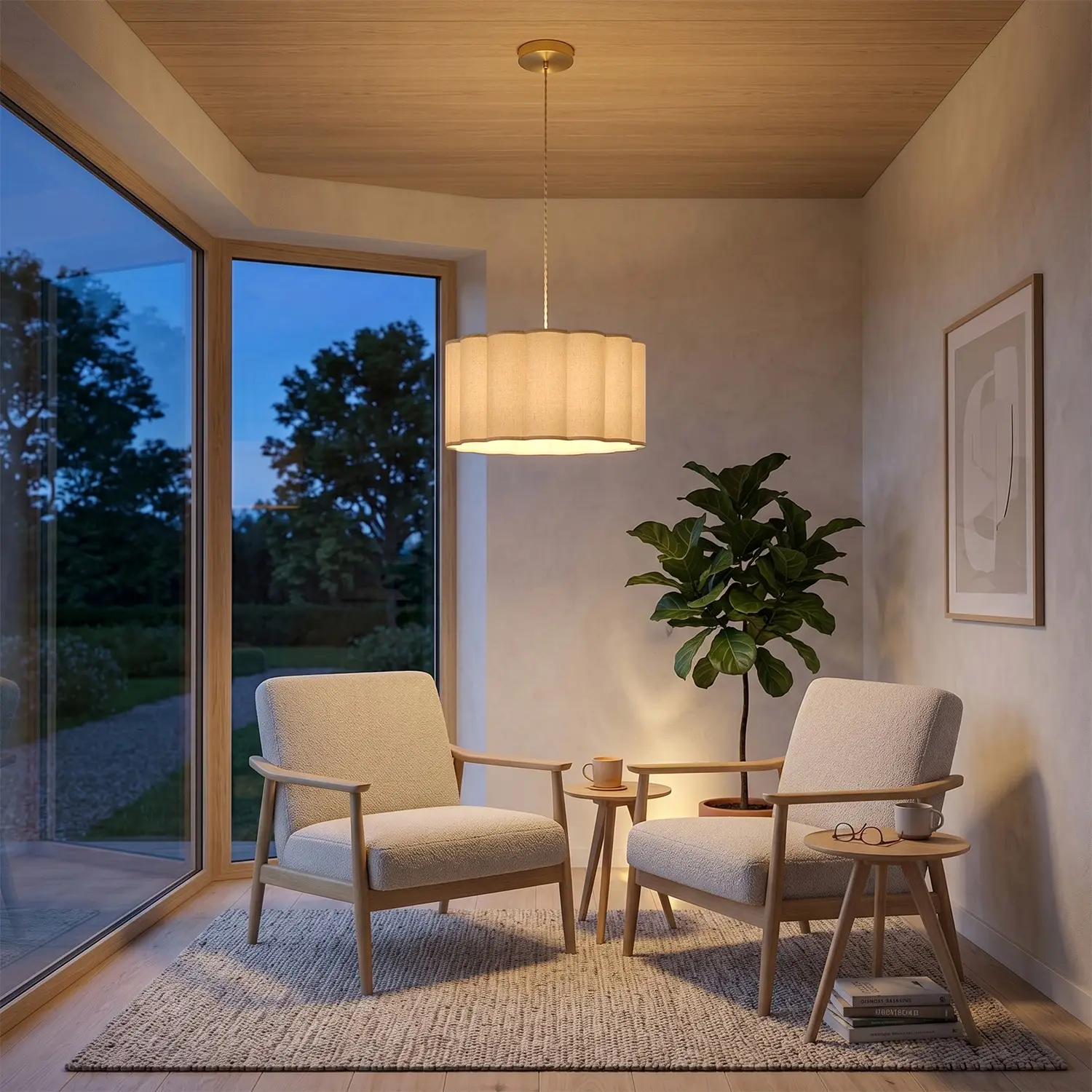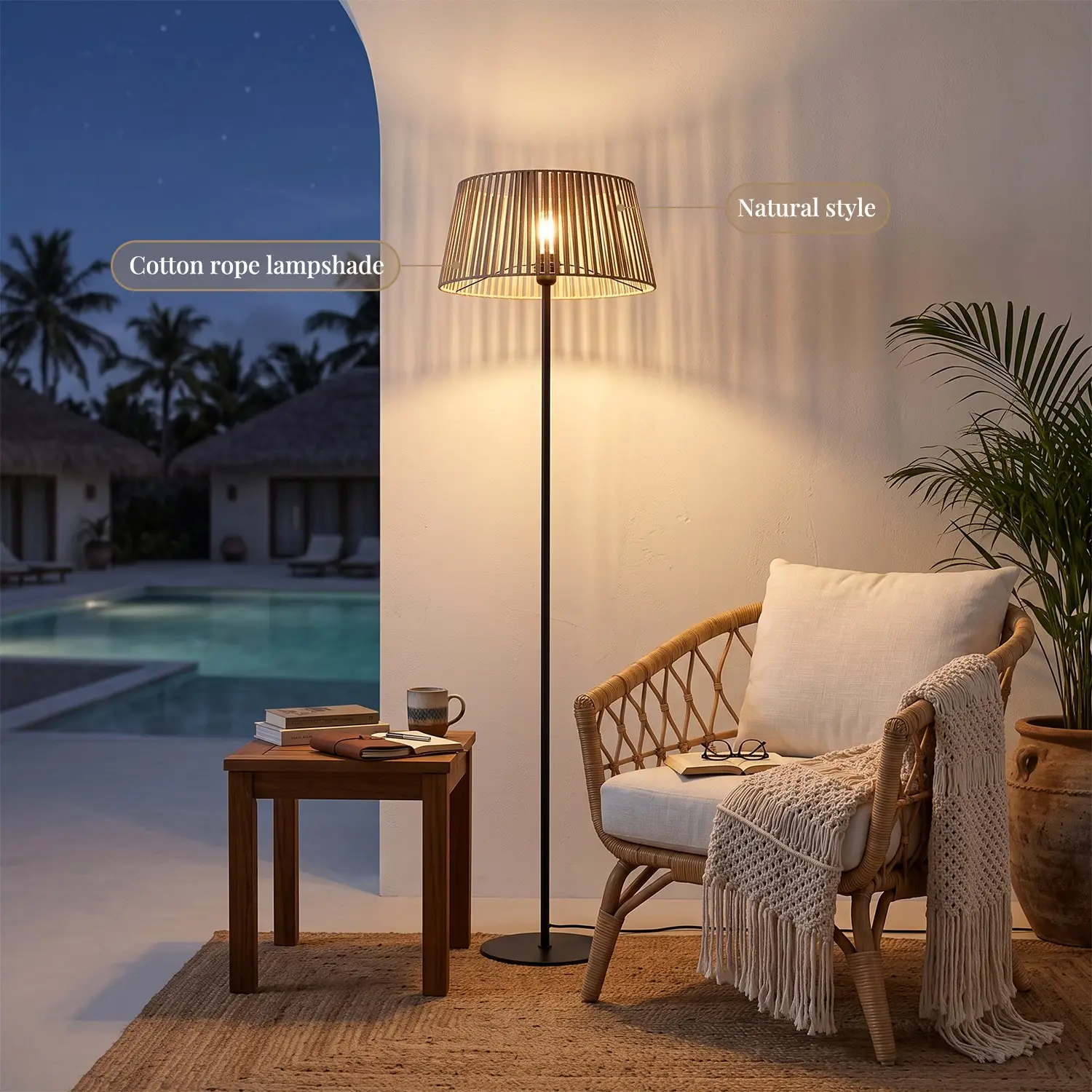
Acoustic fabric pendant lighting for commercial spaces: High-performance acoustic lighting balances sound absorption with architectural aesthetics by utilizing porous materials that mitigate reverberation. Engineers must carefully align fabric density, thermal management, and luminous flux to meet professional lighting standards in open-plan corporate and hospitality environments.
1. The Dual-Function Challenge: Engineering Light and Sound in Modern Commercial Design
In modern open-plan offices, acoustic control is as critical as illumination. Integrating Fabric Pendant Lights requires a rigorous approach to architectural physics. Unlike standard luminaires, these fixtures function as primary sound-absorbing elements. From manufacturing thousands of units, we have found that the primary challenge is not just the aesthetic, but the intersection of structural integrity and acoustic performance. Designers must reconcile the need for high-lumen output with the physical presence of sound-dampening textiles.
2. Decoding Acoustic Fabric Specs: Understanding Porosity, NRC Ratings, and ASTM C423 Compliance
To quantify acoustic success, we rely on the ASTM C423 standard for sound absorption coefficients. Our fabric substrates undergo rigorous testing to ensure specific Noise Reduction Coefficients (NRC) or Sound Absorption Averages (SAA) are met. Porosity is the key variable; a fabric must be open enough to allow sound waves to pass through to the core material, yet dense enough to maintain high-quality aesthetic light diffusion.
3. The Physics of Light Transmission: Balancing Fabric Thickness with Luminous Flux and CRI
The trade-off between acoustic thickness and light quality is a primary engineering concern. In our factory, we measure luminous flux degradation caused by various fabric densities. For instance, our Fabric Pendant Light variants are calibrated to ensure a target CRI >90, even after light travels through specialized diffusion layers. We have quantified light loss at less than 12% in our standard acoustic-rated textiles, ensuring the fixture remains a viable primary light source rather than just a decorative element.
4. Thermal Integrity: How Our Proprietary Design Ensures Driver Safety and Longevity
Enclosing LEDs in fabric housings creates significant thermal management challenges. Using our experience with Table Lamp manufacturing, such as the JT30244-1 model which manages a 9W LED load effectively, we have scaled these thermal paths for larger acoustic fixtures. We implement dedicated airflow channels and heat-sinking internal structures to ensure the LED junction temperature remains stable under sustained load, complying with IEC 60598 luminaire standards.
5. Assembly and Finish: Tensioning Techniques for a Professional Architectural Aesthetic
A professional architectural aesthetic depends entirely on the tensioning system. In our production line, we utilize a proprietary mechanical tensioning ring that keeps the fabric taut, eliminating wrinkles that occur due to humidity or temperature fluctuations in commercial environments. This system allows for modular fabric replacement, ensuring that the visual quality of our Pendant Lights remains consistent throughout the project lifecycle.
6. Maintenance Best Practices: Protocol for Cleaning Acoustic Textiles in Public Areas
Maintaining acoustic integrity in public areas requires specific cleaning protocols. Our fabrics are treated to be fire-retardant (meeting ASTM E84 standards). We advise clients against harsh chemical cleaners that may compromise the fire-retardant coating or the porosity of the weave. Periodic vacuuming with a soft brush attachment is the recommended maintenance protocol to ensure the acoustic performance is not hampered by dust buildup.
7. Project Implementation: How to Specify Our Fixtures for Your Next Commercial Fit-out
When specifying these fixtures, we provide full photometric data files and acoustic test reports. Our manufacturing capacity allows for custom scaling of these Ceiling Light solutions to suit unique corporate footprints. All fixtures undergo CE certification, ensuring that every unit shipped meets stringent international electrical safety compliance for the European and global markets.
| Feature | Standard Fabric Fixture | Our Engineered Acoustic Design |
|---|---|---|
| Acoustic Rating (NRC) | Not Rated | 0.75 - 0.90 Verified |
| Thermal Management | Passive Convection | Active Path/Thermal Sink |
| Finish Stability | Standard Tension | Proprietary Tensioning |
Need Technical Data for Your Project?
Download our full spec sheets and acoustic test reports to assist with your next corporate or hospitality fit-out.
Download Spec Sheet & Request DataFrequently Asked Questions
Q: What are the NRC ratings typically achieved with your fabric pendants?
A: Our acoustic-rated pendants typically achieve NRC ratings between 0.75 and 0.90, depending on the specific textile porosity and core substrate density chosen for the project.
Q: How does fire-retardant treatment impact light performance?
A: The fire-retardant treatments used are specifically engineered to maintain transparency and color consistency, ensuring the light output and CRI levels remain stable and within industry-specified tolerances.
Q: Which fabric types provide the best acoustic performance?
A: Fabrics with higher porosity and specific weave patterns designed to capture sound waves within their structure provide the best results, validated by our ASTM C423 test reports.
Q: How do these fabric fixtures compare to metal or glass in high-traffic areas?
A: Fabric-wrapped pendants offer significantly higher acoustic performance than rigid materials, which reflect sound, while our proprietary tensioning system ensures they maintain a professional, durable finish in high-traffic environments.
Q: What structural load considerations are required for installation?
A: While these fixtures are engineered to be lightweight through advanced internal framing, standard commercial mounting hardware and ceiling load calculations for pendant weight should be verified by a structural engineer per site requirements.