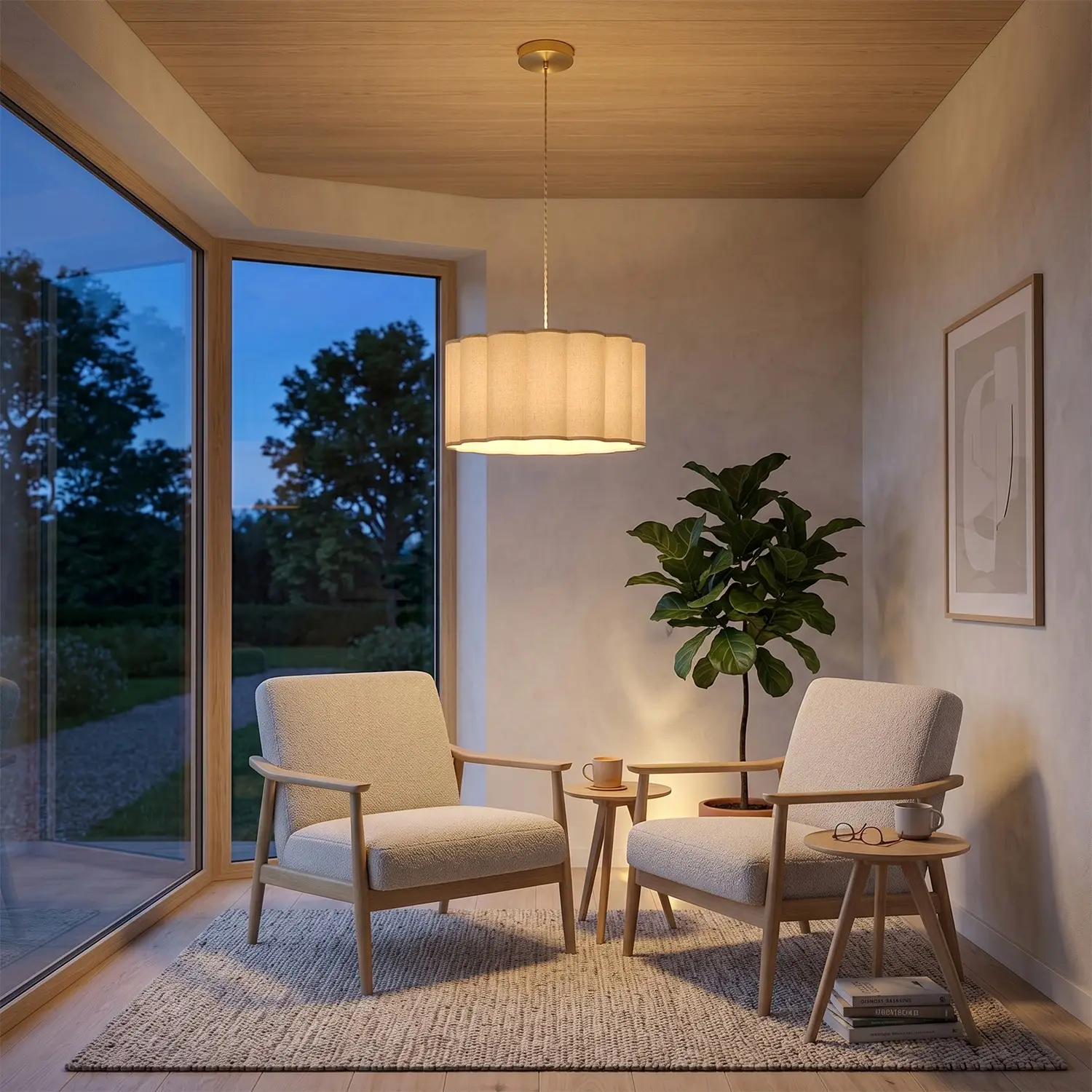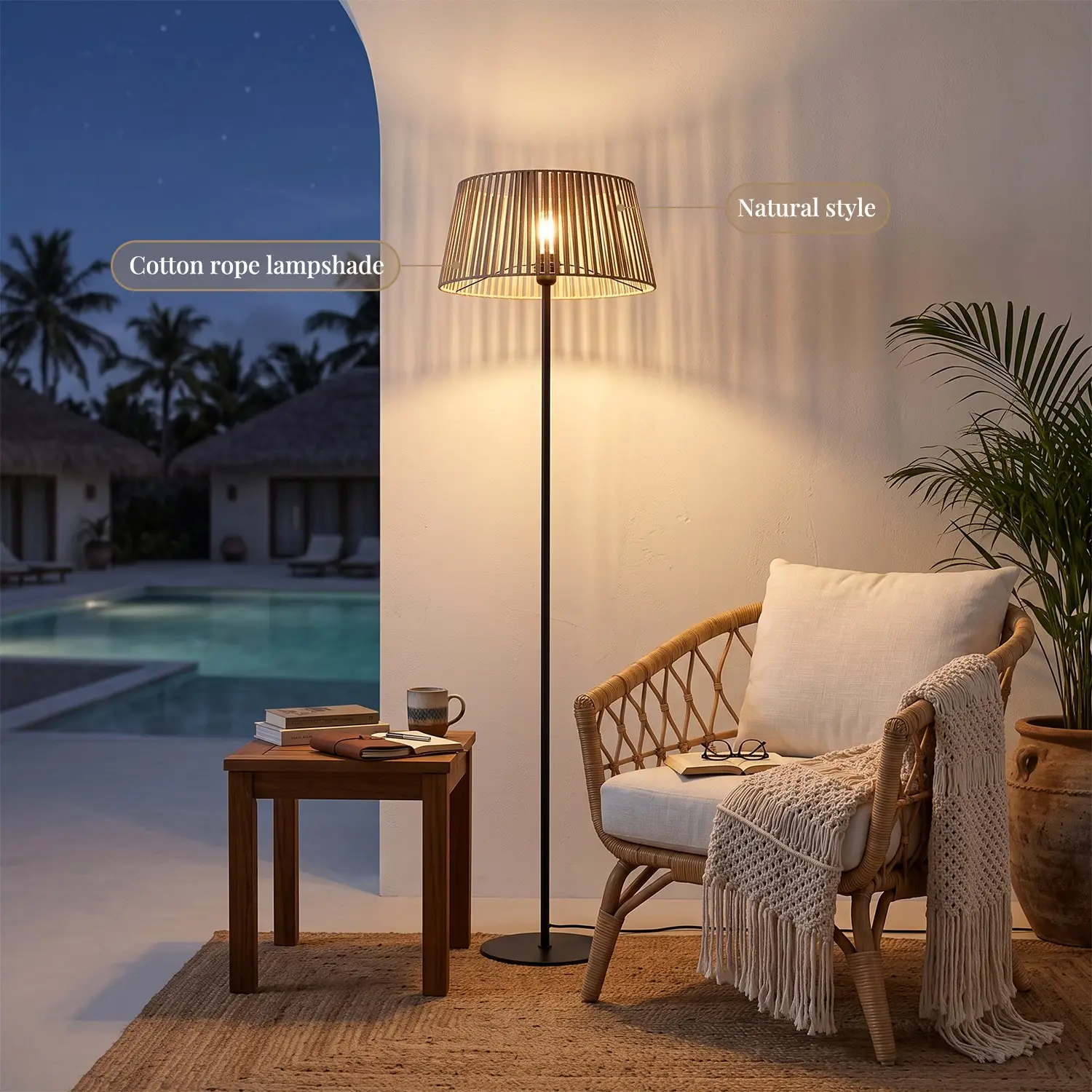
Architectural fabric ceiling light systems: Achieving the balance between aesthetic design and technical performance requires prioritizing photometric efficiency, rigorous fire safety compliance, and modular maintainability. For procurement managers, the key to long-term success lies in specifying systems that utilize flame-retardant materials, optimized thermal management for LEDs, and field-replaceable components.
The Engineering Trade-off: Aesthetics vs. Photometric Efficiency
In large-scale commercial lighting, the challenge often lies in the inverse relationship between fabric density and Light Transmittance (LT). High-density textiles provide superior diffusion, effectively masking LED sources to prevent hotspots, but they also decrease overall luminaire lumen output. Architectural Fabric Pendant Lights require a calculated balance where the fabric weight is optimized for light dispersion without incurring excessive energy penalties.
Material Science: Balancing Fire Compliance with Light Quality
Safety is non-negotiable in commercial environments. All architectural fabric must strictly adhere to ASTM E84 surface burning characteristics to ensure a Class A flame spread rating. Furthermore, the use of fabrics certified under NFPA 701 fire testing protocols is required to guarantee that materials pass small-scale flammability tests for textiles used in indoor spaces.
Structural Integrity: Monolithic vs. Modular Tensioned Fabric Systems
For installations exceeding 2 meters in diameter, monolithic frames often fail to accommodate building settlement, leading to sag. Modular systems, such as our Large Fabric Ceiling Light, utilize precision tensioning brackets that allow for localized adjustments. This ensures the fabric maintains a consistent aesthetic without distortion or structural fatigue over time.
Thermal Management and Longevity: Preventing Fabric Yellowing
Thermal degradation is the leading cause of premature material failure. In our manufacturing process, we ensure LED heat sinks are thermally coupled with the luminaire frame to dissipate heat away from the textile. While our Glass Hanging Lights (such as model JM30356) rely on convective airflow, fabric luminaires require specific distance-from-source metrics. We perform CCT stability testing to ensure high-output LED heat loads do not shift color temperatures or accelerate yellowing of the fabric components.
Quality Control Protocols: Ensuring Uniformity
Uniform light distribution is verified through IES photometric files. During factory assembly, we conduct a "uniformity sweep" using a spot luminance meter to ensure that the difference between peak and trough light intensity on the fabric surface remains below 10%. This is critical for large-format Fabric Ceiling Light installations where hotspots can ruin the architectural design intent.
Total Cost of Ownership: Field-Replaceability vs. Sealed Cycles
| Feature | Sealed Units | Modular/Serviceable Systems |
|---|---|---|
| Maintenance | Requires fixture replacement | Field-replaceable drivers/engines |
| TCO | High (Full unit replacement) | Low (Component swap) |
| Longevity | Limited by LED life | Extended by modular upgrades |
Evaluate Technical Specifications
Download our full compliance data and photometric reports to ensure project code adherence.
Download Spec SheetSpecification Guide: What to Request
When sourcing for mid-to-large projects, mandate the following from your manufacturer: 1) Certified photometric files in IES format; 2) Independent laboratory reports for NFPA 701 compliance; and 3) A clear heat dissipation matrix demonstrating that the chosen CCT remains stable under continuous 24-hour operation.
Frequently Asked Questions
Q: What fire standards are mandatory for fabric ceiling lights in commercial buildings?
A: Commercial fabric luminaires must generally meet ASTM E84 for surface burning and NFPA 701 for flame propagation resistance in vertical materials.
Q: How does fabric density affect lumen output?
A: Higher fabric density increases light scattering and diffusion uniformity, which reduces peak brightness (hotspots) but inherently lowers the total luminous transmittance (LT) efficiency of the fixture.
Q: How can I prevent fabric yellowing in high-output fixtures?
A: Yellowing is prevented by selecting UV-stable synthetic fabrics and implementing robust thermal management, such as forced-air or large-surface-area metal heat sinks that keep the textile temperature significantly below the fabric's degradation point.
Q: Are modular systems better for large-scale installations?
A: Yes, modular systems allow for individual section replacement, lower TCO, and provide mechanical tensioning options that prevent sagging in spans exceeding 2 meters.
Q: What is the recommended maintenance cycle for these fixtures?
A: While the LEDs are rated for long lifecycles, the fabric should be inspected annually for dust accumulation and tension integrity, though modular designs significantly reduce the labor costs associated with these routine inspections.
Need Project Consultation?
Discuss your specific architectural requirements with our engineering team.
Request Project Consultation