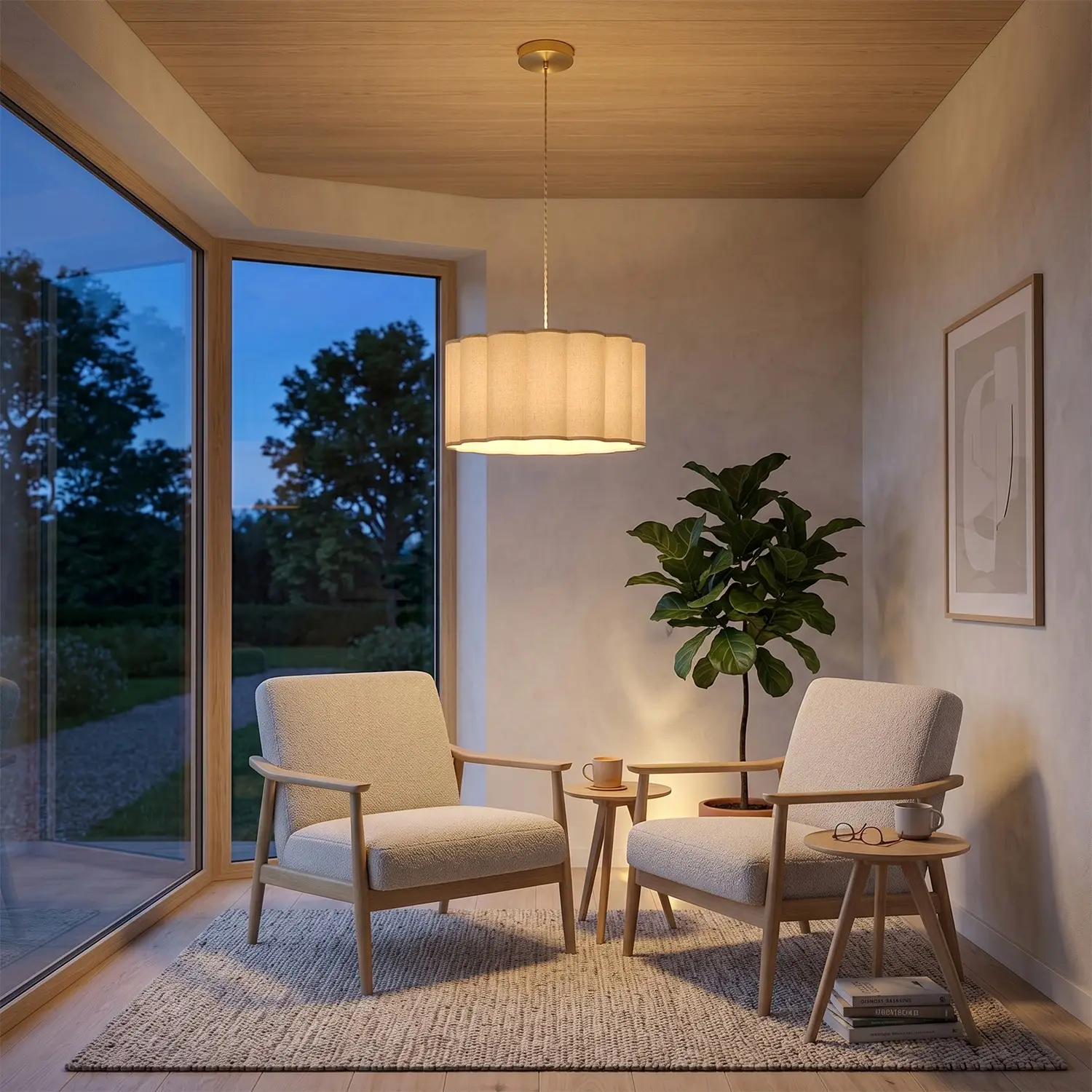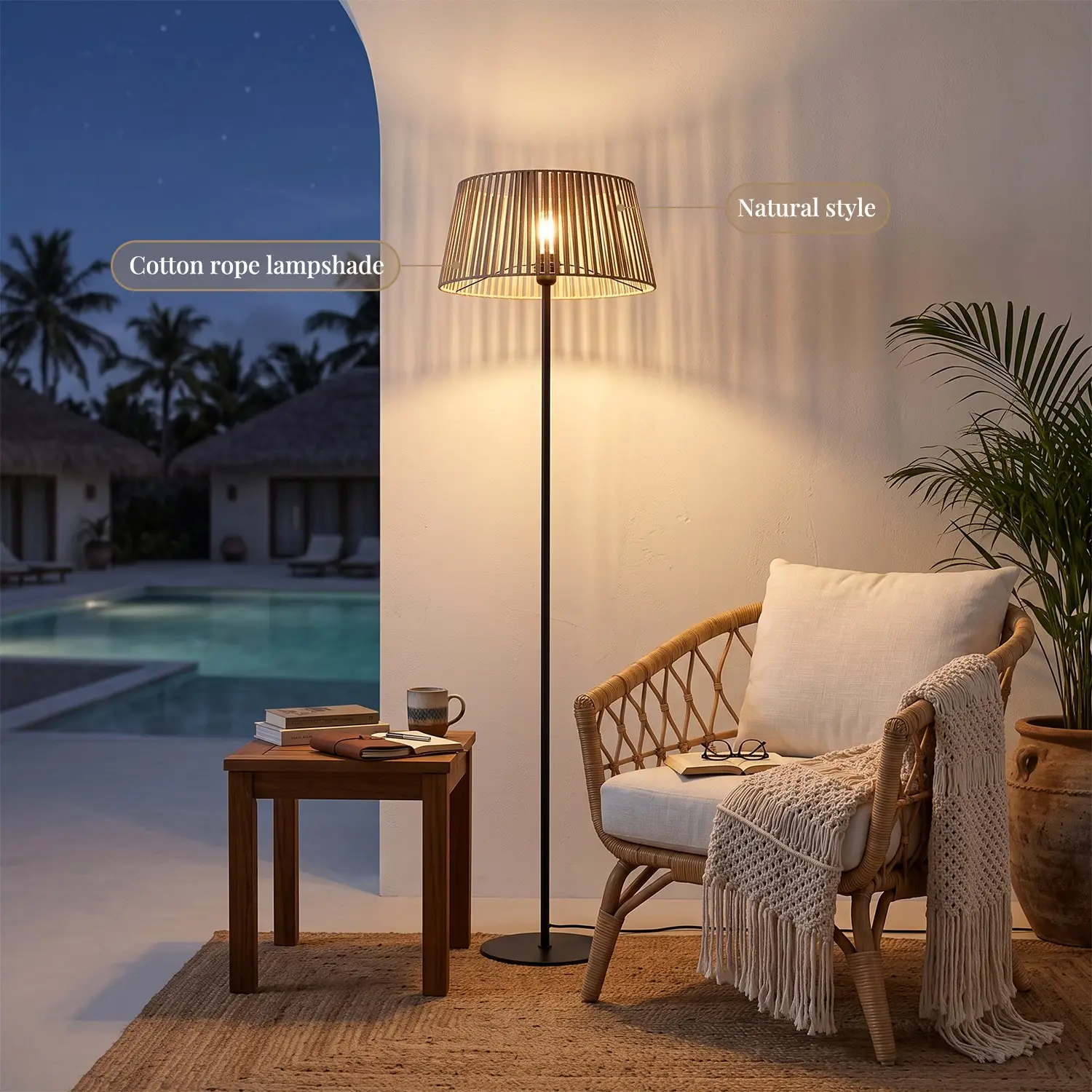
Custom architectural fabric lighting fixtures: Successful integration of large-scale fabric lighting requires balancing aesthetic diffusion with strict structural engineering and fire safety compliance. Procurement teams must prioritize modular frame rigidity, batch-controlled textile consistency, and verified international fire-rating certifications to ensure long-term performance in high-traffic commercial environments.
1. The Engineering Challenge: Balancing Aesthetics with Integrity
Large-scale architectural lighting requires a shift from decorative thinking to structural engineering. In our production line, we frequently observe that the primary point of failure for massive fabric installations is not the fabric itself, but the internal framing's inability to maintain tension over time. A common pitfall in Fabric Pendant Lights is the sagging caused by improper frame reinforcement, which compromises both the visual symmetry and the integrity of the light distribution.
2. Material Science: Selecting Diffusion Textiles
Choosing a textile is about balancing Light Transmission (LT%) with durability. For commercial projects, we mandate technical data sheets confirming the LT% to ensure that the light output meets lumen requirements without creating hot spots. For instance, our Floor Lamp model JF30395-A demonstrates how premium textile selection can diffuse harsh LED glare into a soft, professional ambiance. When evaluating options, look for textiles that maintain a stable LT% even under prolonged UV exposure, which is critical for long-term uniformity.
3. Structural Modularity: Installation for Large Projects
For installations exceeding 2 meters in diameter, modular frames are essential. Using CNC-cut internal ribbing, we achieve structural rigidity that resists twisting during shipping and installation. Verifying the IP/IK ratings for these frames is non-negotiable; we utilize frames tested to IK08 impact resistance to ensure safety in public infrastructure projects. This systematic approach, as detailed in our guide on Selecting High Performance Fabric Lamps, allows for predictable results on-site.
4. The Role of QC in Volume Manufacturing
In large-scale production, batch inconsistency is the greatest risk to project aesthetic continuity. We utilize rigorous dye-lot protocols to ensure that every fabric panel matches in color temperature. During our CNC pattern cutting process, automated tension control is applied to eliminate wrinkles. It is this level of detail that separates high-end architectural fixtures from generic wholesale alternatives.
5. Compliance and Safety: NFPA 701 and ASTM E84
Compliance is the cornerstone of commercial project approval. Any fabric used in public spaces must meet stringent international fire safety standards. We provide third-party documentation for NFPA 701 (standard methods of fire tests for flame propagation of textiles) and ASTM E84 (surface burning characteristics). Always require these specific test reports rather than accepting claims of universal fireproofing.
6. Thermal Management and LED Lifespan
The fabric envelope acts as a thermal trap if not properly engineered. Our internal testing protocols measure thermal dissipation to protect LED life. As referenced in our technical specs, components like those in model JM30364 require adequate airflow within the enclosure to ensure the longevity of the light source. Proper ventilation design within the frame ensures the fixture achieves its rated lifespan.
7. Evaluating OEM/ODM Manufacturing Capabilities
| Criteria | High-Performance OEM Requirement |
|---|---|
| Fire Safety | Certified NFPA 701/ASTM E84 documentation |
| Frame Rigidity | CNC-cut modular steel or aluminum internal frames |
| Batch Control | Strict dye-lot tracking and automated fabric tensioning |
| Thermal Control | In-house LED heat dissipation testing reports |
Streamline Your Sourcing Process
Request our latest technical specification package and engineering consultation to ensure your next large-scale project meets all safety and performance benchmarks.
Request Engineering ConsultationFrequently Asked Questions
Q: What is the importance of NFPA 701 compliance for fabric lighting?
A: NFPA 701 is a critical fire safety standard that measures the flame propagation of textiles. It ensures that in the event of a fire, the fabric used on your lighting fixture will not contribute to the rapid spread of flames, which is a mandatory requirement for public and commercial spaces.
Q: How do you ensure color consistency across large, multi-module fabric fixtures?
A: We implement strict batch-control protocols where all fabric rolls for a single project are sourced from the same dye lot. This prevents color temperature shifts, ensuring visual uniformity even across massive, multi-fixture installations.
Q: Can custom fabric fixtures be installed in high-traffic environments?
A: Yes, provided the internal frame is engineered for the application. We use CNC-machined modular frameworks with IK08-rated structural support, which provides the necessary rigidity to withstand vibrations and environmental stressors typical of high-traffic areas.
Q: What is the typical failure mode for fabric light fixtures?
A: The most common failure modes are fabric sagging due to tension loss over time and LED overheating due to inadequate thermal management. We mitigate this through professional tensioning systems and calculated heat-sink designs within the fabric envelope.
Q: How should procurement teams verify factory capabilities?
A: Procurement teams should always request verified testing reports (such as NFPA 701 or ASTM E84), technical data sheets for light transmission, and clear evidence of structural framing methods. Relying on these data points ensures you are partnering with a manufacturer capable of meeting professional engineering standards.