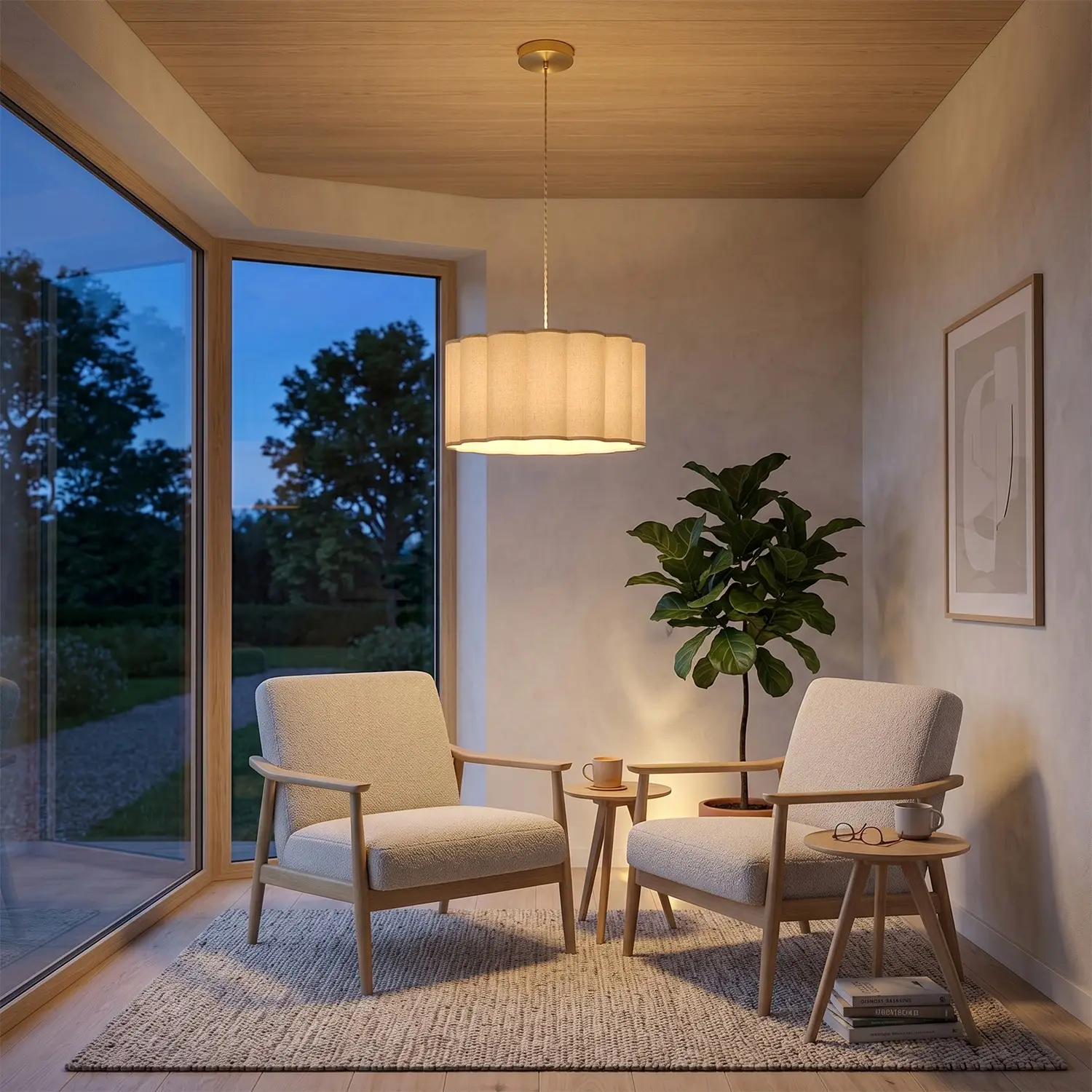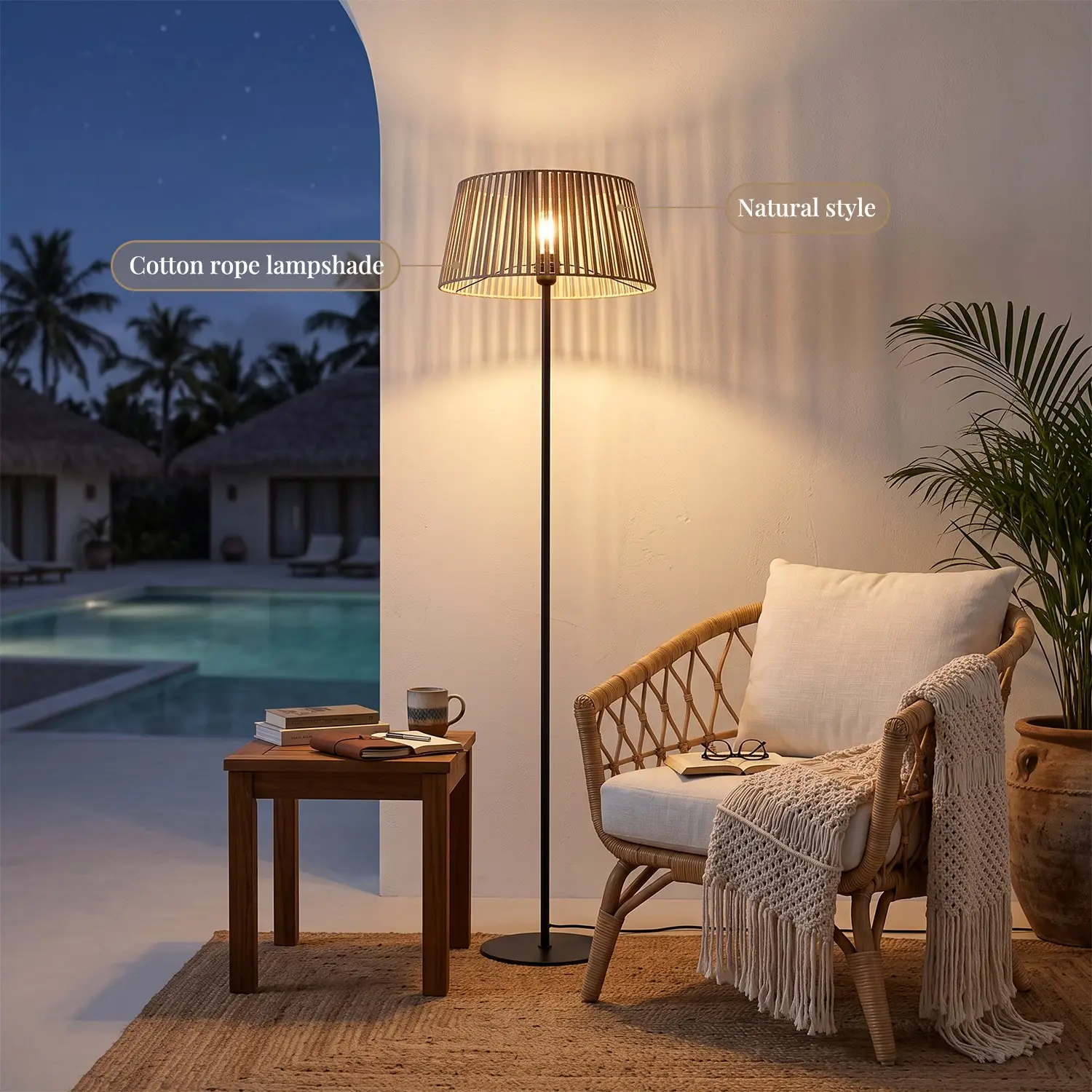
Bespoke fabric lighting engineering for hospitality: Successfully integrating custom textile luminaires requires balancing aesthetic design with mechanical precision. Key considerations include maintaining tension-retention during transit, ensuring uniform light diffusion through weave density calculations, and guaranteeing rigorous compliance with NFPA 701 fire-retardancy and UL 1598 safety standards for commercial environments.
The Hospitality Lighting Dilemma: Aesthetics vs. Engineering
For procurement managers in luxury hospitality, the challenge lies in selecting Fabric Pendant Lights that maintain a premium visual impact without compromising the mechanical realities of a large-scale installation. While aesthetics drive the design, the long-term success of an interior fit-out hinges on structural integrity, thermal management of internal components, and, most importantly, fire safety. Bridging this gap requires deep collaboration with manufacturers who prioritize technical specifications alongside design.
Mastering Light Diffusion: Calculating Weave Density and LED Module Compatibility
Light diffusion is a function of material physics. Our production line focuses on matching fabric GSM (grams per square meter) and weave density with specific LED color temperatures. Improper pairing leads to hotspotting or excessive lumen loss. By analyzing the light transmission coefficient of our textiles, we ensure that an E27 holder, such as the one used in our Engineering Fabric Technical Sourcing Lamp (Model JM30364), delivers uniform output. When specifying, we require data on the desired lumen output at the fixture face, as higher weave densities naturally attenuate light intensity. Our QC process involves testing lumen output against varying textile grades to provide precise illumination mapping.
Structural Integrity in Transit: Our Tension-Retention Manufacturing Process
Large-scale fabric luminaires are prone to deformation during shipping. In our factory, we employ a proprietary tension-retention fabrication process. By utilizing internal metal skeletons—similar to the rigid structural framework found in our Glass Hanging Lights (Model JM30351-5)—we anchor the fabric at micro-intervals. This ensures the geometric silhouette remains intact from the assembly line to the hotel lobby ceiling, eliminating the need for on-site manual adjustment.
Regulatory Compliance: Navigating UL 1598 and NFPA 701 for Commercial Projects
Safety is the primary constraint in public spaces. We ensure all custom textile luminaires meet UL 1598 standards for luminaire safety. Furthermore, our fabrics undergo rigorous NFPA 701 testing to confirm flame propagation resistance. For projects requiring high-traffic durability, we provide test reports documenting combustion rates, ensuring procurement managers can verify compliance with local fire marshal requirements before installation begins.
Advanced Integration: Dimming Drivers and Color Temperature Consistency
Color consistency is validated through MacAdam Ellipse standards to ensure that multi-pendant installations appear uniform to the human eye. We do not support universal dimming protocols; instead, we engineer drivers for specific DALI or 0-10V systems to prevent flicker. For maintenance, we recommend an anti-static dusting protocol using a non-abrasive, dry microfiber tool, as the use of harsh liquid cleaners can degrade the fire-retardant coating applied during manufacturing.
Case Study: Maintaining Shape and Performance in High-Traffic Lobby Installations
In a recent luxury boutique project, we deployed custom 1.5-meter fabric pendants. By integrating a reinforced, non-corrosive internal frame, we achieved 0% geometric deviation after a 2,000km transit. Chromaticity consistency checks confirmed a standard deviation of less than 3 SDCM (Standard Deviation of Color Matching). These results underscore the necessity of factory-side engineering for project success.
| Feature | Standard Retail Fabric | Our Commercial Grade |
|---|---|---|
| Fire Resistance | Untreated/Standard | NFPA 701 Certified |
| Frame Material | Thin Wire | Reinforced Alloy |
| Color Matching | Visual Only | 3-Step MacAdam |
Request Technical Spec Sheet & Fire-Safety Documentation
Ensure your next hospitality project meets all regulatory and performance benchmarks. Get our full library of test results and technical data.
Download Spec SheetHow to Specify Custom Fabric Lighting for Your Next Hotel Project
Specify fabric lighting by detailing the environment, lumen requirements, and control protocols early in the design phase. Leverage our Engineering Large Scale Fabric Lamp expertise to determine the ideal material weight and frame structure. Contact our technical team for an audit of your lighting schedule to confirm compatibility between your dimming systems and our high-performance drivers.
Frequently Asked Questions
Q: What are the flame retardancy standards for fabric light fixtures in commercial hospitality projects?
A: Commercial hospitality projects must adhere to NFPA 701, which measures the flame propagation of textiles. We provide certified testing documentation for all high-traffic grades used in our luminaires.
Q: How do custom fabric diffusers impact lumen output and color rendering index (CRI) consistency?
A: Weave density directly correlates to light attenuation. We calibrate our LED modules to compensate for the specific transmission loss of the selected textile, ensuring the final CRI remains within target specifications.
Q: How should fabric fixtures be specified for moisture-rich boutique hotel bathroom environments?
A: For moisture-prone areas, we specify moisture-wicking textile treatments and IP-rated internal components to prevent oxidation and mildew, ensuring long-term fixture health.
Q: What structural mounting requirements are necessary for large-format custom fabric pendants?
A: Large-format pendants require reinforced junction boxes and weight-distributed mounting hardware. We provide shop drawings for each custom unit detailing the exact load-bearing requirements for ceiling anchors.
Q: Can fabric fixtures be cleaned or are they maintenance-free?
A: No textile fixture is entirely maintenance-free. We mandate periodic anti-static dusting for public spaces to maintain material appearance and safety. Use of liquid chemicals is strictly prohibited to preserve the flame-retardant finish.
Partner With Our Engineering Team
Discuss your project requirements for custom fabric luminaires and receive a detailed technical evaluation.
Consult an Engineer