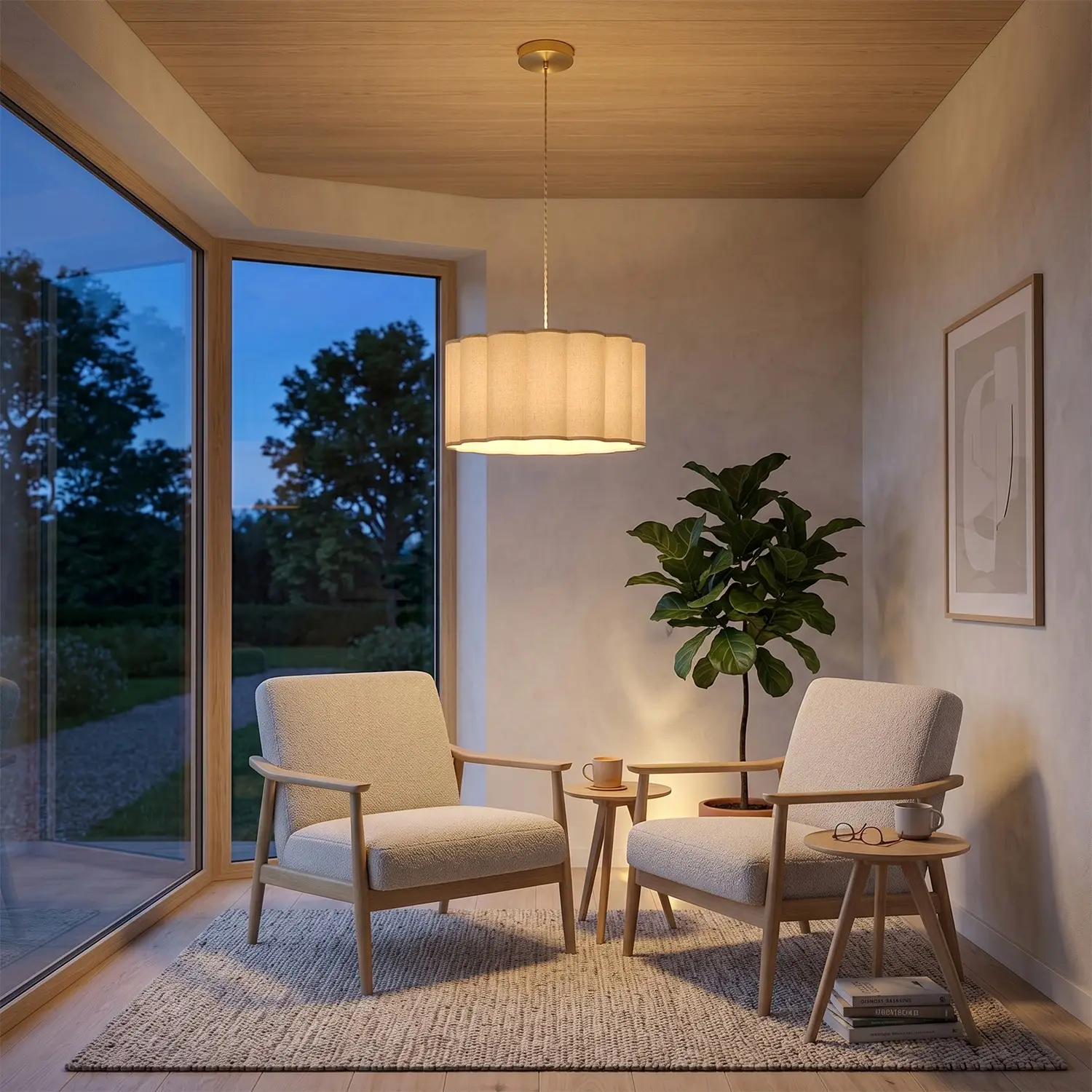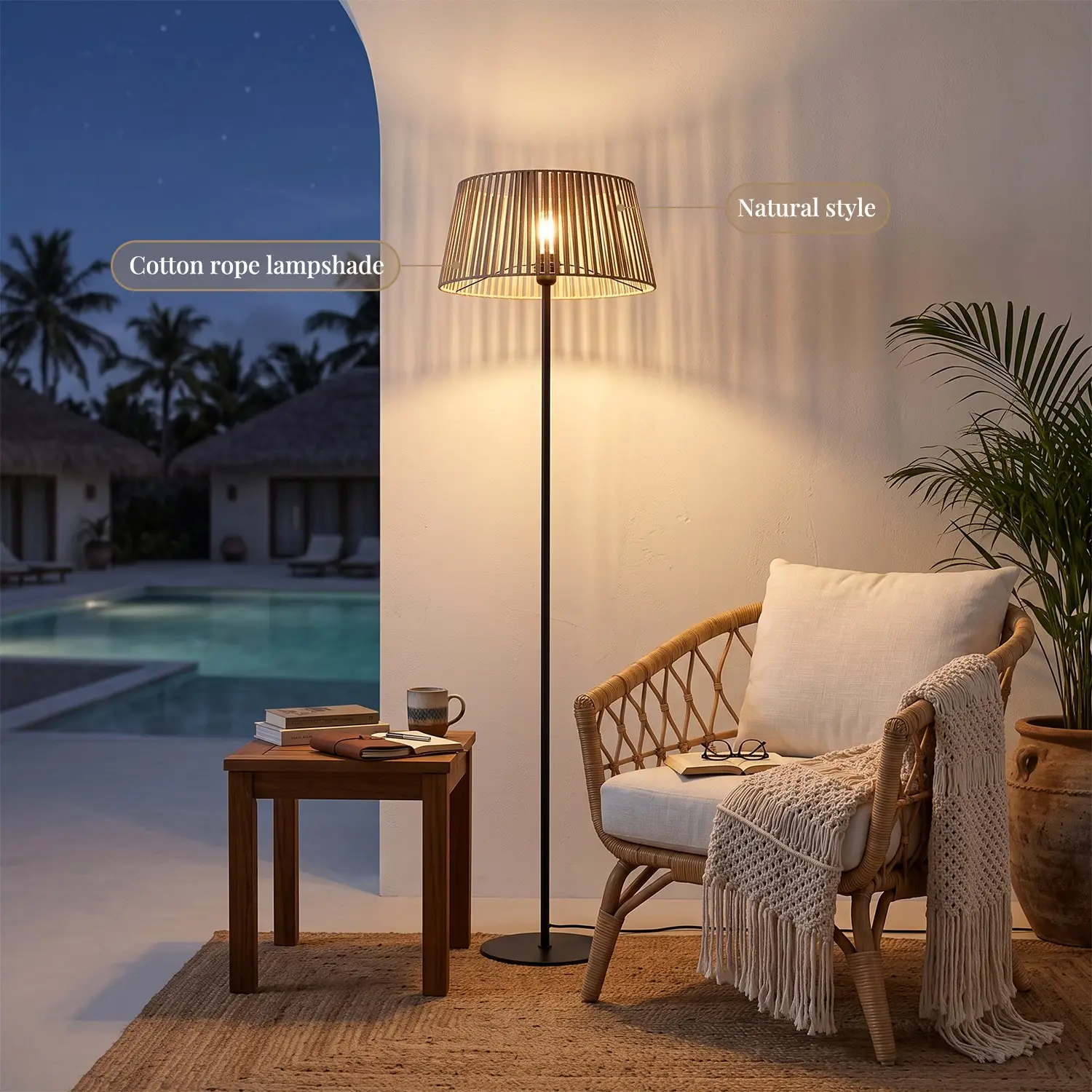
Selecting commercial rope pendant lights: Successful integration into high-occupancy venues requires bypassing residential-grade fixtures in favor of engineered, steel-core suspension systems that meet rigorous safety codes. Procurement managers must prioritize ASTM fire-safety compliance and pull-test documentation to ensure long-term liability protection and structural integrity.
The Engineering vs. Aesthetic Gap
In high-occupancy hospitality projects, the desire for organic textures often clashes with strict municipal building codes. Residential Hemp Rope Light fixtures are frequently unsuitable for commercial use because they rely on the decorative material itself to support the weight of the hardware. In our manufacturing experience, relying on natural fibers for suspension without redundant support leads to premature failure, sagging, and increased liability in public spaces.
Material Integrity and Load-Bearing
True industrial-grade fixtures utilize a factory-integrated internal steel-core suspension cable. Unlike residential decorative ropes, this steel core is engineered to handle the full static load, ensuring that the rope casing remains purely aesthetic. When reviewing specifications for Pendant Lights, check for specific load-bearing certifications. For example, our manufacturing protocols include batch-consistent pull-testing where every hanging mechanism is tested to exceed 50kg per unit, ensuring the fixture remains stable even under high-ceiling thermal stress.
Safety Compliance and ASTM Standards
Commercial lighting requires rigorous adherence to fire safety. Natural fibers must undergo a certified non-toxic, fire-retardant chemical treatment process. We strictly adhere to ASTM E84 standards to evaluate surface burning characteristics. Referencing our Fire Retardant Standards Fabric Pendant documentation is essential for MEP contractors seeking approval from local fire marshals.
Long-Term Performance in HVAC-Controlled Zones
Natural fibers react to humidity fluctuations in commercial HVAC systems, which can lead to loosening of rope tension. Our QC team implements a humidity stress test where materials are cycled through 45% to 85% relative humidity for 500 hours to ensure they do not lose structural rigidity. While our fixtures such as the Glass Hanging Lights utilize stable metal-to-glass interfaces, organic rope fixtures require scheduled dust maintenance protocols—typically bi-annual cleaning—to prevent accumulation that can mask fire-retardant degradation.
Smart Building Integration
Standard E27 bulbs are not inherently compatible with modern DALI or 0-10V control systems. Commercial-grade rope fixtures must integrate professional-grade LED drivers within the canopy to allow for centralized dimming. When sourcing, always verify the compatibility of the driver with the venue's existing smart building architecture to avoid flicker or hum issues common in improperly integrated systems.
| Feature | Residential Standard | Commercial Specification |
|---|---|---|
| Suspension | Self-supporting rope | Internal steel-core cable |
| Fire Safety | Untreated | ASTM E84 compliant treatment |
| Dimming | Phase-cut only | DALI / 0-10V compatible driver |
Need Commercial Documentation?
Request our latest spec sheets and independent lab testing results to support your project bidding.
Download Spec SheetProcurement Checklist
Before placing volume orders, ensure your manufacturer provides: 1) Pull-test reports (kgs/lbs weight capacity), 2) Valid CE certification, 3) Proof of fire-retardant batch testing, and 4) DALI/0-10V dimming integration data. For example, fixtures like the JM30356 (Ø30 × H100 CM) require specific mounting hardware confirmation to match ceiling height requirements for your site.
Testing Results and Case Study
In recent audits, our treated fibers demonstrated a 30% reduction in fraying over a 12-month period compared to untreated samples in high-traffic zones. By implementing the internal steel-core support (as seen in our broader range of Fabric Pendant Lights), we ensure that the aesthetic housing is not under tensile stress. Our commitment to International Electrotechnical Commission standards for luminaires provides the reliability needed for long-term commercial deployments.
Frequently Asked Questions
Q: How often do commercial rope lights require maintenance?
A: We recommend a bi-annual inspection and light vacuum cleaning to manage dust accumulation on organic materials, which is vital for maintaining the effectiveness of fire-retardant coatings.
Q: Does the rope housing carry the weight of the light fixture?
A: No. Commercial-grade rope lights must use an internal steel-core suspension cable to carry the weight; the rope serves only as an aesthetic cover.
Q: Can rope fixtures be integrated into DALI lighting systems?
A: Yes, provided that the fixture is equipped with a compatible professional driver. Standard E27 bulb sockets are not enough; you must specify DALI or 0-10V drivers during the procurement phase.
Q: What fire safety standards apply to these pendants?
A: We adhere to ASTM E84 testing protocols for textile and organic materials to ensure they meet commercial flame-spread safety requirements.
Q: Are these fixtures suitable for humid environments?
A: Yes, provided they are treated and tested. We subject our materials to high-humidity stress testing to ensure the fiber does not degrade or sag in HVAC-controlled commercial spaces.