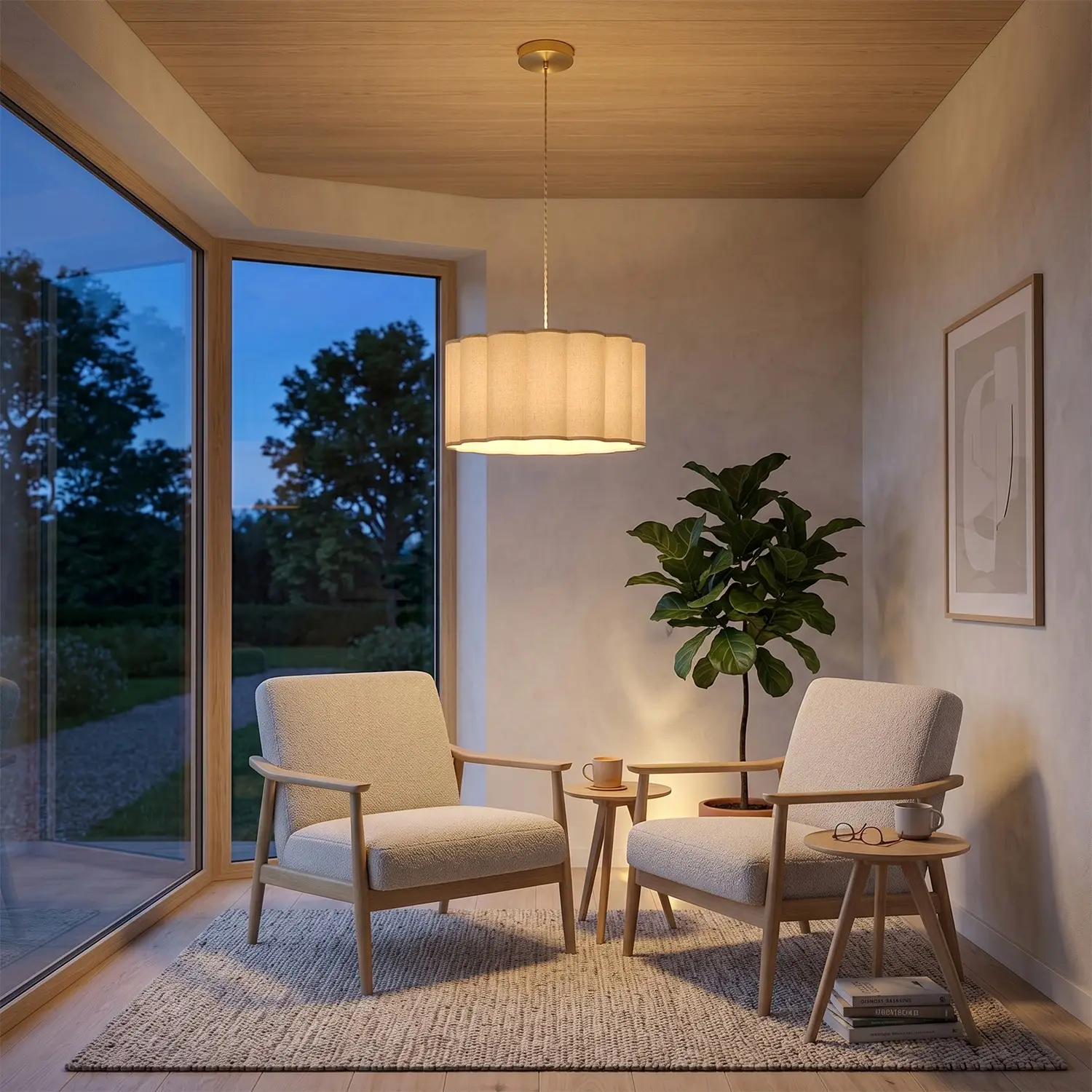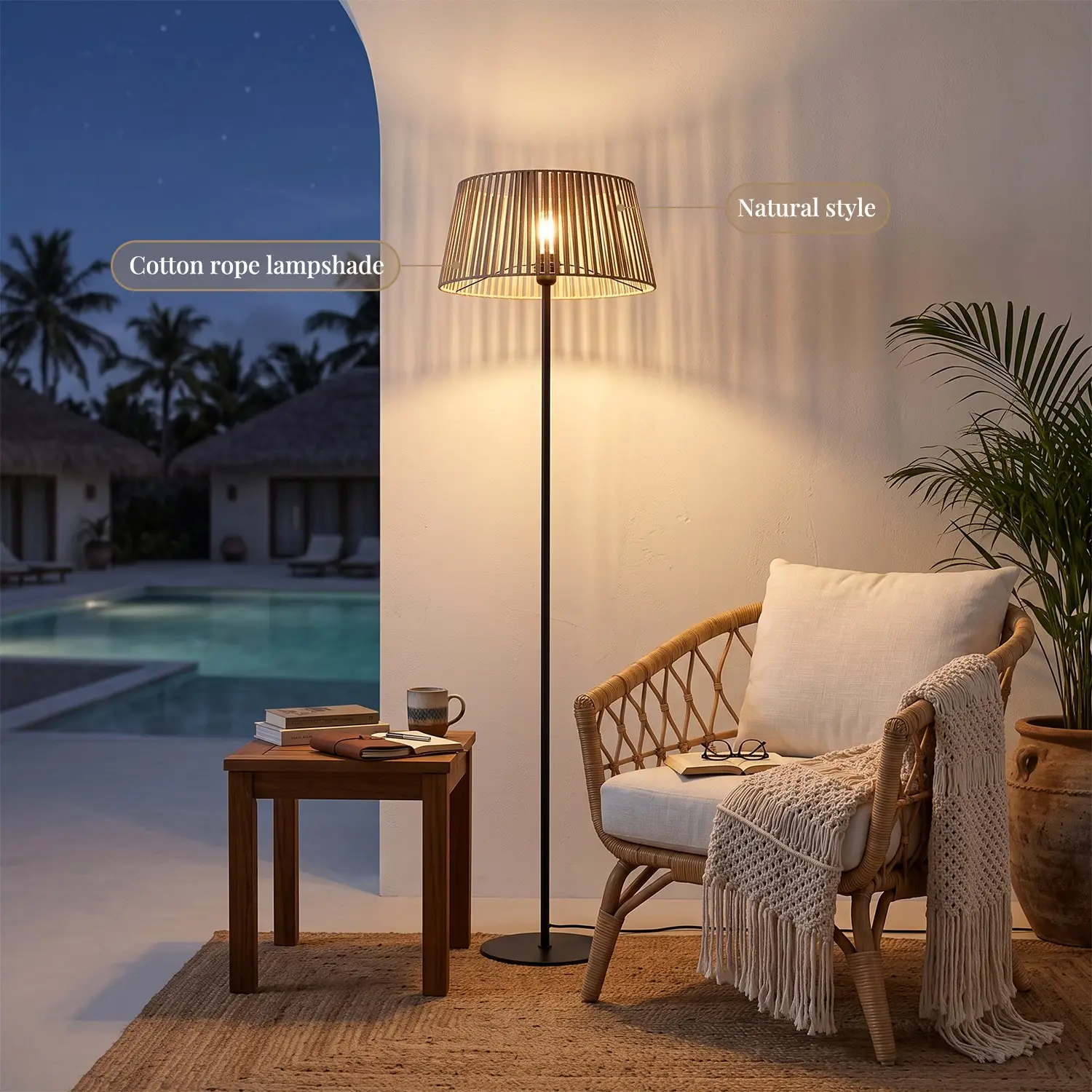
Commercial rope pendant light specifications: Sourcing compliant, aesthetic lighting for high-traffic hospitality spaces requires balancing organic design with rigorous fire safety and structural integrity. This guide details how to reconcile designer trends with mandatory NFPA 701 and UL standards for long-term commercial durability.
The Hospitality Procurement Dilemma: Aesthetics vs. Safety Regulations
For procurement managers, the request for natural fibers and organic textures in hotel lobbies often conflicts with strict building codes. While a Hemp Rope Light adds immediate tactile warmth, natural fibers are inherently combustible. In our manufacturing experience, we have found that relying on raw materials without secondary treatments leads to immediate rejection during local fire marshal inspections. Navigating Fire Retardant Standards Fabric Pendant requires a documented chain of custody from material sourcing to final assembly.
Engineering for Scale: Structural Rope vs. Decorative Weave
A critical engineering failure in commercial lighting is the misapplication of residential rigging. Decorative rope is often non-load bearing and prone to stretching over time, which can shift the weight distribution of a heavy fixture. We utilize an internal structural rigging design that separates the load-bearing suspension cable from the decorative rope wrapping. This ensures that the aesthetic weave remains taut, even in high-vibration hospitality environments. Similar to the construction found in our Glass Hanging Lights, we prioritize the integrity of the suspension system to handle the cumulative weight of the materials used.
Material Science: Fire Retardant Compliance (ASTM E84/NFPA 701) in Natural Fibers
Natural fibers are not naturally fire-resistant. Every project we fulfill undergoes a proprietary in-house fire-retardant (FR) treatment process. We certify our materials against NFPA 701 (standard methods of fire tests for flame propagation of textiles and films) and ASTM E84 (standard test method for surface burning characteristics of building materials). By chemically treating the fibers before weaving, we ensure the substance permeates the material depth, preventing flashover. We provide the full test certification for every bulk order to satisfy local jurisdiction compliance.
Thermal Management: Protecting LED Drivers inside Organic Shades
Embedding LEDs inside organic materials poses a significant fire hazard due to heat trapped within dense rope textures. During our thermal analysis testing, we discovered that improperly vented enclosures could reach internal temperatures exceeding 85 degrees Celsius, degrading LED drivers within months. For instance, in our Pendant Lights design phase, we enforce a minimum clearance of 25mm between the LED housing and the rope shade. Our dedicated photometric lab confirms that heat dissipation maintains ambient driver temperatures under 55 degrees Celsius, extending the lifespan of the fixture to over 30,000 hours.
Operational Maintenance: Cleaning Protocols for Hospitality Environments
Natural rope textures are notorious for dust accumulation. To maintain aesthetic longevity in commercial settings, we recommend specific maintenance protocols. In environments such as high-end lobbies, fixtures should be vacuumed with a soft-brush attachment on a quarterly basis. For marine-adjacent environments, we utilize specific anti-mold treatments during production that are verified not to compromise the FR-treatment. As seen in the design of our Kitchen Island Glass Pendant Light, accessibility for cleaning is a core component of our product engineering.
Case Study: Scaling Custom Production for Large-Scale Rollouts
We recently supplied 450 custom units for a luxury hotel chain project in a high-traffic lobby rollout. By utilizing our standardized Fabric Pendant Lights chassis but customizing the exterior wrapping with FR-treated custom rope, we met the 12-week installation deadline. QC checkpoints were performed at three stages: raw fiber FR-batch testing, structural cable load-testing (tested to 5x the final fixture weight), and final photometric uniformity verification.
| Specification Category | Standard Commercial Rope Fixture | Our Certified Hospitality Fixture |
|---|---|---|
| Fire Safety Compliance | Untested or residential only | NFPA 701 / ASTM E84 Verified |
| Load Bearing Design | Rope-only suspension | Steel core rigging (up to 50kg) |
| Thermal Management | Encapsulated driver housing | Vented heat-sink assembly |
Download Technical Specification Pack
Access our full library of fire-safety documentation and photometric test reports for your next hospitality project.
Request DocumentationPartnering with Manufacturers: What to Request in Your RFQ
When drafting an RFQ for hospitality lighting, mandate that all natural material fixtures include a Material Safety Data Sheet (MSDS) for the FR-coating used. Ensure your vendor provides IEC 60598 compliance documentation for electrical safety. Our factory utilizes components like those in model JM30364, which feature standardized E27 holders with AC 110-240V compatibility, simplifying global rollout maintenance.
Frequently Asked Questions
Q: How does natural fiber treatment affect fire safety compliance in commercial hospitality spaces?
A: Raw natural fibers do not meet commercial fire codes. We apply a chemical fire-retardant treatment verified by NFPA 701 testing to ensure the material resists flame propagation, which is essential for hotel and public space compliance.
Q: What are the load-bearing requirements for custom pendant fixtures in high-traffic hotel lobbies?
A: For public safety, every fixture should feature an independent steel-core suspension system that isolates the structural weight from the decorative organic weave, ensuring the fixture does not sag or fail under stress.
Q: Can rope pendant designs be customized for specific IP-rated damp environments?
A: Yes, for coastal resorts, we apply specialized anti-mold and moisture-wicking treatments to natural fibers, though you must specify the desired IP-rating during the design phase to ensure appropriate electrical housing seals.
Q: What is the typical lead time for bespoke lighting fabrication for hotel chains?
A: For large-scale rollouts, lead times typically average 10–14 weeks, depending on the volume of custom fiber treatments and structural rigging tests required for your specific design.
Q: How do you ensure consistent color temperature across large-scale lighting installations?
A: We bin our LEDs to ensure strict color consistency within 3-step MacAdam ellipses, and our photometric lab tests each production batch to guarantee uniform Kelvin output across all units in your installation.