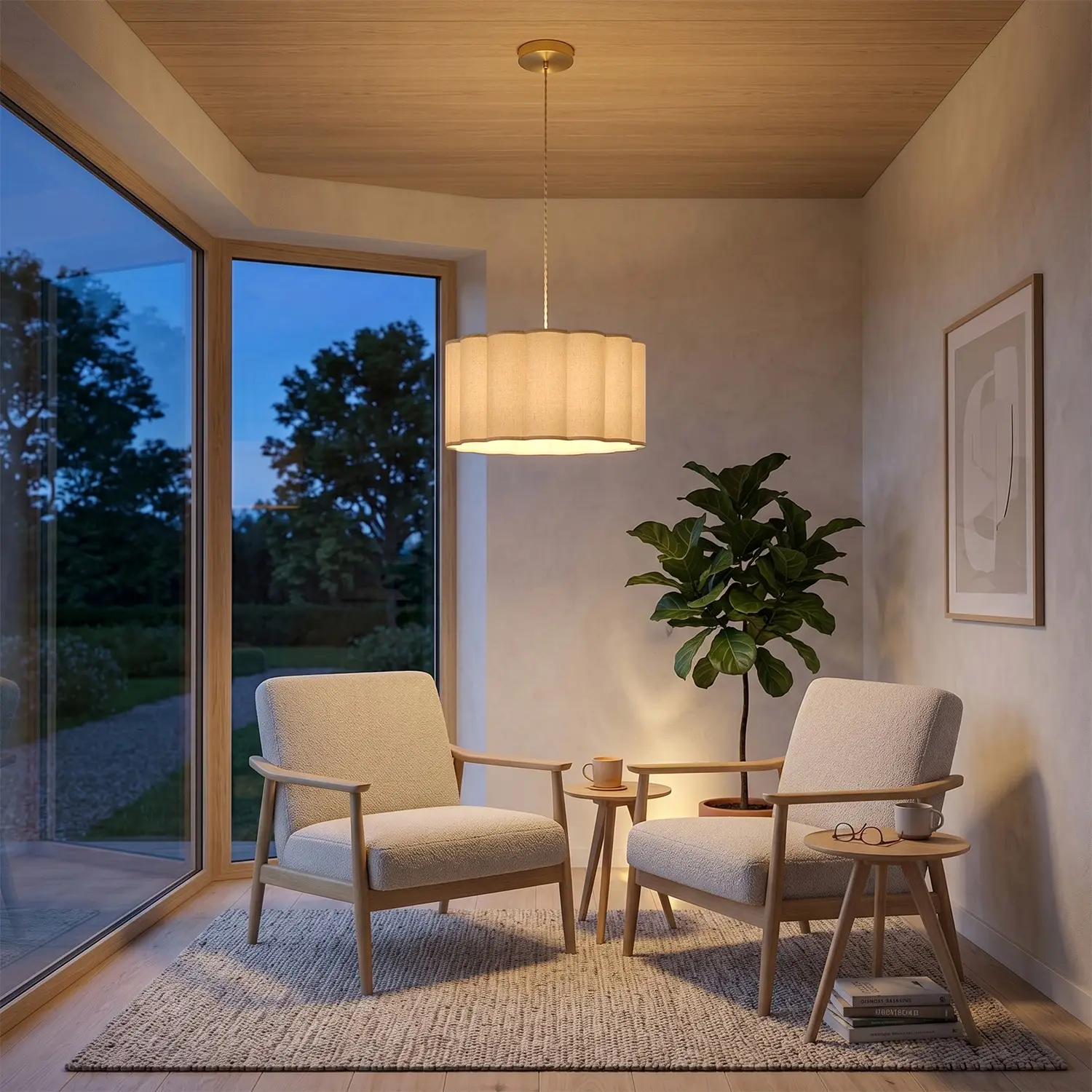
Acoustic pendant lighting performance specifications: Balancing aesthetic design with functional acoustics requires adherence to rigorous testing protocols like ASTM C423 for sound absorption and UL 1598 for thermal safety. Properly specified acoustic fixtures reduce reverberation in open-plan offices while maintaining long-term LED reliability through proprietary thermal-bridge chassis designs.
The Acoustic-Lighting Gap: Why Aesthetics Are Failing Open-Plan Offices
Modern commercial architecture often relies on high-ceiling, open-plan layouts that prioritize natural light and collaborative flow. However, these spaces are prone to excessive reverberation. Traditional Fabric Pendant Lights often serve purely decorative roles, failing to address the acoustic fatigue reported by building occupants. Integrating sound-absorbing materials into Pendant Lights provides a dual-purpose solution, yet many off-the-shelf fixtures lack the verified technical data required for professional specification. Architects must look beyond form to evaluate material density and thermal management to ensure fixtures provide measurable acoustic comfort.
Engineering Acoustic Comfort: Porosity vs. Thickness and NRC Ratings
Sound absorption performance is primarily governed by the porosity, density, and thickness of the acoustic felt. The Noise Reduction Coefficient (NRC) provides a single-number index ranging from 0 to 1, representing the percentage of sound absorbed. In our production line, we utilize a cross-laminated felt fiber structure that achieves an NRC rating of 0.85+. As detailed in ASTM C423 reports, achieving high absorption in the 250Hz to 4kHz frequency range requires specific material thickness. We have found that increasing felt thickness to 12mm—without increasing structural weight—optimizes the damping of human-range speech frequencies, effectively curbing the "cocktail party effect" in corporate offices.
The Thermal Dilemma: Sustaining LED Performance in Enclosed Acoustic Housings
A frequent failure point in acoustic fixtures is the encapsulation of heat-generating LED components within insulating fiber housings. Standard LED junction temperatures must remain within prescribed limits to ensure lifespan and color consistency. To resolve this, we have developed a proprietary thermal-bridge chassis. During factory testing per UL 1598 standards, our thermal-bridge design demonstrated a 15-degree Celsius reduction in operating temperature compared to non-vented enclosures, ensuring long-term LED junction stability. This manufacturing process allows the Fabric Pendant Light to maintain both its acoustic integrity and its photometric performance over years of continuous operation.
Compliance as a Priority: Navigating ASTM C423 and Fire Safety Standards
For commercial project managers, dual certification is non-negotiable. Our acoustic fixtures utilize Class A fire-rated felt, tested according to ASTM E84 Surface Burning Characteristics. This certification ensures the material exhibits minimal flame spread and smoke development. By pairing these safety ratings with UL-listed electrical drivers, we ensure that every unit meets the stringent life-safety requirements found in modern building codes, providing the necessary documentation for architectural sign-offs.
Scaling for Impact: Fixture Volume and Array Placement in Large Spaces
Specifying the quantity of fixtures is as critical as the fixture performance itself. In large-volume environments, we recommend an array pattern that covers 15% to 20% of the ceiling surface area to achieve significant reverberation control. This supplementary approach does not replace structural wall panels but provides a high-impact, distributed solution that breaks up standing waves near workstations. Properly calculated spacing ensures the light output remains uniform while maximizing the sound-absorbing surface area exposed to the workspace.
| Feature | Standard Decorative Fixture | Engineered Acoustic Fixture |
|---|---|---|
| NRC Rating | 0.05 - 0.10 (Negligible) | 0.85+ (Certified) |
| Fire Rating | Standard Flammability | ASTM E84 Class A Certified |
| Thermal Management | Enclosed (Risk of Overheat) | Thermal-Bridge Chassis (UL 1598) |
Need Technical Specs for Your Project?
Download our full acoustic performance and thermal data sheets for your next commercial bid.
Download Spec SheetCase Study: Measuring Ambient Noise Reduction in a Corporate HQ
In a recent 5,000 sq ft open-plan corporate HQ, we implemented an acoustic lighting array to address high-frequency noise complaints. Before installation, decibel mapping indicated a persistent 72dB ambient level during peak hours. Following the installation of 40 acoustic pendant units, post-occupancy testing showed an average reduction to 64dB. This 8dB decrease is perceived by the human ear as a roughly 40% reduction in sound intensity, validating the effectiveness of our Acoustic Fabric Pendant Engineering Light systems in high-ceiling environments.
Technical Checklist for Architects: Specifying Acoustic Lighting
When selecting acoustic fixtures for corporate procurement, ensure your documentation includes: (1) ASTM C423 test reports verifying the NRC across the required octave bands; (2) ASTM E84 test results for housing fire ratings; (3) UL 1598 documentation confirming thermal junction temperature limits; and (4) Evidence of a thermal-management strategy. These elements ensure that the chosen Fabric Pendant Light provides lasting value without compromising building safety.
Frequently Asked Questions
Q: Do acoustic pendant lights completely eliminate office noise?
A: No, these fixtures are intended for reverberation control and acoustic comfort, not total soundproofing. They serve as a supplementary solution to absorb sound reflections in large spaces.
Q: Why is thermal management crucial in felt-enclosed lights?
A: Acoustic felt is an excellent insulator. Without a proprietary thermal-bridge chassis, heat from LEDs can trap inside the housing, potentially causing premature driver failure or shortened LED lifespan.
Q: What is a good NRC rating for acoustic lighting?
A: An NRC of 0.85 or higher is considered high-performance for commercial architectural lighting, indicating the material absorbs 85% of sound energy hitting the surface.
Q: Are these fixtures fire safe?
A: Our units utilize materials tested to ASTM E84 standards, achieving a Class A fire rating, which is the standard requirement for most commercial occupancy permits.
Q: How does fabric thickness affect sound absorption?
A: Greater thickness (typically 9mm to 12mm) generally increases the absorption coefficient at lower frequencies, providing a broader range of sound mitigation across the 250Hz to 4kHz spectrum.
Optimize Your Next Project
Request our latest acoustic performance data and full lighting specifications.
Request a Quote