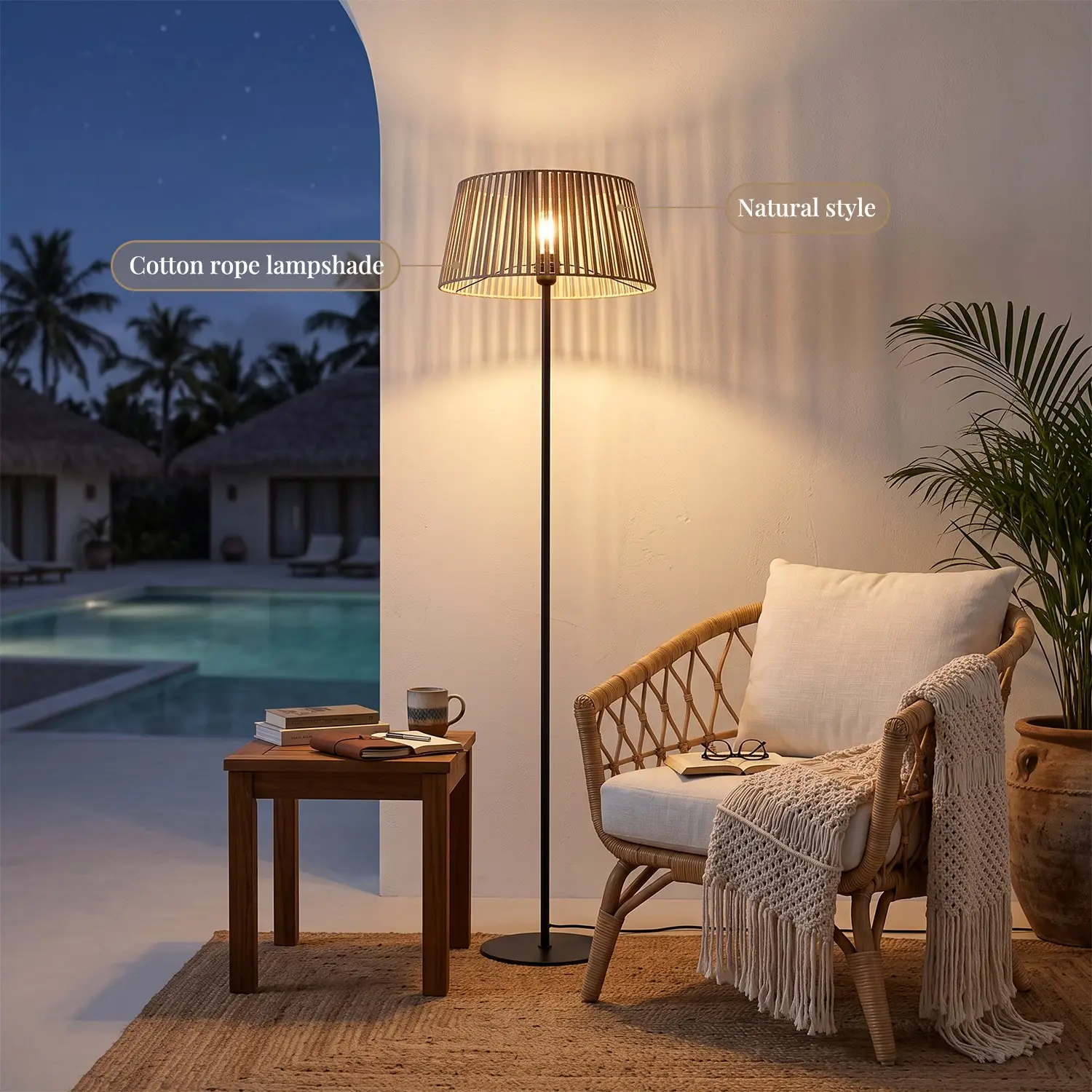
Commercial rope pendant light specifications: Specifying organic rope aesthetics for high-traffic commercial environments requires a synthesis of material science and rigorous structural testing. Procurement professionals must prioritize IEC 60598-1 certified fire-retardant fiber treatments, tension-tested suspension hardware, and integrated heat-dissipation engineering to ensure long-term safety and code compliance in permanent infrastructure.
The Engineering Challenge of Organic Aesthetics in Commercial Spaces
The transition from residential decorative lighting to commercial-grade infrastructure is defined by the move from static aesthetics to dynamic performance standards. In our production line, we encounter frequent design requests for the raw texture of natural fiber; however, consumer-grade fixtures are rarely suited for permanent high-ceiling commercial installations. Engineering a Hemp Rope Light for a hospitality project requires balancing the client's desire for an organic look with the realities of structural load and fire safety. We approach these projects by decoupling the decorative rope sleeve from the internal weight-bearing suspension cable, ensuring the rope itself remains a cosmetic finish rather than a structural component.
Material Science for Commercial Longevity
In high-end commercial projects, the choice of fiber dictates the life-cycle of the fixture. Jute and manila offer a superior aesthetic but require proprietary moisture-resistant treatment protocols to prevent environmental degradation in humid hospitality settings. During factory audits, we prioritize tensile strength analysis to categorize fiber performance:
- Manila/Jute: Requires flame-retardant coating and synthetic resin sealing to maintain integrity over five-plus years.
- Polypropylene: Offers the highest inherent moisture resistance, ideal for outdoor-adjacent covered dining or lobby spaces where ambient humidity fluctuations are high.
Safety Standards & Fire Ratings
Compliance with IEC 60598-1 is the bedrock of our manufacturing process. Decorative rope elements often act as heat traps if not properly engineered. Our fixtures feature integrated internal wire shielding that separates the electrical conductor from the flammable rope fiber. Furthermore, the housing design utilizes active heat-dissipation channels, preventing thermal degradation of the fiber and protecting the fixture from premature aging. For comprehensive insights into safety, consult our Fire Retardant Standards Fabric Pendant documentation.
Field-Adjustability and Scalability
Commercial high-ceiling environments frequently demand custom drop lengths. We utilize JM-series suspension hardware, which is factory-tested for field-adjustability without requiring specialized tools. Technical schematics confirm that the locking mechanism for these Pendant Lights maintains its torque setting even under the vibration of HVAC systems or heavy foot traffic, a critical requirement for long-drop installations in atrium spaces.
QC Protocols: Beyond Appearance
Quality control in a B2B setting moves beyond visual inspection. Our JM-series hardware undergoes mandatory pull-test certification, with random samples subjected to 500N of tension for 24 hours to ensure zero deformation. These protocols are essential for procurement managers who must verify that hardware exceeds the weight-to-support ratios of the fixtures.
Integrating Specialized Fixtures
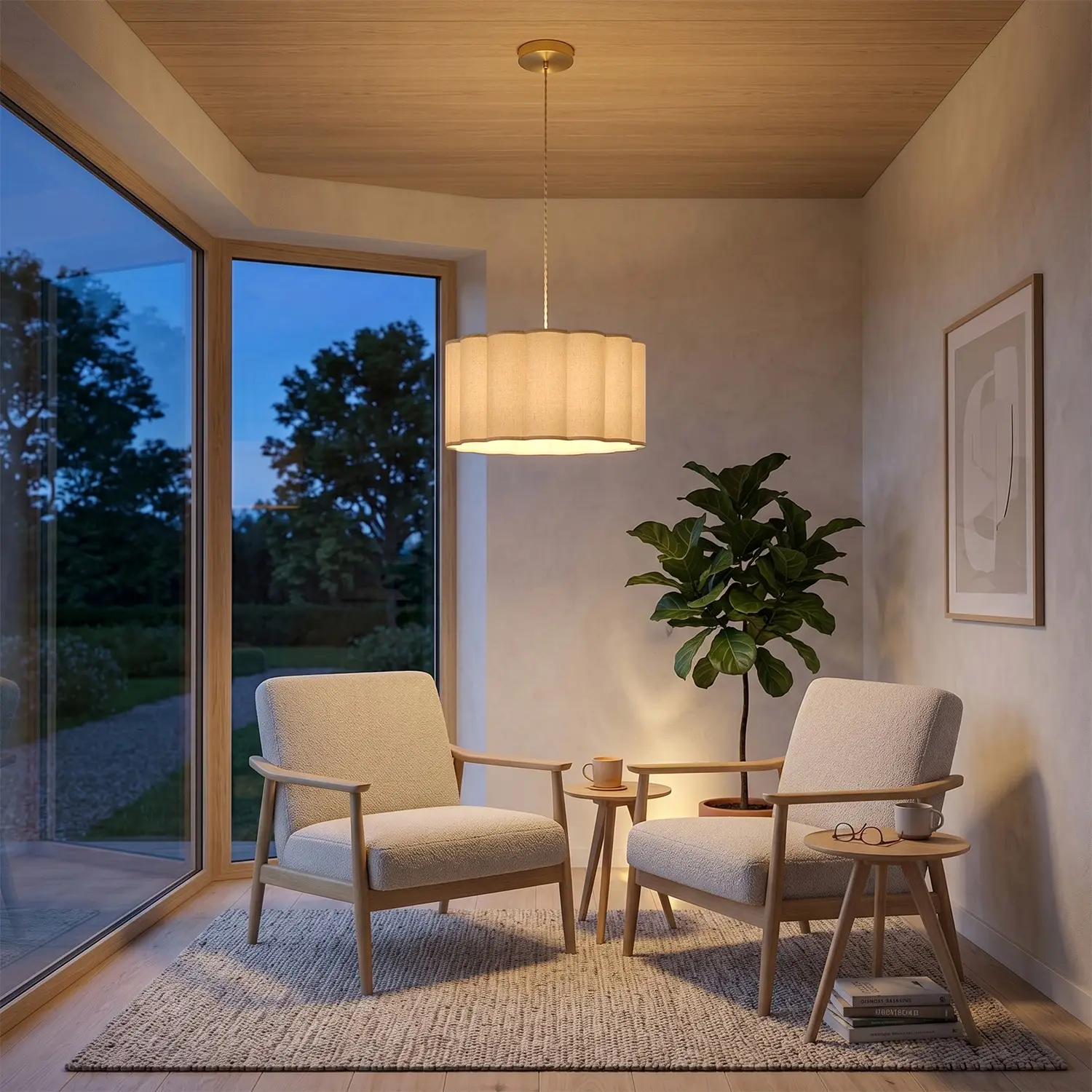
Our catalog demonstrates these principles through precision-engineered models. For example, our JM30356 (Modern Kitchen Glass Pendant Light) uses high-durability metal-to-glass coupling, while the JM30364 (Linen Pendant Light) showcases our ability to integrate fire-retardant fabric technologies into complex shapes. When designing for hospitality, the JM30351-5 (Luxury Glass Pendant Light) offers a blend of high-end aesthetics with industrial-strength mountings suitable for a 110cm drop profile.
| Model | Material | Primary Application |
|---|---|---|
| JM30356 | Metal + Glass | Kitchen Island / Dining |
| JM30351-5 | Metal + Glass | Luxury Lobby / High-Ceiling |
| JM30364 | Linen / Fabric | General Commercial/Retail |
Need Technical Specs for Your Project?
Request our full catalog or specific JM-series test certification files for your procurement approval process.
Request Project QuoteFrequently Asked Questions
Q: What are the load-bearing requirements for industrial-grade rope pendant fixtures?
A: Industrial-grade fixtures must exceed a safety factor of 4:1, where the suspension hardware is pull-tested against four times the dead-weight of the unit to ensure stability in commercial ceilings.
Q: How do natural fiber vs. synthetic rope materials perform in high-humidity commercial environments?
A: Natural fibers like jute require specialized moisture-resistant treatments to prevent mold and fiber degradation, whereas synthetic polypropylene is inherently resistant to humidity, making it better for high-traffic or semi-outdoor spaces.
Q: Are there specific fire safety codes or flame-retardant treatments required for rope lighting in hospitality spaces?
A: Yes, commercial installations should adhere to international standards like IEC 60598-1, which mandates heat-shielding for all flammable components. Always verify your specific local municipal codes alongside these standards.
Q: How does the suspension mechanism integrate with standard commercial J-box installations?
A: Most commercial pendants utilize a universal crossbar mounting plate compatible with standard octagonal 4-inch junction boxes, though heavy-duty fixtures require additional structural blocking in the ceiling plenum.
Q: What is the recommended maintenance schedule for dust removal and fiber integrity checks in high-traffic areas?
A: We recommend a quarterly inspection cycle for high-traffic areas, including non-abrasive dust removal and a tension verification of the suspension hardware to account for potential settling.
Download Technical Specification Sheets
Access our full library of certified schematics and pull-test data for bulk procurement.
Download Spec Sheets