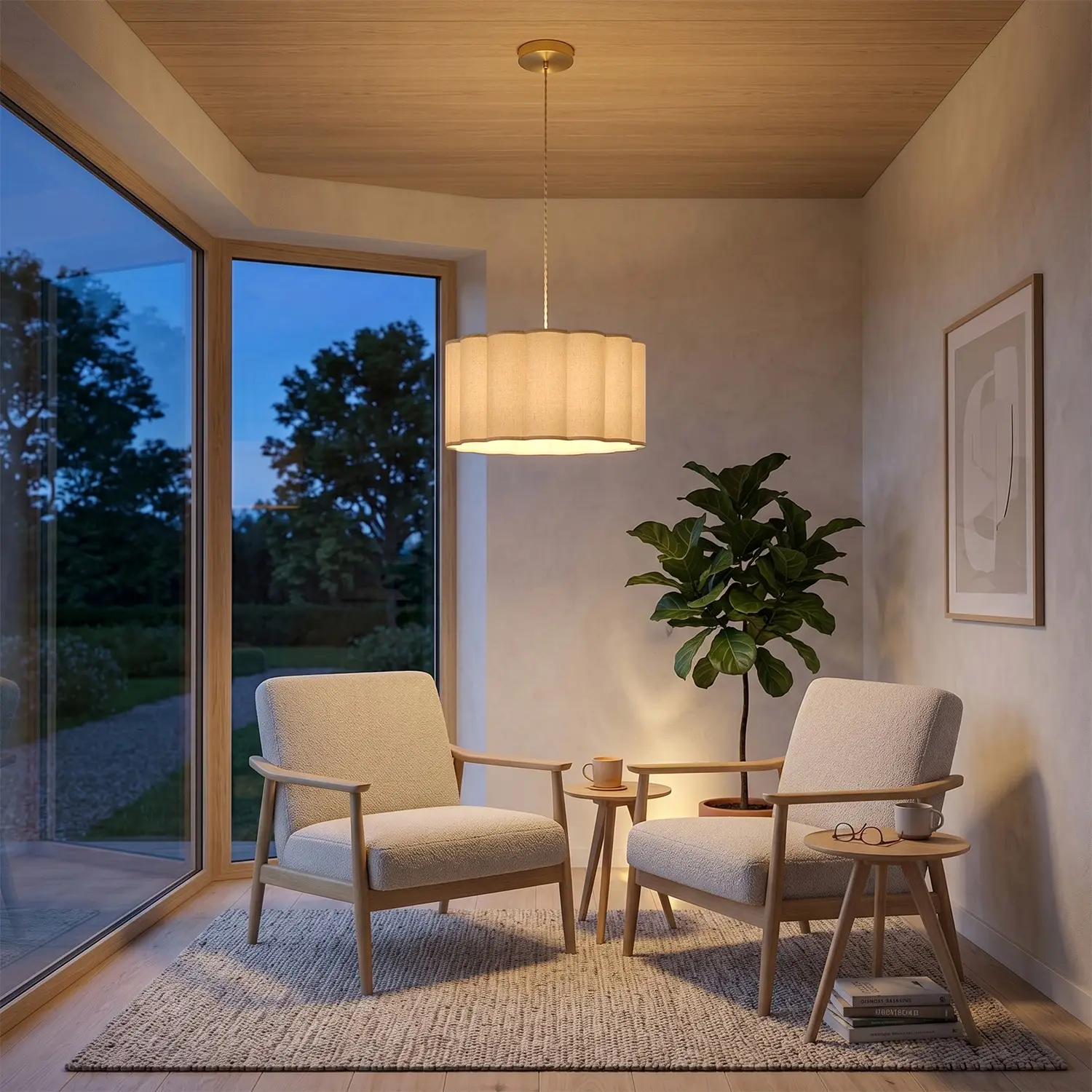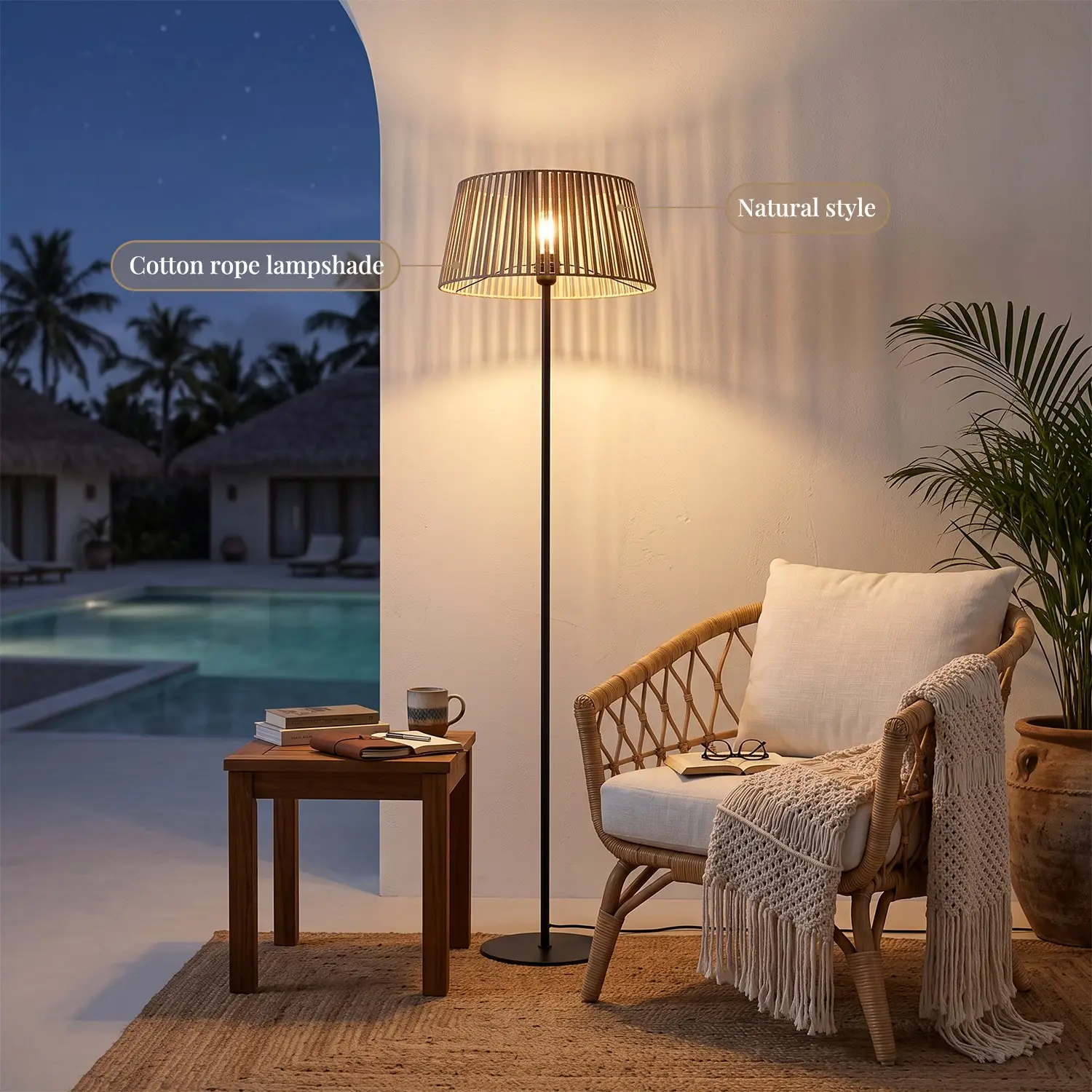
Commercial rope pendant light specifications: For B2B hospitality and commercial projects, selecting rope-style lighting requires balancing aesthetic intent with rigorous safety mandates. Successful procurement hinges on verifying internal steel-core structural support, certified fire-retardant treatments, and compliance with international standards like UL safety certification to ensure long-term public space safety.
The Engineering Dilemma - Aesthetic Appeal vs. Commercial Compliance
Interior architects often seek the warmth of natural textures, yet the transition from residential to commercial specification is fraught with liability. Unlike standard residential Pendant Lights, commercial lighting must withstand rigorous use. In our production line, we often encounter the common oversight of treating the decorative rope as a load-bearing component. Professional engineering mandates that the rope shell remains strictly decorative, with all tension handled by internal, aircraft-grade galvanized steel cables.
Decoding the Specs - Decorative Rope Housing vs. Structural Power Cable
Proper Hemp Rope Light assembly requires the decoupling of mechanical support from electrical pathways. Our manufacturing process ensures the power cabling is housed within a non-conductive, fire-resistant sleeve inside the rope braid. For instance, while our Glass Hanging Lights, such as model JM30356 (Ø30 × H100 CM), rely on metal stems for structural rigidity, our rope-textured series uses a dual-core system: a steel wire for suspension and a protected electrical core for power.
Fire Safety & Material Science - Understanding Flammability Ratings
Public lobby installations necessitate adherence to IEC 60598 luminosity and safety standards. Natural fibers are inherently flammable; therefore, our Standard Operating Procedure (SOP) involves a vacuum-impregnation process using non-toxic, fire-retardant chemical agents. This process penetrates the fiber filaments, elevating the material rating to meet NFPA 701 compliance for decorative materials in public buildings.
Structural Integrity - Pull-Test Data and Mounting Mechanics
In high-traffic hospitality settings, dynamic loading is a critical failure point. During factory audits, we conduct pull-test protocols on our canopy mounts. Our standard testing procedure ensures that every ceiling canopy mount—regardless of the fixture aesthetic—supports weights exceeding 15kg without measurable deformation. This ensures safety against accidental impacts or building vibrations.
Lifecycle Analysis - Humidity-Induced Expansion and Fixture Longevity
Natural fibers respond to ambient humidity, which can lead to significant structural sagging over time if not pre-stabilized. We address this through an accelerated stress-testing cycle: exposing fibers to 95% relative humidity for 72 hours while measuring expansion coefficients. By pre-treating the fibers, we reduce the expansion rate by 40% compared to untreated raw materials, significantly extending the fixture's maintenance-free lifecycle.
Procurement Checklist - What to Request from Manufacturers
Before finalizing a purchase, ensure you collect the following documentation to mitigate future liability: 1. UL/CE electrical core certification. 2. Fire-retardant treatment test report (e.g., ASTM E84 or NFPA 701). 3. Load-bearing pull-test certificate for the specific mounting canopy. 4. Material batch specifications for moisture resistance.
Comparative Summary Table - Rope-Housed vs. Metal Conduit Systems
| Feature | Rope-Housed Commercial | Metal Conduit Systems |
|---|---|---|
| Structural Support | Internal Steel-Core Cable | Rigid Metal Stem |
| Fire Resistance | Certified Treated Fibers | Non-combustible |
| Maintenance | Periodic Inspection Required | Minimal |
Need Technical Specifications for Your Project?
Contact our engineering team to receive full pull-test data, fire-rating certificates, and CAD drawings for your commercial build-out.
Request Spec SheetFrequently Asked Questions
Q: Do natural rope lights meet commercial fire codes?
A: Only if specifically certified. Authentic commercial-grade rope fixtures undergo vacuum-impregnation with flame-retardant chemicals and must meet standards like NFPA 701.
Q: Can the rope itself support the fixture weight?
A: No. In professional installations, the decorative rope must house an internal steel-core or reinforced cable that bears 100% of the weight.
Q: How do I prevent natural fiber sagging over time?
A: Manufacturers use stabilization processes to treat the fibers against humidity-induced expansion. Request moisture-resistance testing data from your supplier.
Q: Are there load-bearing limits for canopy mounts?
A: Yes. Commercial standards generally dictate that mounting systems should pass laboratory pull-tests for at least 15kg to account for dynamic safety factors.
Q: Why choose rope-housed over rigid conduit?
A: Aesthetics are the primary driver, but they can be successfully used in commercial spaces if the internal electrical and mechanical design adheres to safety standards.
Ready to Source Certified Fixtures?
Compare our full range of Pendant Lights and request compliance documentation for your next project.
Download Spec Sheet