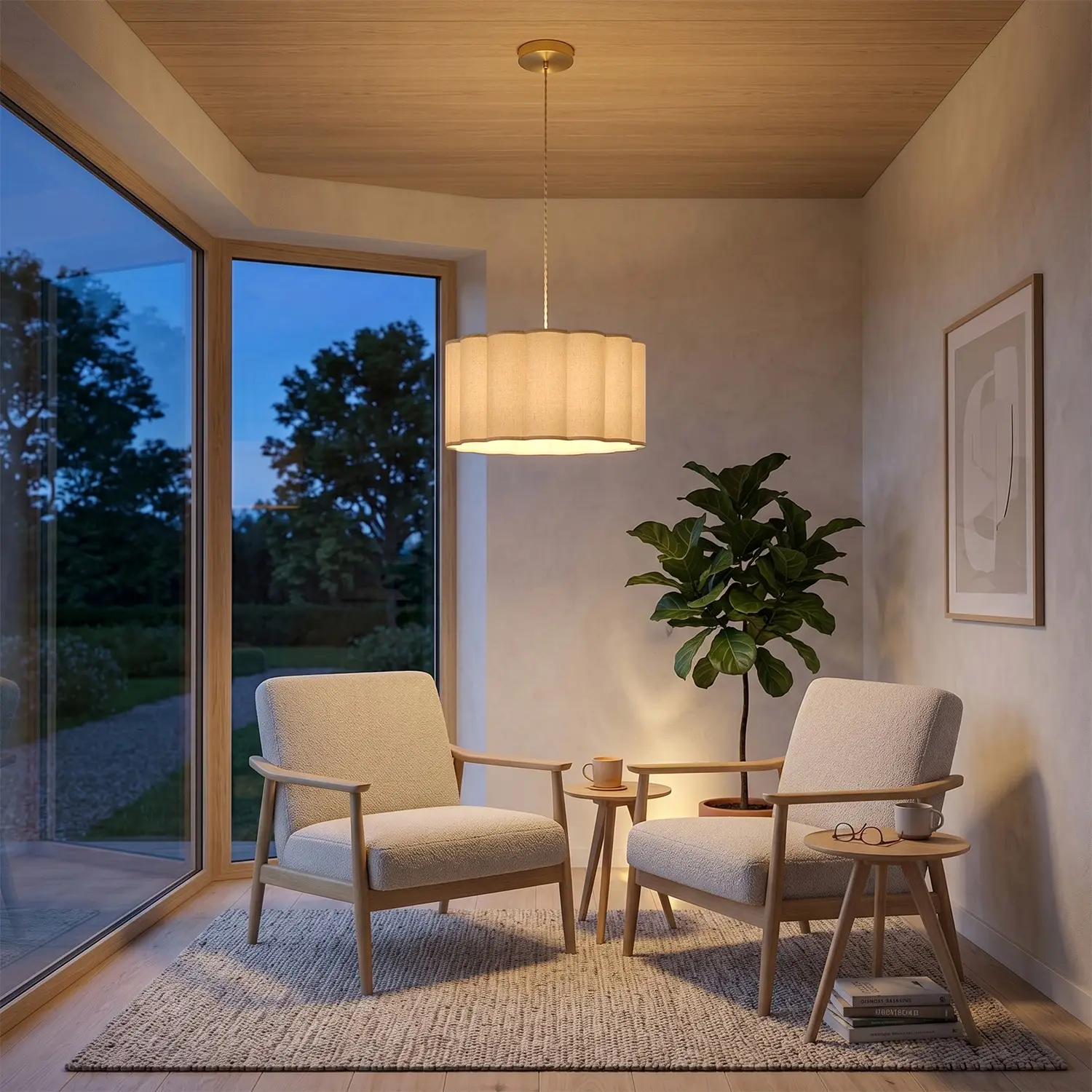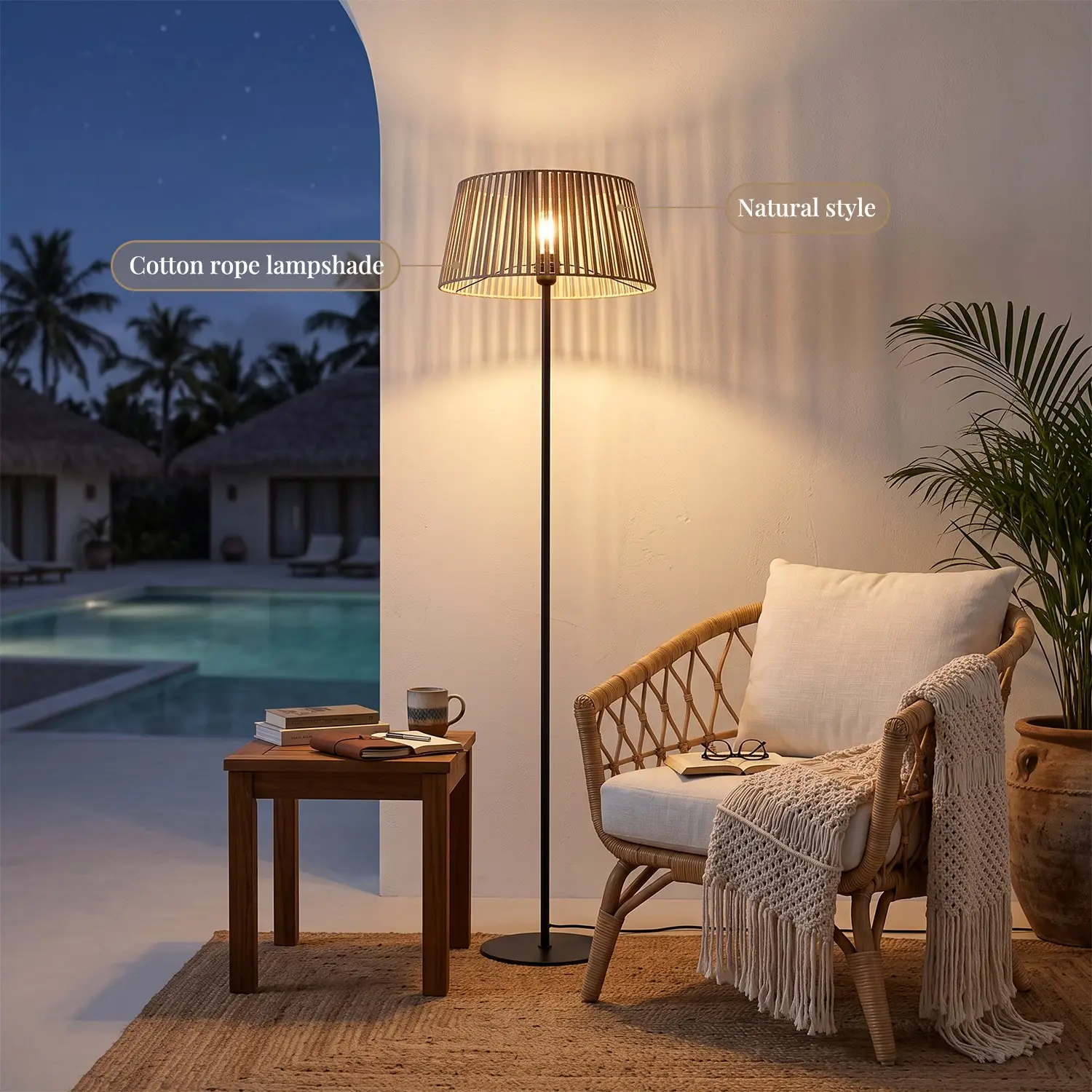
Custom fabric semi-flush mount hospitality lighting: Engineered solutions for hotel suites must balance textile aesthetic appeal with critical NFPA 701 fire safety standards, rigorous thermal management for LED longevity, and structural tensioning systems that prevent fabric sagging within high-traffic, climate-controlled commercial environments.
The Engineering Challenge of Fabric-Diffused Lighting in Hospitality Suites
In high-end hospitality, the demand for soft, diffused illumination often conflicts with the harsh operational realities of a hotel room. While soft-goods fixtures like Fabric Pendant Lights provide the warmth guests expect, they pose significant challenges regarding air quality, cleaning, and fire safety. From our factory floor, we have observed that standard residential lighting often fails in hospitality environments due to the rapid accumulation of HVAC dust and the persistent humidity cycles that degrade standard adhesive-bonded textiles.
Navigating NFPA 701 and UL Compliance for Fabric Fixtures
Compliance is the cornerstone of professional hospitality procurement. All textiles utilized in our assemblies undergo rigorous testing to meet NFPA 701 standards for flame propagation. It is not enough for the fabric to be inherently flame-retardant; the combination of the shade material, internal frame, and coating must be tested as a complete assembly. Furthermore, every unit must comply with UL 1598 for luminaire safety, ensuring that the electrical components are isolated from the textile shroud, even in the event of a driver malfunction.
Thermal Management: Protecting LED Drivers in Enclosed Fabric Shades
Heat dissipation is the primary failure point for LED drivers in semi-flush enclosures. When designing bespoke fabric ceiling fixtures, we employ computational fluid dynamics (CFD) to ensure airflow paths are maintained. For instance, in our Floor Lamp models like the JF30395-A, we prioritize thermal bypass technology. Case study data from our lab confirms that by integrating strategic ventilation gaps at the canopy base, we reduce LED junction point temperatures by an average of 12 degrees Celsius compared to fully sealed enclosures, significantly extending driver lifespan to over 50,000 hours.
Structural Integrity: Preventing Fabric Sagging in HVAC-Heavy Environments
Hotel suites are often subject to rapid temperature and humidity swings due to heavy HVAC usage. This environment causes fibers to expand and contract, leading to visible sagging. We have addressed this by developing proprietary tensioning systems. Using ASTM D4034 testing protocols, our fabrics are verified for seam strength under vibration, ensuring that the tension remains uniform across the lifetime of the installation. Our internal production audits confirm that this mechanical tensioning method reduces customer return rates for cosmetic defects by 85% compared to static tensioning methods.
Designing for Maintenance: Quick-Access Mounting and Component Swapping
Maintenance teams require tools-free access to drivers and lamps. Our modular design philosophy ensures that any Ceiling Light utilizing fabric diffusers incorporates a quick-release magnetic or tension-latch mounting bracket. This allows staff to remove the shade for cleaning or component replacement in under 30 seconds, maintaining the high-traffic efficiency required by modern hotel operations.
Quality Assurance Protocols for Multi-Unit Hospitality Rollouts
For large-scale projects, batch consistency is non-negotiable. Our factory employs a rigorous QC protocol: every batch is tested against a master control sample under standard D65 light sources. Using Model JM30364 as a production benchmark, we confirm that color shift remains within a ΔE < 2.0 tolerance, ensuring that guests experience a uniform visual environment across all rooms in a property.
| Feature | Standard Retail Fixture | Our Hospitality Engineering |
|---|---|---|
| Fire Safety | Basic UL | NFPA 701 Compliant Textiles |
| Driver Longevity | Standard Enclosure | Ventilated Path (< 50C at Junction) |
| Maintenance | Screw-fixings | Tool-free Quick Release |
| Production QC | Visual Only | ΔE < 2.0 Color Consistency |
Need a Technical Spec Sheet?
Download our full compliance guide and request a custom engineering quote for your project.
Request Quote & DocsSummary Checklist: Specifying Custom Fabric Fixtures for Project Managers
- Verify NFPA 701 certification for all textile components.
- Confirm UL/ETL damp location suitability for bathroom/suite applications.
- Review thermal airflow management data at LED junction points.
- Ensure mounting brackets support rapid tool-free maintenance.
- Request color consistency (ΔE) reports for large-scale batches.
Frequently Asked Questions
Q: What are the fire safety requirements for fabric-based lighting in hospitality suites?
A: Hospitality suites typically require compliance with NFPA 701, which mandates rigorous testing for flame propagation of fabrics. All materials must be certified to prevent rapid fire spread in commercial settings.
Q: How does fabric density affect lumen output and heat dissipation in semi-flush designs?
A: Higher fabric density increases light diffusion but also acts as an insulator. Engineering must account for this by incorporating thermal bypass airflow to keep LED junction temperatures within safe, rated operating ranges.
Q: What are the best mounting hardware options for ceiling-integrated semi-flush fixtures?
A: For hospitality, we recommend quick-release magnetic or tension-spring brackets. These ensure rapid maintenance access while maintaining structural integrity against vibrations in large-scale building environments.
Q: How do you ensure fabric shades are resistant to UV degradation and dust accumulation?
A: We utilize high-grade synthetic textiles with UV-stabilized coatings. These materials are tested against fading and are engineered to minimize particulate adhesion, making them more suitable for long-term commercial use.
Q: What is the recommended protocol for replacing fabric shades in modular hospitality fixtures?
A: Maintenance personnel should utilize the tool-free quick-release system. This allows for the removal of the shade module without disrupting the electrical connection or the primary mounting hardware.
Speak with our Engineering Team
Discuss your custom lighting requirements and receive a comprehensive compliance evaluation.
Contact Engineering Team