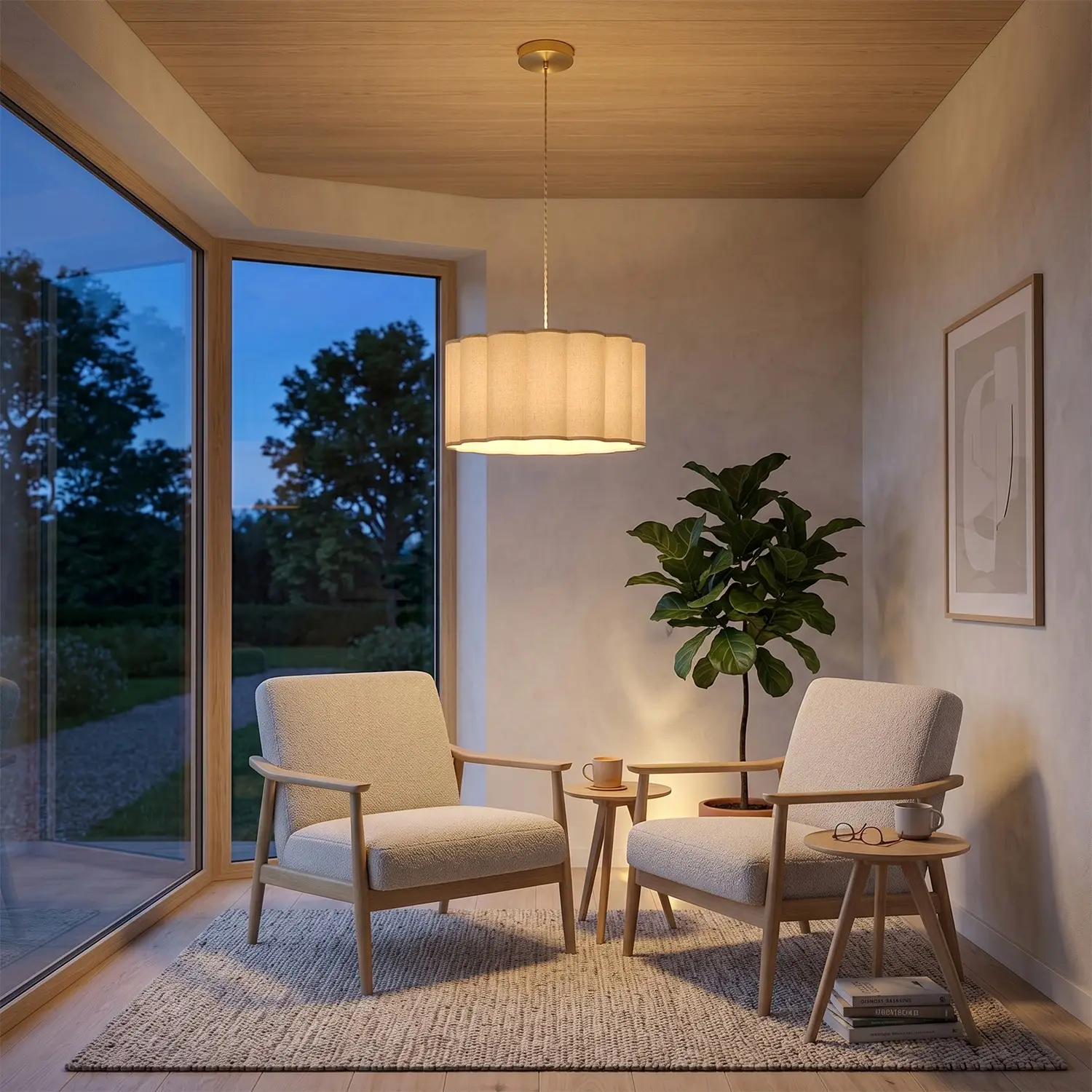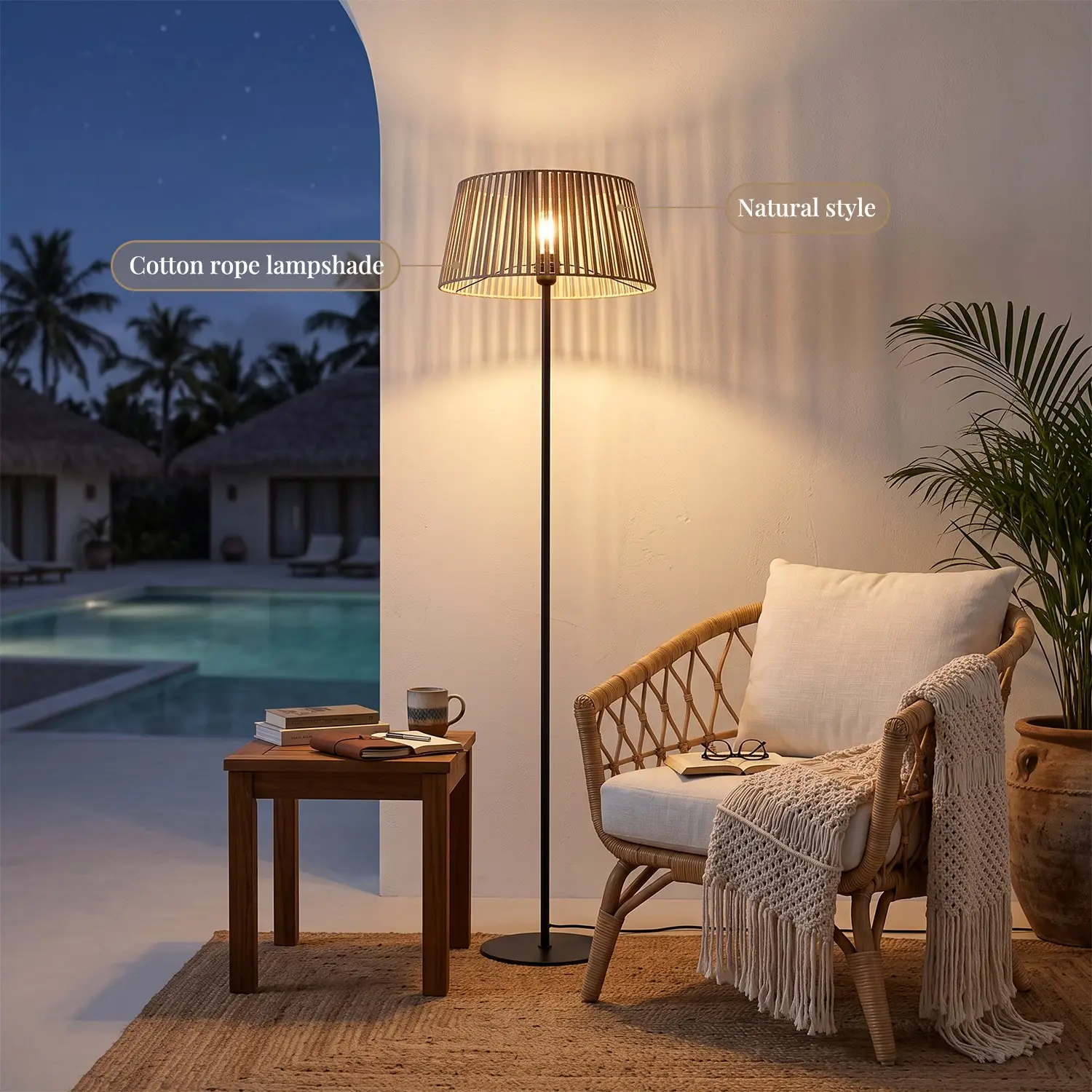
Commercial hemp rope lighting specification: Balancing organic design with high-performance engineering requires strict adherence to thermal management protocols and fire-safety certifications. By implementing proprietary thermal barriers and factory-certified fire-retardant treatments, architects can safely integrate natural fiber luminaires into large-scale commercial projects while maintaining regulatory compliance.
The Material Paradox: Balancing Organic Aesthetics with Architectural Integrity
For interior architects, the appeal of a Hemp Rope Light lies in its raw, tactile texture. However, natural fibers inherently struggle with the heat produced by high-output commercial LED engines. In our production line, we have identified that the primary failure point for bespoke fixtures is not the light source itself, but the degradation of fiber integrity caused by localized hotspots. By treating fiber density as a design variable rather than a static aesthetic, we ensure structural longevity in high-traffic retail and hospitality settings.
Thermal Management: Engineering Heat Dissipation for Encased LED Rope Lighting
Managing heat in organic materials is critical for B2B applications. We utilize a proprietary thermal-barrier casing that prevents internal LED heat buildup within dense hemp braids. Our heat dissipation testing shows a significant delta between internal core temperature and external fiber surfaces. While standard un-engineered rope lighting may reach surface temperatures exceeding 65 degrees Celsius, our design maintains an external surface temperature of below 45 degrees Celsius, protecting the natural fibers from premature brittleness.
Compliance & Safety: Navigating NFPA 70 and Fire-Rating Requirements
Safety is non-negotiable in commercial specification. All lighting solutions must adhere to NFPA 70 / NEC Article 410 for luminaires. Our third-party fire-retardancy test results verify that our treated hemp fibers meet stringent flame spread standards, ensuring the material does not act as a fuel source. We avoid broad claims of being fireproof, instead providing documented certifications that confirm the chemical treatment maintains fiber texture while meeting air quality standards. For comparison, our Hemp Rope Pendant Light undergoes the same rigorous QC protocols as our Glass Hanging Lights (such as model JM30356, which features Ø30 × H100 CM dimensions).
The Impact of Braid Density on Lumen Efficacy and Light Distribution
Braid density is the silent factor in lighting performance. A tighter braid increases the physical durability of the rope but creates a significant barrier to light diffusion. During factory audits, we have found that balancing fiber coverage with LED spacing is vital. For example, our JM30364 model utilizes an E27 holder with AC 110-240V, demonstrating that consistent light distribution relies on precise cable geometry. Over-densifying the braid can result in a 15-20% loss in lumen efficacy, a detail often overlooked by non-specialized manufacturers.
Installation Efficiency: Why Factory-Prepped Connectors Reduce Labor Costs
Field-wiring organic rope in a commercial ceiling can be a costly bottleneck. We provide factory-engineered quick-connect termination points. These connectors are designed for high-traffic field installation and ensure code-compliant wiring integrity. By minimizing exposed connections, we reduce the risk of ground faults and ensure the fixture maintains its aesthetic form throughout the installation process.
Specifying Custom Lengths and Tensioning for Large-Scale Commercial Spaces
Large-scale projects often require long-run LED configurations. It is crucial to note that we do not guarantee unlimited custom lengths. All custom runs must reference standard voltage drop limitations to prevent dimming or flickering at the end of the line. For a 12-month structural integrity validation, we point to our case study of a high-traffic lobby where our tension-controlled mounting systems prevented fiber sagging, a common issue with untreated natural fibers.
| Feature | Our Commercial Standard | Standard Retail Alternative |
|---|---|---|
| Fire Treatment | Certified Third-Party Tested | None or Self-Certified |
| Thermal Management | Proprietary Barrier Casing | Exposed Fiber Heating |
| Connector Type | Factory Quick-Connect | Hard-Wired Field Assembly |
Need Detailed Specs for Your Project?
Request our technical spec sheet and internal thermal dissipation reports to ensure full compliance for your next hospitality installation.
Request Technical Spec SheetSummary Checklist: What to Demand from Your Lighting Manufacturer
When specifying hemp lighting, procurement managers should always demand:
- Documented third-party fire-retardant test certificates.
- Thermal management reports indicating core vs. surface temperature.
- Factory-standard compliance with NFPA 70 for electrical terminations.
- Verification of lumen output based on the specific braid density provided.
Frequently Asked Questions
Q: Are hemp rope lights considered fireproof for commercial use?
A: No, hemp is a natural fiber and is not inherently fireproof. Professional-grade rope lighting must undergo specific chemical fire-retardant treatments, backed by third-party testing, to comply with commercial fire codes.
Q: How does braid density impact the light output?
A: Higher braid density provides greater structural durability but can significantly obstruct light, leading to a reduction in lumen efficacy. We engineer our fixtures to optimize this balance, ensuring both structural integrity and desired brightness.
Q: Do I need special connectors for hemp rope installation?
A: Yes, for commercial field reliability, we recommend factory-engineered, quick-connect termination points. These prevent improper wiring, reduce labor costs on-site, and ensure compliance with NFPA 70 standards.
Q: Can custom lengths be ordered for large projects?
A: Custom lengths are possible, but they must be calculated against standard voltage drop limitations for LED configurations to ensure consistent performance throughout the entire length of the fixture.
Q: How should organic fiber lighting be maintained in high-traffic areas?
A: Maintenance should involve gentle dust removal. Because our fixtures feature specialized thermal barriers, the risk of fiber-related degradation or yellowing due to internal heat is significantly minimized, extending the lifespan of the fixture.
Speak with a Project Consultant
Discuss your architectural specifications and receive expert guidance on code-compliant rope lighting solutions.
Contact Our Engineering Team