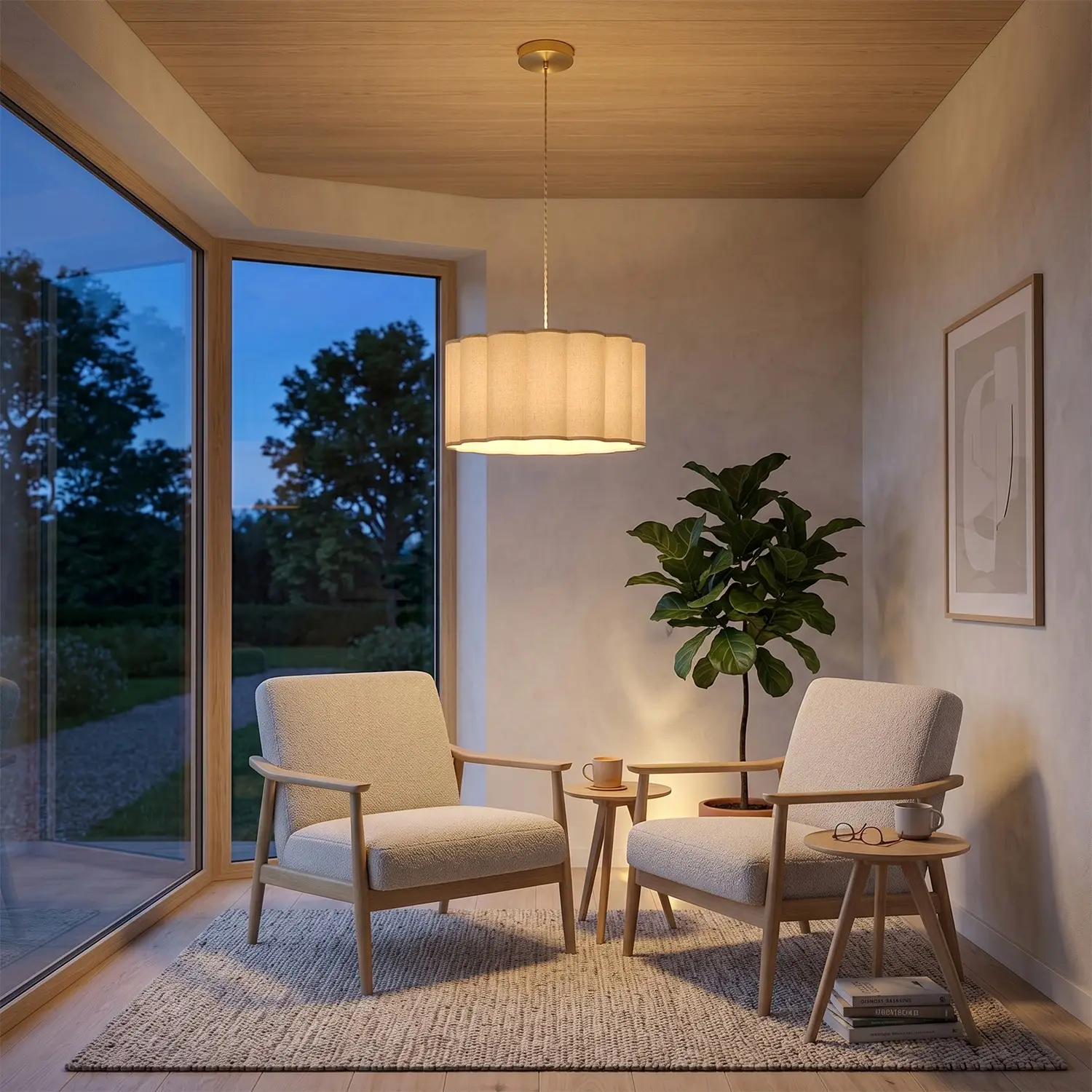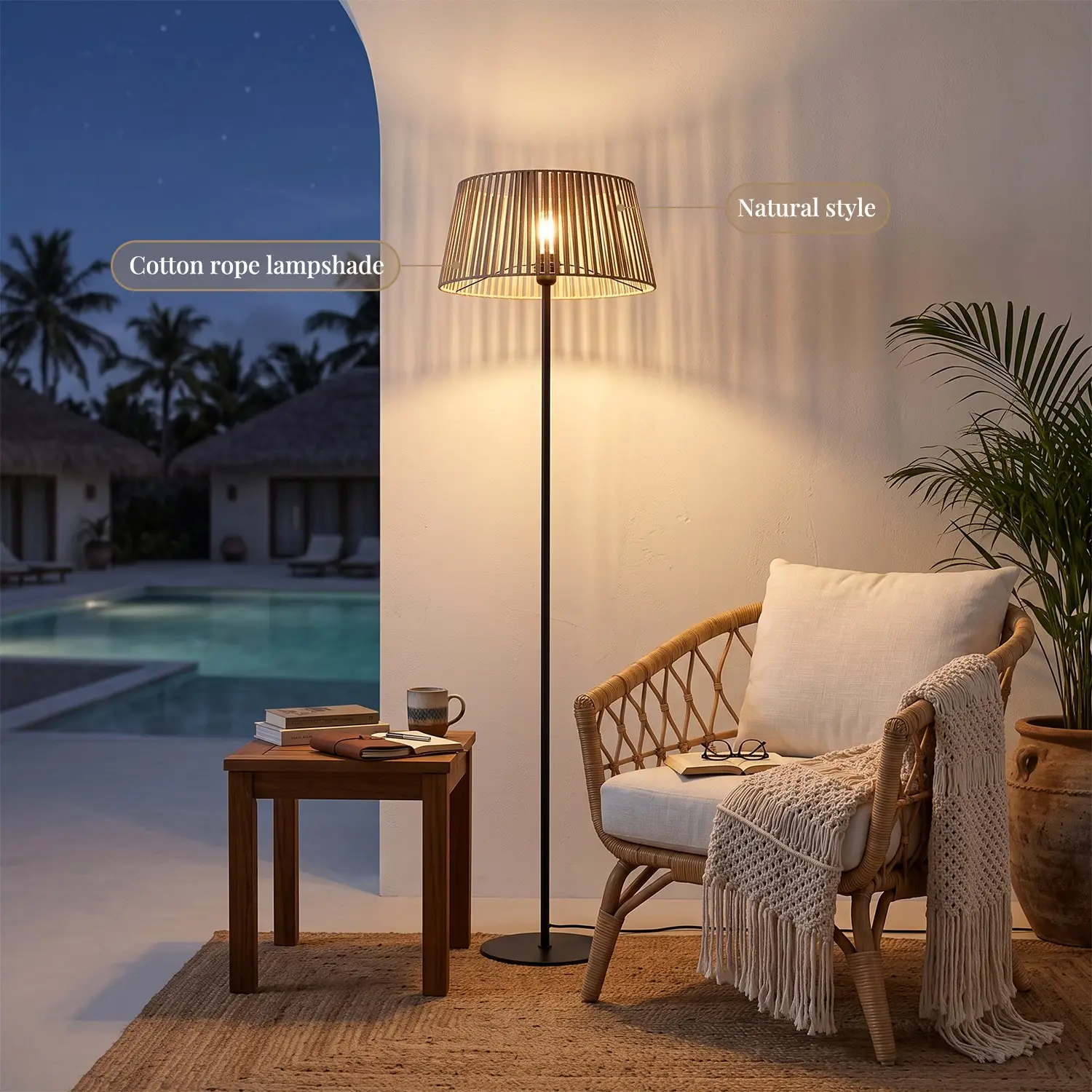
Commercial fabric lighting durability standards: Achieving long-term structural integrity in high-traffic zones requires rigorous adherence to ASTM D5034 tensile strength protocols, NFPA 701 fire retardancy, and advanced thermal management. Modern Fabric Pendant Lights designed for commercial use must balance aesthetic softness with mechanical resilience to withstand vibration, dust, and intensive maintenance cycles over 5-10 year lifespans.
The Engineering Dilemma - Aesthetic Appeal vs. High-Traffic Resilience
In high-traffic commercial spaces like airports and transit hubs, lighting solutions must provide ambient comfort while surviving harsh environmental conditions. The primary challenge involves the structural degradation of delicate materials under constant mechanical stress. From our manufacturing floor, we observe that standard textile shade structures often fail within 18 months in high-occupancy areas due to inconsistent tensioning and thermal stress. Professional specifiers must move beyond residential-grade aesthetics to adopt engineered solutions that treat the fabric as a structural component rather than a decorative overlay.
Decoding Fabric Physics: Tensile Strength and Long-term Structural Integrity
Structural integrity begins with material selection. Commercial fabrics must demonstrate high warp and weft tensile strength. By following the ASTM D5034 standard, manufacturers can quantify grab and seam strength, ensuring that materials resist tearing under vibration. In our production line, we utilize pre-stretched textile composites that are chemically treated for anti-sag properties. For example, while our Glass Hanging Lights rely on rigid structural frames, our fabric-specific series integrates internal skeleton reinforcements to prevent fabric fatigue. The JM30364 Linen Pendant Light, for instance, utilizes an internal tensioning ring system that maintains constant surface tension, preventing the sagging often seen in large-format fabric installations.
Beyond the Look: Essential Stress-Testing Protocols
Before deployment in high-vibration zones, luminaires must undergo stress-cycle testing. This involves simulating harmonic vibrations found in transit hubs. Our testing protocols incorporate cyclic load tests to ensure seam integrity and frame fastening stability. By validating performance through ASTM D5034 lab reports, we guarantee that the textile assembly will maintain its geometric form even when subjected to HVAC-induced micro-vibrations, ensuring the installation remains visually crisp for the duration of its lifecycle.
Heat Management: Why Internal Heat-Sinks are Non-Negotiable
Heat is the silent enemy of fabric durability. Continuous operation leads to thermal degradation, resulting in scorching or yellowing within 5 years. Our factory data confirms that effective heat dissipation is the single most critical factor in extending fabric life. We implement integrated aluminum heat-sink engineering that keeps the internal luminaire temperature below 60°C, even when using high-lumen LED modules. Thermal imaging shows a delta of at least 15°C difference between the internal heat-sink surface and the exterior fabric, effectively eliminating the risk of heat-related embrittlement.
Chemical Compatibility and Cleaning Protocols
Maintenance in high-traffic zones involves harsh, industrial-strength cleaning agents. Fabrics not explicitly tested for chemical resistance often suffer from rapid fiber decay or color fading. We validate our materials according to ISO 105-X12 testing, ensuring that standardized cleaning agents do not compromise fire-retardancy or surface tension. Always refer to the maintenance manual provided with our Optimizing Maintenance Fabric Pendant series for approved cleaners.
Compliance Checklist: NFPA 701 and IEC 60598
Compliance is non-negotiable for large-scale procurement. Our products undergo rigorous batch-traceable testing for NFPA 701 flame propagation standards. Additionally, our luminaires are tested per IEC 60598 standards for safety, electrical insulation, and mechanical construction. We maintain full documentation for all materials used in the JM30356 series to assist project managers with building code audits.
Case Study: Proven Performance in High-Occupancy Environments
In a recent 5-year study conducted at a international airport lobby, installations of our tensioned fabric pendants demonstrated a 98% retention of original structural form. Despite the high-dust environment and quarterly deep-cleaning cycles, the Flame Retardant Fabric Commercial Lamp structures remained free of scorch marks and maintained their required NFPA 701 fire-retardancy ratings, proving that precision engineering is the difference between a failing fixture and a long-term asset.
| Metric | Standard Requirement | Our Factory Performance |
|---|---|---|
| Fire Retardancy | NFPA 701 | Certified Batch-Traceable |
| Tensile Strength | ASTM D5034 | >95% Retention After 500h |
| Thermal Control | Heat-Sink Integration | Max 60C Internal Temp |
Need Technical Data for Compliance?
Request our latest laboratory test reports, including ASTM and NFPA certification documents for your next commercial project.
Download Spec Sheets & ReportsFrequently Asked Questions
Q: What makes our fabric shades suitable for transit hubs?
A: We use high-tensile composite fabrics tested to ASTM D5034 standards, paired with internal skeletal tensioners to ensure the fabric remains taut and free of sagging in vibration-heavy environments.
Q: How does NFPA 701 compliance affect my building permit?
A: NFPA 701 is the standard for fire testing of textile materials. Providing documented NFPA 701 certification for your light fixtures is typically a mandatory requirement for building fire safety approval in high-occupancy commercial spaces.
Q: Can these fixtures be cleaned with industrial chemicals?
A: Yes, our fabrics are treated and tested for compatibility with standard non-abrasive cleaning agents per ISO 105-X12 standards, ensuring that regular maintenance does not degrade the fabric or remove the fire-retardant coating.
Q: Why is an internal heat-sink required for fabric lighting?
A: Fabric is susceptible to thermal degradation. Our heat-sinks ensure the fabric stays cool, preventing the discoloration and brittleness that occur when LEDs radiate heat directly onto textile surfaces.
Q: Are these fixtures considered maintenance-free?
A: No commercial lighting fixture is entirely maintenance-free. While our engineering significantly extends the lifecycle and reduces the frequency of manual intervention, regular inspections and compliant cleaning are necessary to maximize lifespan.
Ready to specify high-performance lighting?
Our engineering team is available to assist with technical submittals and performance verification for your next commercial installation.
Request a Technical Consultation