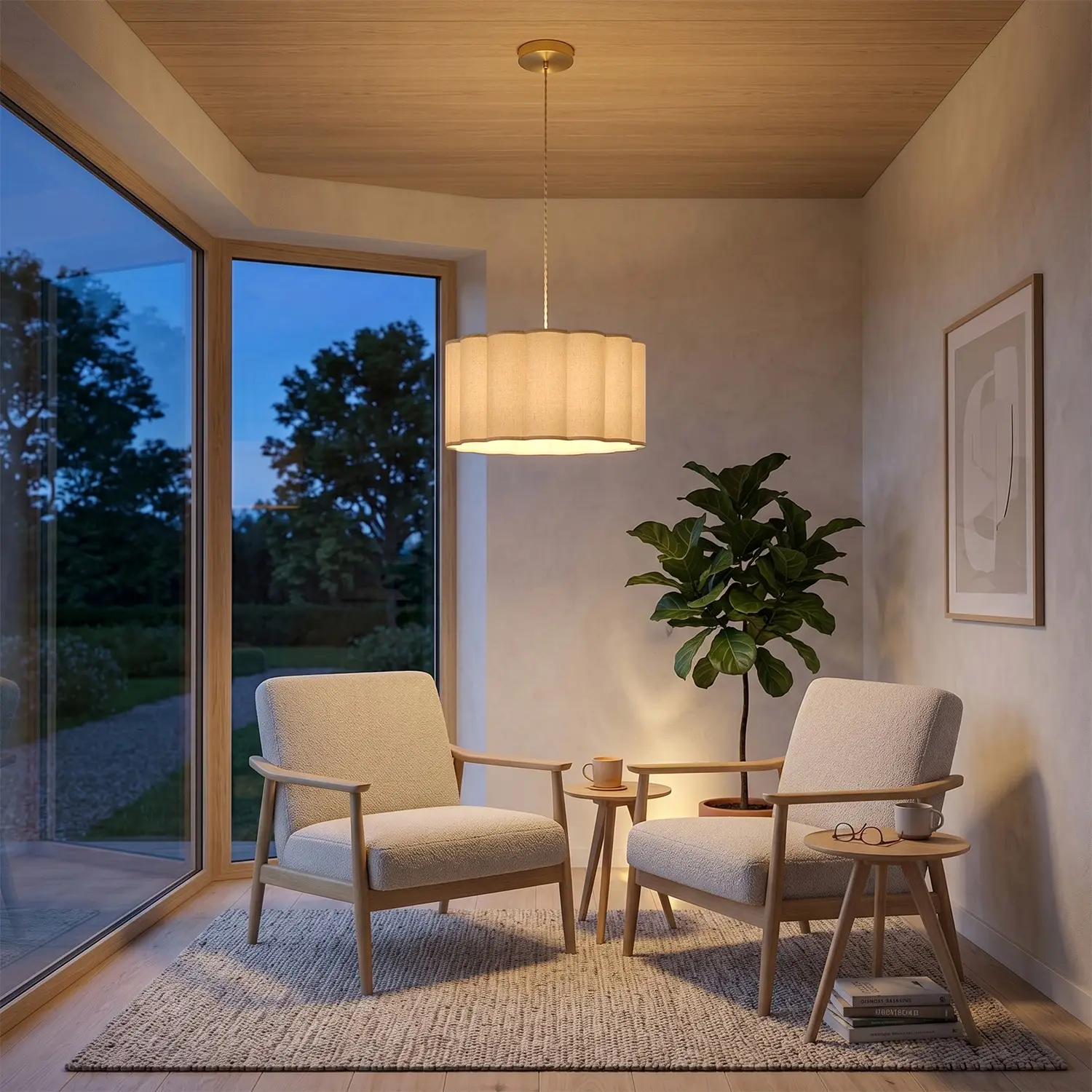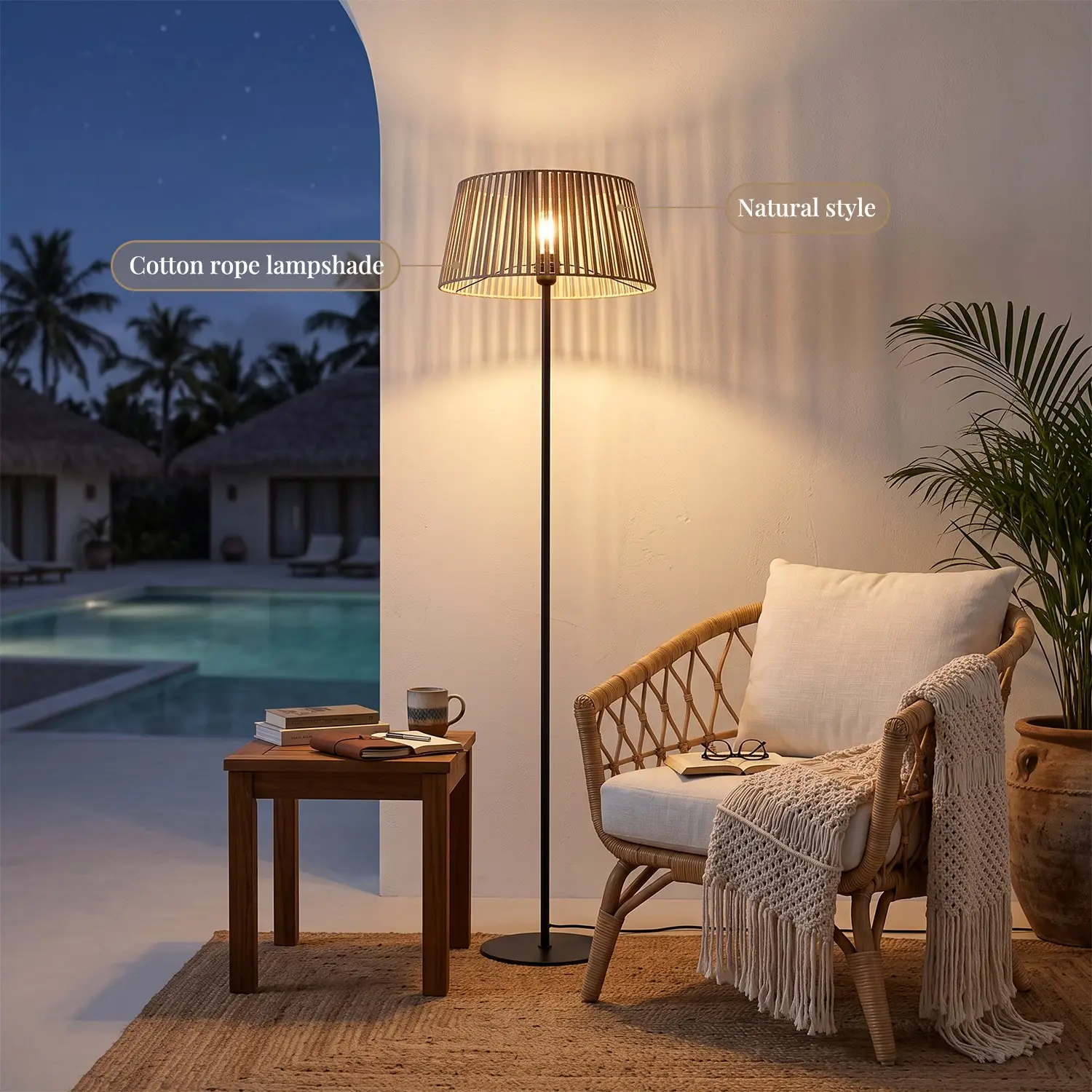
Oversized acoustic fabric pendant lighting for commercial offices: Successful integration of large-scale architectural lighting requires a rigorous balance of structural load capacity, fire safety compliance, and precise electrical dimming control to ensure long-term durability and acoustic performance in high-traffic corporate work environments.
The Engineering of Large-Scale Fabric Pendants: Moving Beyond Aesthetics
In our production line, we have observed that standard decorative fixtures often fail when scaled to architectural sizes. Oversized Fabric Pendant Lights require a precision-engineered internal skeletal framework. Unlike lightweight residential units, these frames must be crafted from high-grade aluminum or powder-coated steel to maintain structural rigidity against the tension of heavy-duty fabric skins. During manufacturing, we employ automated tensioning jigs to ensure the material remains taut, preventing sagging over the product life cycle. While products like our Glass Hanging Lights utilize metal and glass, our larger fabric units are engineered for weight efficiency to meet the strict dead-load requirements of commercial ceiling grids.
Load Management and Seismic Compliance in Ceiling Fixture Mounting
For specifying architects, the critical concern is often ceiling load capacity. Our engineering team designs mounting solutions that distribute weight across multiple structural points rather than a single junction box. For high-traffic corporate offices, we provide installation templates that define the exact pull-out strength required for anchors. In seismic-prone zones, our fixtures are designed to be secondary-supported, ensuring that the luminaire remains secure during vibration events. As documented in our internal Acoustic Fabric Pendant Engineering Light reports, failure to account for proper weight distribution is the primary cause of site-related damage in large-scale installations.
Acoustic Performance: How Fabric Density Shapes the Office Soundscape
Fabric density is the primary driver of sound dampening in commercial spaces. By layering high-porosity acoustic cores with certified fire-rated textiles, we control the reverberation time in open-plan offices. Note that acoustic performance is entirely dependent on the specific surface-area-to-volume ratio of the fixture. We advise project managers to review our technical data sheets before finalizing the acoustic layout, as NRC (Noise Reduction Coefficient) ratings vary significantly based on the internal foam density and the air gap maintained between the light source and the fabric enclosure.
Technical Integration: Deploying DALI/0-10V Controls in Oversized Fixtures
Large-scale fixtures are not merely light sources; they are complex integrated components of an office's Building Management System (BMS). We utilize thermally-conductive internal heat sinks to extend the life of LED drivers, ensuring they operate within optimal temperatures. For seamless integration, our units support either DALI (Digital Addressable Lighting Interface) or 0-10V dimming protocols. Proper driver selection is mandatory; for example, the Fabric Pendant Light model can be configured with dual-channel drivers to allow for independent control of task and ambient light outputs.
Fire Safety and Compliance: Navigating ASTM E84 and UL Standards
Commercial safety standards are non-negotiable. Our fabric materials undergo rigorous ASTM E84 Surface Burning Characteristic tests to ensure Class A flame spread ratings. Furthermore, every luminaire undergoes UL/cUL compliance procedures to meet electrical safety benchmarks. For instance, while our Large Fabric Ceiling Light features standard E27 holders, our custom architectural projects utilize hard-wired, high-lumen LED engines that must comply with IEC 60598 global safety standards for fixed general purpose luminaires.
From Factory Floor to Site: Logistics and Assembly for Commercial Projects
Shipping large fixtures is often the highest risk factor in a project. We mitigate site damage through flat-packed modular assembly. By shipping the internal framework and the tensioned fabric skins separately, we reduce the total shipping footprint by up to 60%, significantly lowering freight costs and carbon impact. This approach allows for on-site assembly, ensuring that the fabric remains pristine and free from creases upon installation.
| Feature | Standard Architectural Luminaire | Our Commercial Grade Solution |
|---|---|---|
| Frame Material | Lightweight Polymer/Wood | Reinforced Structural Aluminum |
| Compliance | Basic CE | UL/cUL + ASTM E84 Class A |
| Shipping | Full-Size Crate | Flat-Packed Modular System |
Request a Project Consultation or Technical Spec Sheet
Our engineering team is ready to review your floor plans and compliance requirements to ensure your installation meets all local safety codes.
Download Spec SheetPartnering for Custom Specifications: Scalability for Architectural Design
Scaling a project requires a manufacturing partner with flexible capacity. We have successfully executed large-scale office fits with over 500 units, maintaining quality control through every stage of production. From the initial frame welding to the final fabric tensioning, our Scaling Statement Sourcing Tall Lamps methodology ensures that every unit delivered to the job site meets the exact photometric and structural criteria defined by the architect.
Frequently Asked Questions
Q: What fire ratings should I look for in office fabric lighting?
A: You should verify compliance with ASTM E84 for surface burning and NFPA 701, which is often required for large-scale fabric installations in commercial occupancies.
Q: Can fabric pendants be used with standard DALI systems?
A: Yes, provided that the fixture is ordered with a DALI-compatible LED driver; standard 0-10V drivers will not support DALI protocols without additional control modules.
Q: How is the acoustic benefit of a fabric pendant measured?
A: Acoustic benefit is quantified by an NRC rating, which should be provided as lab-verified data specific to the exact fabric and core assembly of the fixture.
Q: What is the advantage of flat-packed lighting in B2B projects?
A: Flat-packed assembly reduces shipping volume by up to 60%, minimizes the risk of structural frame damage during transit, and simplifies on-site logistics for large-scale installations.
Q: Are these fixtures compatible with seismic building codes?
A: Our commercial fixtures can be engineered with secondary support mounting points designed to meet regional seismic safety requirements, provided the site mounting surface is structural.