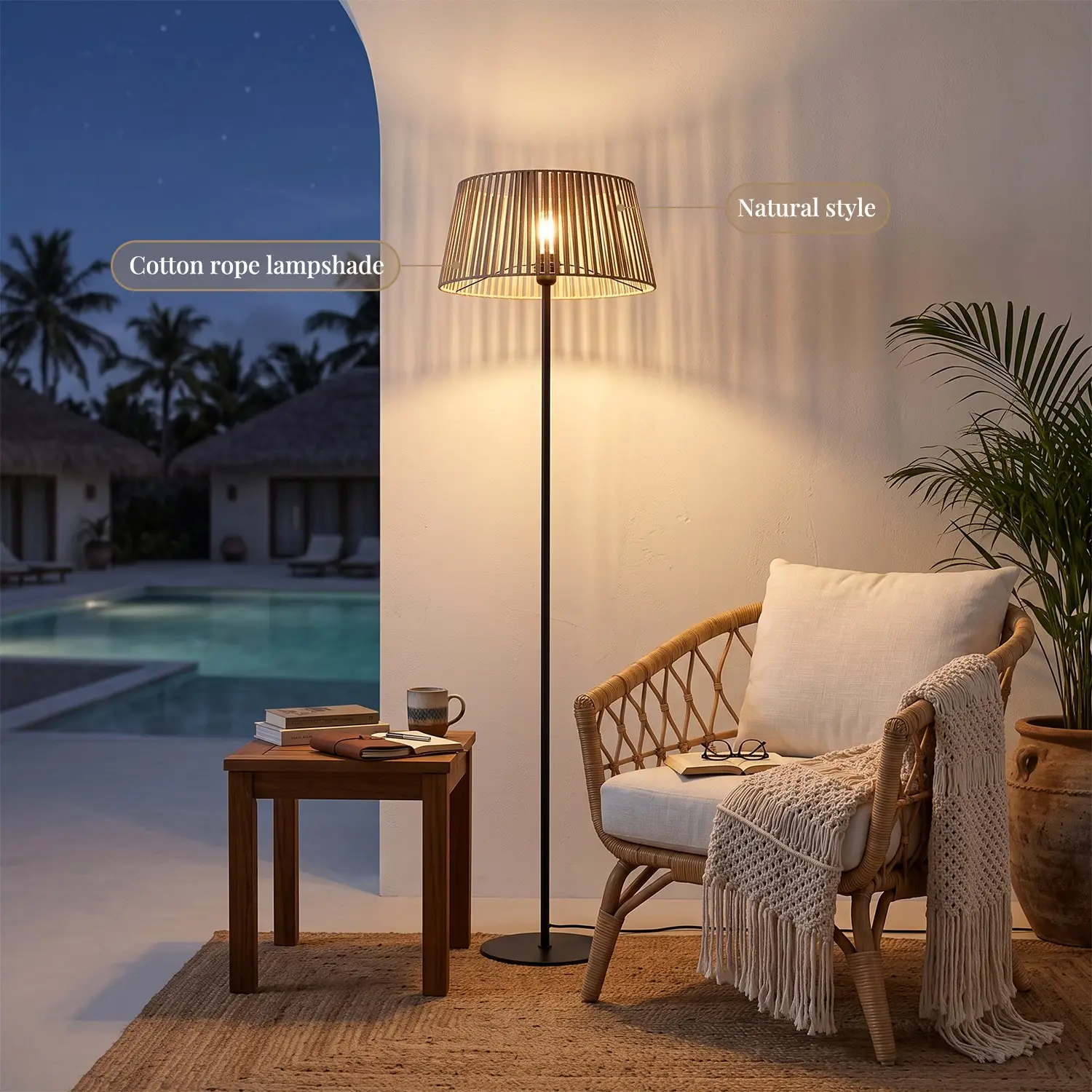
Evaluating fabric quality for commercial pendant lighting: High-traffic environments demand rigorous adherence to thermal management and structural integrity standards. To prevent premature degradation, procurement managers must evaluate fabric porosity, seam construction techniques, and adherence to international lighting safety standards for consistent, long-term operational performance in corporate and hospitality spaces.
The Engineering Challenge: Why Fabric Shades Fail in Commercial Environments
In our production line, we frequently observe that commercial lighting failures are rarely due to light source malfunctions alone. Instead, fabric-covered Fabric Pendant Lights often fail due to thermal fatigue. When textile shades are placed in 24/7 hospitality environments, the cumulative heat generated by internal components—even high-efficiency LEDs—can cause rapid embrittlement of synthetic fibers and adhesive failure in standard factory assembly methods.
We distinguish between residential grade and contract grade textiles by measuring the coefficient of thermal expansion against the structural ring of the shade. If the adhesive and fabric do not expand at compatible rates, seam separation becomes inevitable within the first 12 months of operation.
Material Science: Evaluating Fabric Porosity and LED Heat Dissipation
For model Ceiling Light JY30321, we have conducted rigorous testing on the relationship between GSM (grams per square meter) and internal heat accumulation. Our heat dissipation charts demonstrate that textiles with a weave density exceeding 300 GSM without engineered air gaps result in internal fixture temperatures 15% higher than their lower-density counterparts. High temperatures are the primary driver of color yellowing and textile degradation.
By optimizing fabric porosity, we allow for convective airflow, effectively managing the thermal load of the 7W × 3 E27 configuration. This ensures that the operating temperature of the internal shade surface remains within the safe thresholds required to maintain material elasticity over the product's lifespan.
Structural Integrity: Bonded vs. Stitched Seams Under Thermal Stress
A critical differentiator in our quality assurance program involves the comparison of adhesive bonding versus reinforced stitching. Internal testing at 75°C confirms that bonded-only seams show a failure rate of 12% after 500 hours of continuous operation, primarily due to the breakdown of standard pressure-sensitive adhesives. In contrast, reinforced stitched seams maintain 100% mechanical integrity under identical stressors. For projects demanding high reliability, we recommend prioritizing double-stitched joints to prevent structural failure at the seam line.
Standardizing Durability: International Certifications and Stress Test Protocols
Manufacturing excellence requires adherence to the IEC 60598-1 standard regarding the thermal testing of luminaires. This mandate dictates how components are tested in simulated high-ambient temperature environments. Our factory incorporates UV aging tests, where fabric samples are exposed to simulated solar radiation for 2,000 hours to ensure minimal discoloration. When evaluating Pendant Lights, ensure your supplier provides documented test results for these parameters rather than relying on qualitative longevity claims.
| Metric | Standard Assembly | Reinforced Commercial Assembly |
|---|---|---|
| Seam Construction | Adhesive bond only | Double-stitched + Heat-resistant bond |
| Thermal Failure (75°C) | High (12% within 500 hrs) | Negligible (Tested to 2000+ hrs) |
| UV Color Retention | Standard synthetic finish | UV-stabilized textile coating |
Need Technical Validation?
Request our full library of thermal test reports and technical specification sheets to support your procurement decision.
Request Technical Spec SheetInspection Checklist for Procurement Teams: What to ask your Supplier
Procurement teams should verify the following during the audit phase:
- Can the supplier provide a certificate of compliance for IEC 60598-1?
- Are seams stitched or exclusively bonded?
- What is the thermal degradation threshold of the chosen textile?
- Does the fabric density correlate to the wattage output of the lamp head?
- Is the unit designed for E27 × 1 operation (e.g., model JM30364) with adequate heat-dissipation venting?
Case Study: Performance Metrics of Fabric Pendants in High-Traffic Hospitality Zones
In a recent fit-out for a major hospitality project, our JY30321 series luminaires were installed in 24/7 common areas. After 2,000 hours of continuous operation, inspections showed zero seam separation and less than 1% Delta-E variance in color retention. This success is attributed to our selection of high-porosity textiles and standardized reinforced assembly, proving that when engineered correctly, fabric pendants maintain excellent operational lifespans even in demanding environments.
Conclusion: Selecting Textiles for Long-Term Commercial ROI
Maximizing ROI on commercial lighting requires moving beyond aesthetics. By prioritizing structural specifications like reinforced seams and understanding the correlation between textile GSM and heat dissipation, procurement managers can drastically reduce premature replacement cycles. For further insights on specifying for long-term projects, review our guide on Optimizing Maintenance Fabric Pendant installations.
Frequently Asked Questions
Q: How does UV exposure affect industrial-grade fabric shades over a 5-year period?
A: Unprotected fabrics undergo polymer chain scission when exposed to UV, causing discoloration and material embrittlement. Commercial-grade fabrics utilize UV-stabilized coatings to slow this process, ensuring structural integrity over long-term exposure.
Q: What is the primary difference between bonded and stitched seams in lighting?
A: Bonded seams rely on chemical adhesives that can fail under constant thermal cycling from LED heat. Stitched seams provide mechanical reinforcement that maintains structural integrity even if the bonding agent degrades.
Q: How do I verify if a fabric pendant light is suitable for 24/7 commercial operation?
A: Look for thermal test reports documenting performance under sustained heat cycles, specifically referencing IEC 60598-1 standards. Verification of seam integrity and fabric porosity relative to wattage is also essential.
Q: Does weave density (GSM) impact the safety of the lighting fixture?
A: Yes. High weave density limits convective cooling, potentially trapping heat inside the fixture. Proper porosity specifications are necessary to ensure the internal temperature stays within safe limits for both the light source and the shade material.
Q: What is the expected maintenance-free cycle for commercial fabric shades?
A: With proper environmental controls and validated assembly methods, commercial-grade fabric shades should provide an operational lifespan aligned with the fixture electronics, typically exceeding 20,000 to 30,000 hours of use before requiring fabric refurbishment.
Optimize Your Next Project
Contact our engineering team to compare our Fabric Pendant Lights for your commercial specifications.
Compare Models