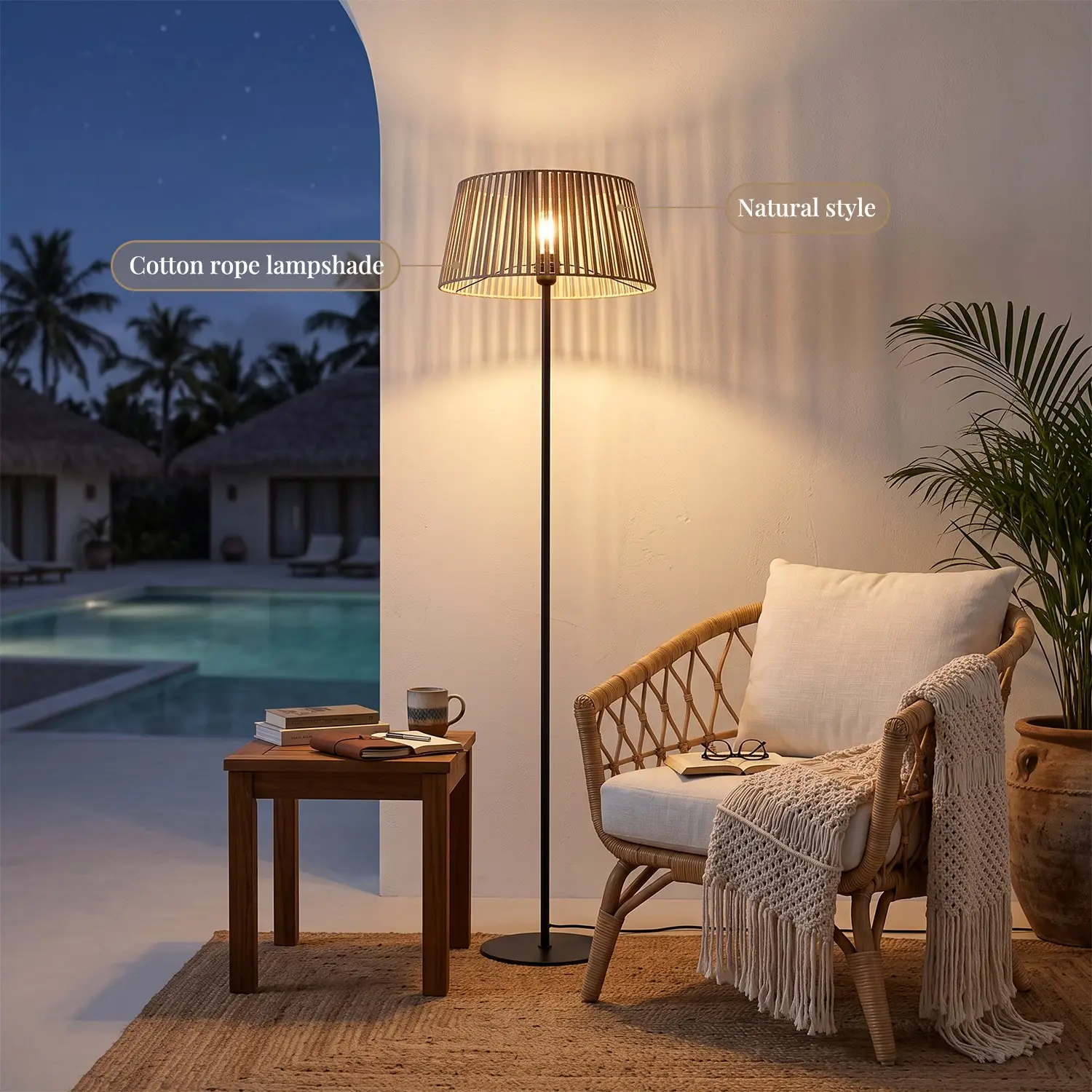
Commercial textile specifications for fabric light fixtures: Achieving long-term performance in commercial environments requires selecting textiles that meet NFPA 701 fire standards while utilizing heat-resistant polymer coatings to withstand continuous LED thermal output. Proper specification ensures structural integrity, consistent light transmission, and safety code compliance.
The Engineering Disconnect: Why Aesthetic Selection Fails in Commercial Lighting
In our production line, we frequently observe a critical gap between design intent and material capability. Architects often select Fabric Pendant Lights based on hand-feel and visual texture, ignoring the punishing reality of high-intensity commercial LED arrays. When fabrics lack a specific heat-resistant polymer backbone, the continuous thermal load leads to premature embrittlement, yellowing, and eventual structural failure. Understanding Flame Retardant Fabric Commercial Lamp requirements is not just about meeting code; it is about ensuring the long-term viability of the fixture investment.
Thermal Management: Mitigating LED Heat Impact on Textile Integrity
Thermal management is the most overlooked factor in Ceiling Light specification. LEDs may be efficient, but they emit significant localized heat at the heat sink junction. If a textile is placed within 50mm of the source without appropriate thermal dissipation, synthetic fibers undergo rapid polymer chain scission. During factory audits, we have found that standard textiles often experience a 30% reduction in tensile strength within 1,000 hours of operation. Our proprietary coatings are engineered to maintain integrity at temperatures up to 85 degrees Celsius, protecting the fabric from degradation and discoloration over the product lifecycle.
Compliance Mandates: Navigating NFPA 701 and ASTM E84 for Commercial Projects
Compliance with the NFPA 701 Standard Methods of Fire Tests for Flame Propagation of Textiles is a non-negotiable requirement for commercial installations. While NFPA 701 addresses the propagation of flame for drapery and hangings, ASTM E84 Surface Burning Characteristics of Building Materials measures flame spread and smoke development on interior finish materials. Procurement teams should note that decorative fabric ratings are not substitutes for these structural fire safety tests. Always request current laboratory reports from accredited third parties like SGS or Intertek before approving a textile for a large-scale project.
The Physics of Diffusion: Balancing Light Loss (LT) with Energy Efficiency
Light Transmission (LT) is a function of yarn denier, weave density, and coating thickness. We typically measure LT in a range of 45% to 75% depending on the required aesthetic opacity. Higher opacity requires higher LED wattage to achieve target foot-candles, which in turn increases thermal output. Our Engineering Commercial Comfort Procurement Lamps documentation provides a compensation matrix showing exactly how much lumen output is lost per 10 grams per square meter (GSM) of added fabric density.
Manufacturing Precision: Seam Engineering, Tensioning, and Large-Scale Consistency
Large-scale installations often fail due to seam puckering and sagging over time. Through thousands of units produced, we have developed automated tensioning processes that maintain a constant radial pull during the assembly of fabric diffusers. This eliminates fraying at the edges and ensures that the textile remains taut even under thermal expansion cycles. Achieving 98% color consistency across high-volume production batches requires rigorous spectrophotometer calibration in our QC laboratory, ensuring that the light rendering remains identical from the first to the five-hundredth unit.
Procurement Checklist: What to Demand from Your Textile Supplier
| Documentation Item | Purpose |
|---|---|
| NFPA 701 Certification | Flame propagation compliance |
| ASTM E84 Class A Report | Surface burning safety |
| Heat Aging Data (5,000 hrs) | Durability under LED heat |
| Light Transmission (LT) Index | Energy efficiency calculations |
Download Technical Spec Sheet & Compliance Portfolio
Access our full library of ASTM E84 test results and light transmission charts for your next commercial project.
Download DocumentationCase Study: Accelerated Aging Test Results
In our internal laboratory, we subjected our proprietary polyester-polymer composite to 5,000 hours of continuous 60°C exposure, simulating 5 years of heavy commercial use. Results showed a tensile strength retention of 94% and less than 1% yellowing as measured on the CIE L*a*b* scale. This verifies the efficacy of our UV-stabilized, high-heat resistant coatings in demanding Optimizing Maintenance Fabric Pendant installations.
Frequently Asked Questions
Q: Do all synthetic fabrics perform the same under LED heat? A: No, textile performance depends entirely on the chemical composition and fiber structure. Standard synthetics can degrade or yellow prematurely when exposed to the sustained heat profiles of modern LED drivers and modules.
Q: Is decorative textile certification enough for ceiling fixtures? A: No. Ceiling fixtures often require adherence to specific building codes, including ASTM E84 for flame spread. Always ensure your fabric is rated for the specific assembly and fire exposure requirements of the project.
Q: How does fabric opacity affect energy efficiency? A: Higher opacity fabrics typically reduce light transmission (LT), requiring more LED wattage to maintain foot-candle levels. This increased wattage generates more heat, requiring careful thermal management to prevent premature fabric failure.
Q: What is the difference between NFPA 701 and ASTM E84? A: NFPA 701 measures the ability of a fabric to resist flame propagation when ignited, primarily for curtains and hangings. ASTM E84 measures the surface burning characteristics (flame spread and smoke) of interior building materials.
Q: How do you ensure consistency in large-scale production? A: We utilize automated, high-precision tensioning methods and spectrophotometer-calibrated color checking, ensuring 98% color consistency across production batches to prevent visual variation in large installations.