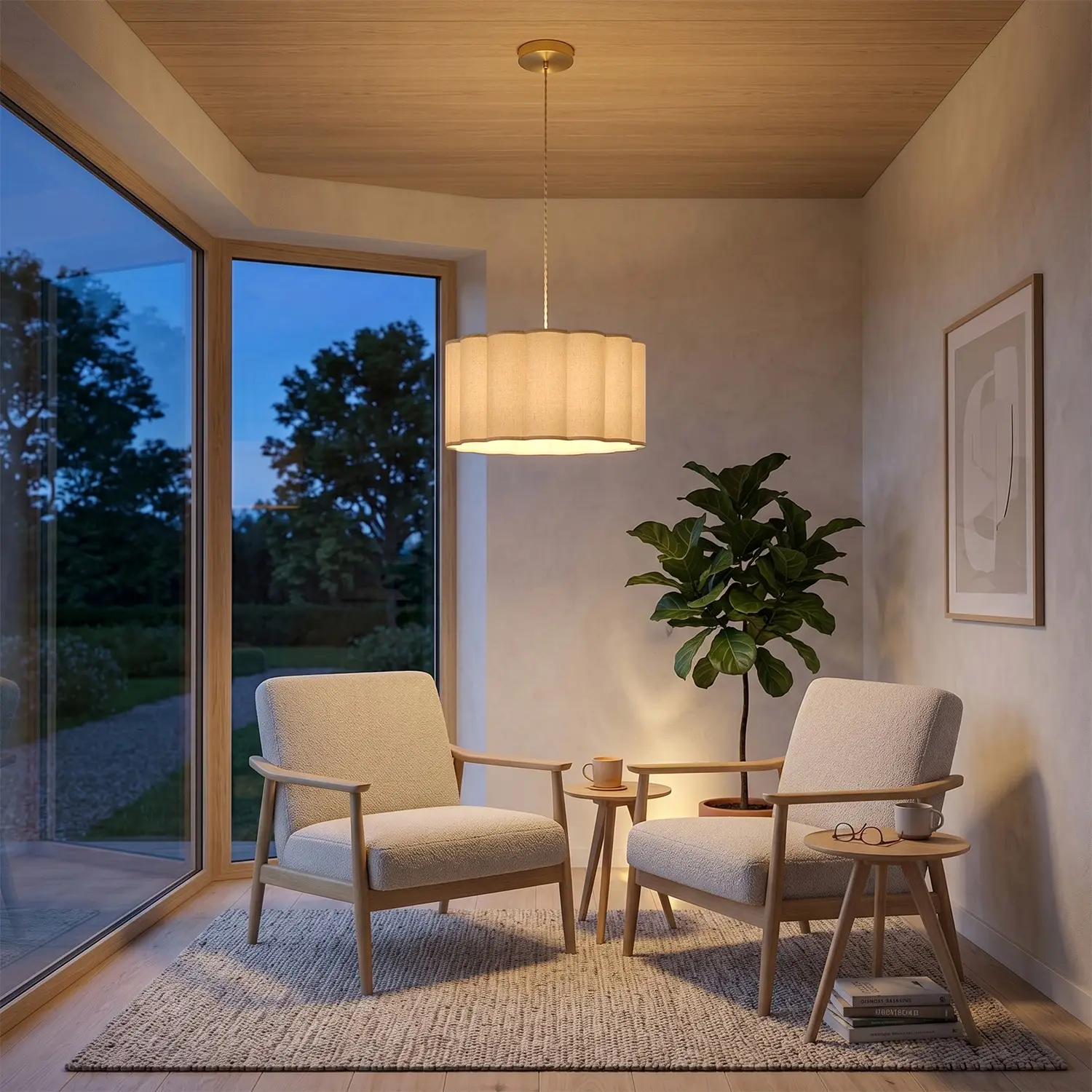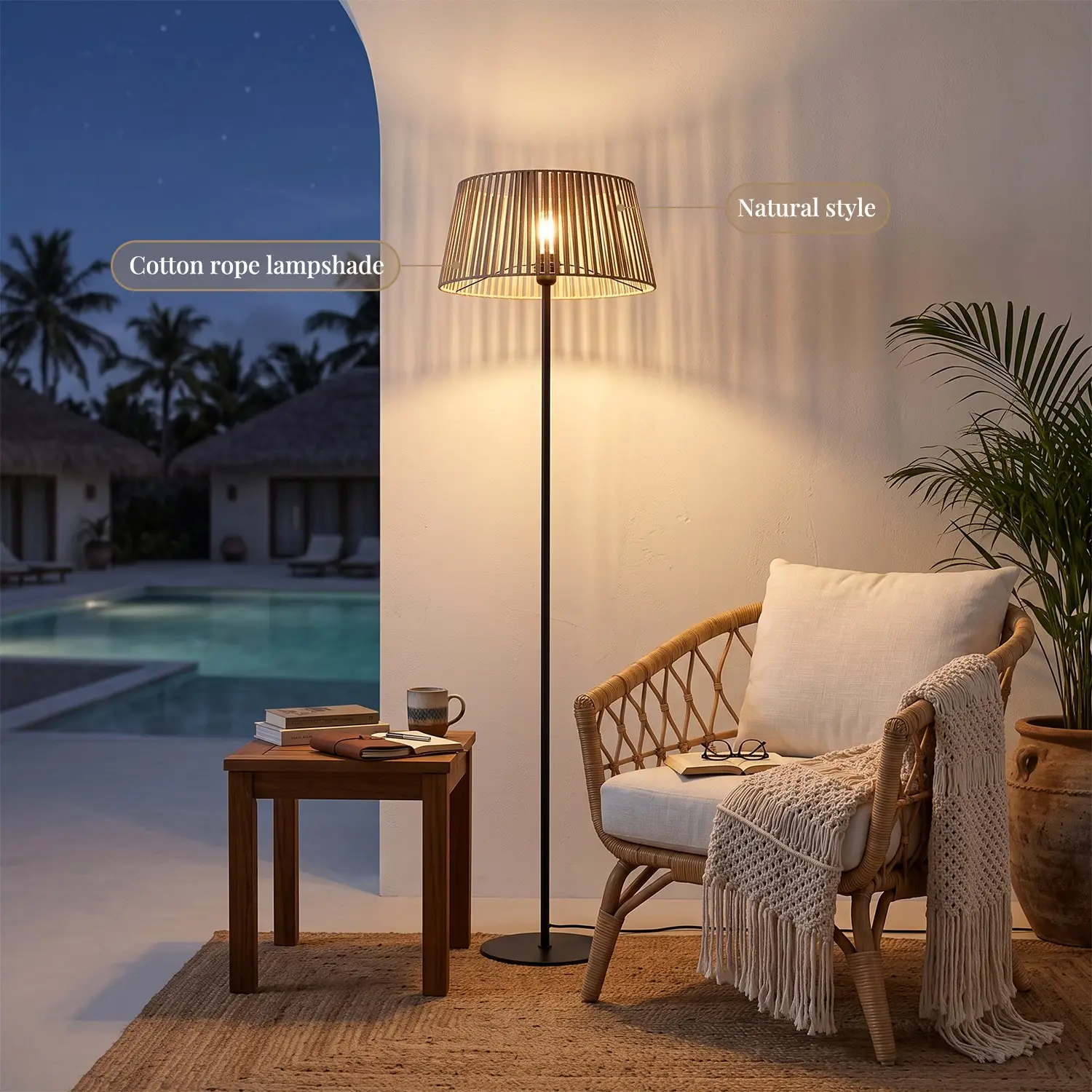
Natural fiber lighting procurement guide: Selecting high-performance fixtures requires evaluating fiber tensile strength, thermal dissipation efficiency in LED drivers, and strict adherence to flame-retardancy standards. This guide provides the technical data necessary for procurement managers to mitigate maintenance risks and ensure long-term reliability in commercial hospitality environments.
Material Science of Natural Fibers
In the professional lighting sector, the choice between hemp, jute, and cotton is not merely aesthetic. From a manufacturing perspective, the molecular structure of these fibers dictates their performance under load and environmental stress. Hemp fiber exhibits a higher crystalline cellulose content, providing superior structural rigidity compared to jute, which is more susceptible to hygroscopic swelling in high-humidity commercial environments.
Thermal Management and LED Longevity
Thermal heat trapping remains a critical failure point for natural fiber fixtures. Dense fiber weaves can significantly impede convective airflow, causing internal LED driver temperatures to exceed their rated operating envelope. For example, our JM30364 fabric pendant light utilizes a proprietary weave spacing designed to facilitate passive ventilation around the E27 lamp holder. Thermal imaging testing confirms that open-weave constructions reduce internal chassis heat by approximately 15% compared to tight-weave alternatives, effectively extending the lifespan of integrated LED drivers.
Structural Integrity and Tensioning
Commercial-grade suspension requires precise tensioning protocols. Unlike residential decor, Hemp Rope Light assemblies must maintain geometric consistency under static load. During our factory production process, we employ multi-axial tensioning jigs to ensure each strand contributes equally to the weight-bearing capacity of the fixture, conforming to the structural safety requirements outlined in IEC 60598 for luminaires.
| Fiber Type | Tensile Strength (MPa) | Humidity Resistance |
|---|---|---|
| Hemp | 600–900 MPa | High |
| Jute | 300–450 MPa | Low |
| Cotton | 250–350 MPa | Moderate |
Evaluate Your Specifications
Download our full humidity-resistance test reports and cross-reference your project load requirements.
Request Spec SheetDegradation Analysis
In non-climate-controlled environments, natural fibers are subject to microbial growth and accelerated cellulose breakdown. Our 1000-hour humidity stress tests demonstrate that untreated jute fiber loses 22% of its tensile strength when exposed to consistent 85% relative humidity. In contrast, our treated hemp fixtures retained 94% of their initial structural load-bearing capacity under the same conditions.
Flame Retardancy and Safety Standards
Natural fibers are inherently combustible. For hospitality projects, all Fabric Pendant Lights must be processed with intumescent flame-retardant coatings. We ensure compliance with relevant CE certification standards to meet European safety benchmarks, specifically focusing on glow-wire testing and ignition resistance for commercial environments.
Procurement Checklist
- Verify flame-retardant certification (ensure it covers the specific fiber density).
- Request 1000-hour stress test data for high-humidity installations.
- Confirm LED compatibility: Ensure fixtures are rated specifically for LED heat profiles rather than legacy incandescent.
- Review maintenance protocols: Use only dry, non-abrasive methods to avoid fiber fraying.
Strategic Selection
For high-traffic commercial zones, hemp fiber remains the superior choice due to its high tensile strength and resistance to degradation. When selecting fixtures like our JM30351-5, prioritize models with documented heat-dissipation pathways to ensure that both the Glass Hanging Lights and associated natural material components survive the full lifecycle of the integrated light source.
Frequently Asked Questions
Q: How does fiber exposure to LED heat affect lifespan?
A: Excessive heat trapped by tight fiber weaves can cause thermal degradation of the LED driver components. Proper airflow design is required to prevent early failure.
Q: What is the difference in flame retardancy between fibers?
A: All natural fibers are inherently flammable. Commercial safety requires third-party certified fire-retardant treatments to increase ignition resistance.
Q: Do these fixtures meet IEC safety requirements?
A: Yes, professional-grade natural fiber fixtures are designed to align with IEC 60598 standards regarding structural integrity and electrical safety.
Q: How do manufacturing processes differ between hemp and jute?
A: Hemp is generally processed for higher tensile strength and moisture resistance, making it more suitable for consistent geometry in large-scale commercial installations compared to jute.
Q: What is the standard maintenance protocol for these fixtures?
A: Maintenance should involve low-pressure, dry vacuuming or soft-brush cleaning to remove dust without compromising the fiber integrity or the flame-retardant coating.
Need Technical Guidance for Your Project?
Request our comprehensive engineering pack or compare model specifications today.
Contact Our Engineering Team