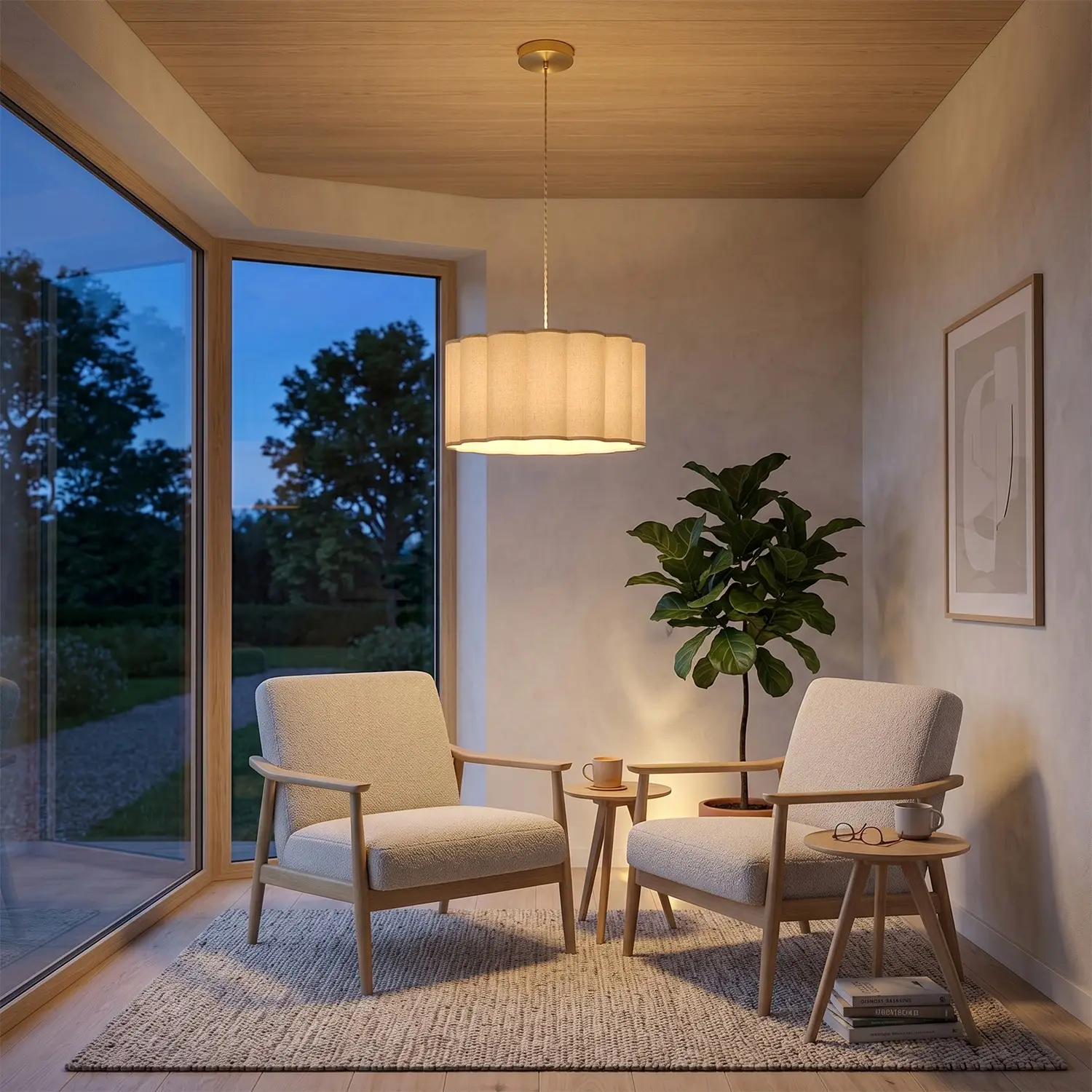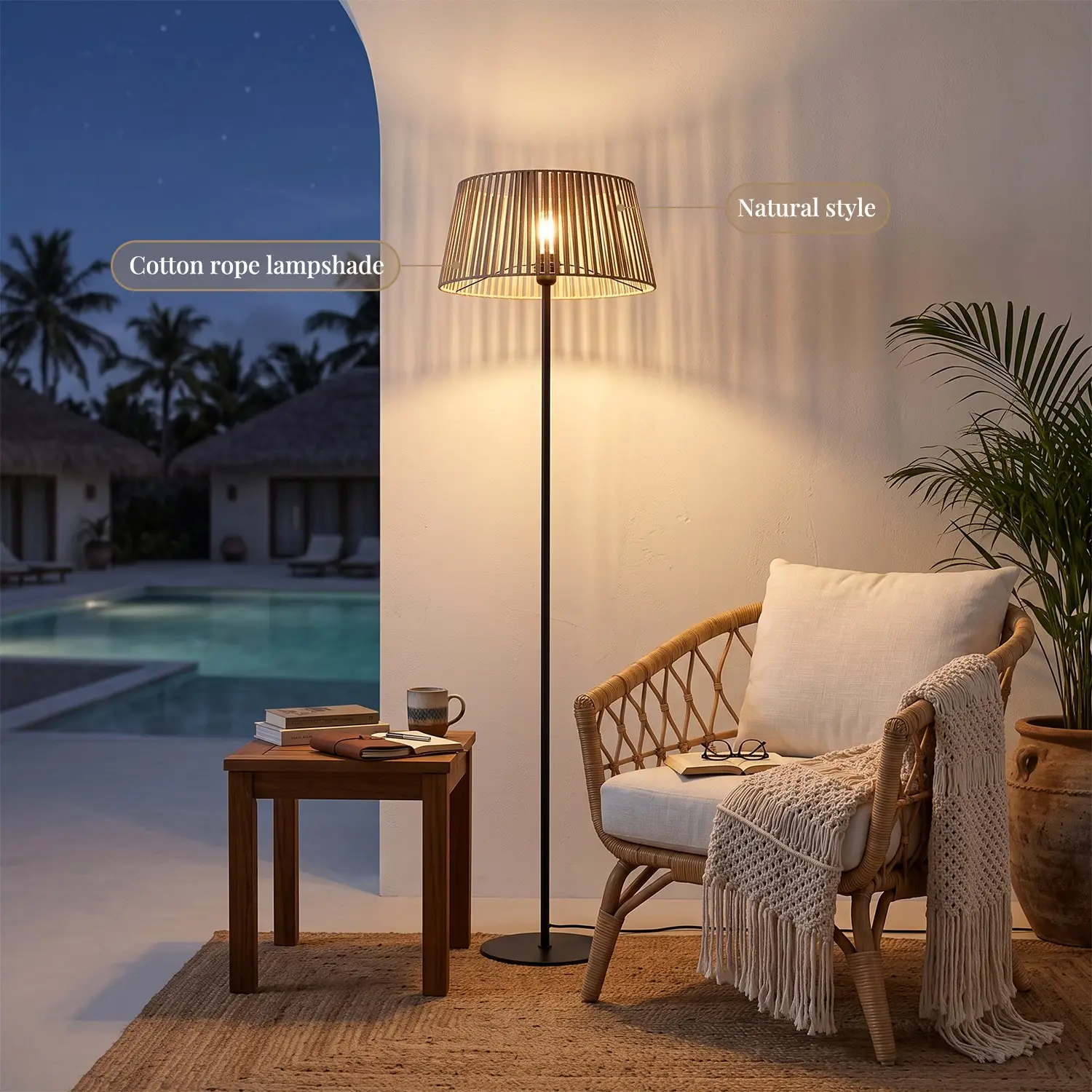
Sustainable fabric lighting procurement for commercial projects: Balancing sophisticated textile aesthetics with rigorous safety, thermal management, and long-term durability requires a standardized approach to compliance. Procurement managers must verify fire-retardancy certifications, material tensile strength, and LED thermal degradation to ensure large-scale installations meet architectural and safety specifications.
The Procurement Challenge: Balancing Design with Commercial Compliance
In large-scale hospitality and corporate developments, the aesthetic appeal of Fabric Pendant Lights often conflicts with the harsh realities of code-mandated safety. Procurement managers frequently face the challenge of reconciling designers' desires for natural, soft-touch textiles with building fire codes that mandate rigid performance metrics. Successfully navigating this requires early-stage engagement with manufacturers who operate under IEC 60598 standards for luminaires.
Material Science: Understanding Tensile Strength and VOCs
Large-format textile fixtures are susceptible to weave relaxation, which can lead to sagging in humid or high-traffic environments. From manufacturing thousands of units, we have found that cross-weave reinforcement is essential for maintaining geometric integrity. Regarding sustainability, while manufacturers may discuss VOC levels, verified compliance requires third-party testing reports. Always ensure that the specified fabrics meet structural load requirements before assessing their acoustic damping potential compared to standard industrial panels.
Navigating Safety Standards: Why NFPA 701 and DIN 4102 Compliance is Non-Negotiable
Public sector projects require absolute verification of flame retardancy. NFPA 701 (Standard Methods of Fire Tests for Flame Propagation of Textiles and Films) or the European DIN 4102 classification are standard industry benchmarks. Never accept a manufacturer's claims of flame resistance without the physical test reports from a certified laboratory covering the specific batch of fabric being used.
Thermal Management and Longevity: Protecting Fabric Under LED Illumination
Integrated LED modules generate localized heat that can cause textile discoloration or fiber brittleness over time. Our Model JY30321 large fabric ceiling light incorporates specific thermal air-gap spacing to mitigate this. For instance, testing on this model shows that keeping the LED junction temperature below 85 degrees Celsius effectively extends the fabric life-cycle beyond 24 months in continuous operation. This type of thermal efficacy is central to Engineering Large Scale Fabric Lamp protocols.
Scaling Consistency: Quality Assurance Processes for Multi-Batch Projects
Batch-to-batch variation is the primary failure point in large-scale commercial orders. During factory audits, we prioritize color-fastness testing using a spectrophotometer to ensure Delta E values are within 1.5. Model JM30364 is produced using a standardized tensioning process that ensures the weave maintains consistent light diffusion across all units in a shipment.
Logistics: Best Practices for Receiving and Tensioning Large-Format Fixtures
Large-format fixtures benefit from modular architecture. By designing components that allow for flat-pack shipping, we reduce the surface area at risk during transit. Upon arrival, site installation teams should inspect for tension-memory distortion. If creases occur during shipping, professional low-temperature steaming is the only recommended corrective action to restore textile integrity without compromising fire-retardant coatings.
| Feature | Commercial Grade Standard | Budget/Residential Grade |
|---|---|---|
| Fire Retardancy | NFPA 701 Certified | Untreated |
| Thermal Management | Active heat sinking | Passive enclosed housing |
| Consistency Control | Spectrophotometer matched | Visual inspection only |
Need Technical Support for Your Project?
Download our full material compliance guide and compare technical specs for our professional-grade fabric fixtures.
Download Spec SheetFrequently Asked Questions
Q: What are the fire safety and flame retardancy standards for large-scale fabric lighting installations?
A: The primary standards for large-scale textile lighting are NFPA 701 in the United States and DIN 4102 in Europe. Manufacturers must provide third-party laboratory test reports demonstrating that the specific fabric has passed these flame spread tests.
Q: How do sustainable fabric lighting solutions impact HVAC efficiency in commercial environments?
A: By utilizing thermally efficient LED-to-fabric spacing, fixtures minimize internal heat buildup. This reduces the load on local HVAC systems compared to older, high-heat bulb fixtures, potentially lowering total building energy consumption.
Q: What maintenance and cleaning protocols are required for high-ceiling fabric lighting in institutional projects?
A: Maintenance requires low-pressure air dusting or professional dry cleaning. Because commercial fabric is often treated with flame retardants, liquid cleaning agents must be avoided as they may strip the chemical coating.
Q: How do sustainable textile dyes and binders affect light transmission and lumen output consistency?
A: Natural, non-toxic dyes and binders can affect light scattering. High-quality manufacturing uses calibrated light-transmission sensors to ensure that even with eco-friendly materials, the final lumen output remains consistent across the entire production run.
Q: What are the supply chain documentation requirements for LEED or WELL building certification points?
A: To qualify for green building credits, you must provide material batch tracking numbers, proof of low-VOC certification from an accredited lab, and documentation of recycled content volume if applicable.
Streamline Your Procurement
Request a formal quotation and compliance documentation for your next commercial development.
Request a Quote