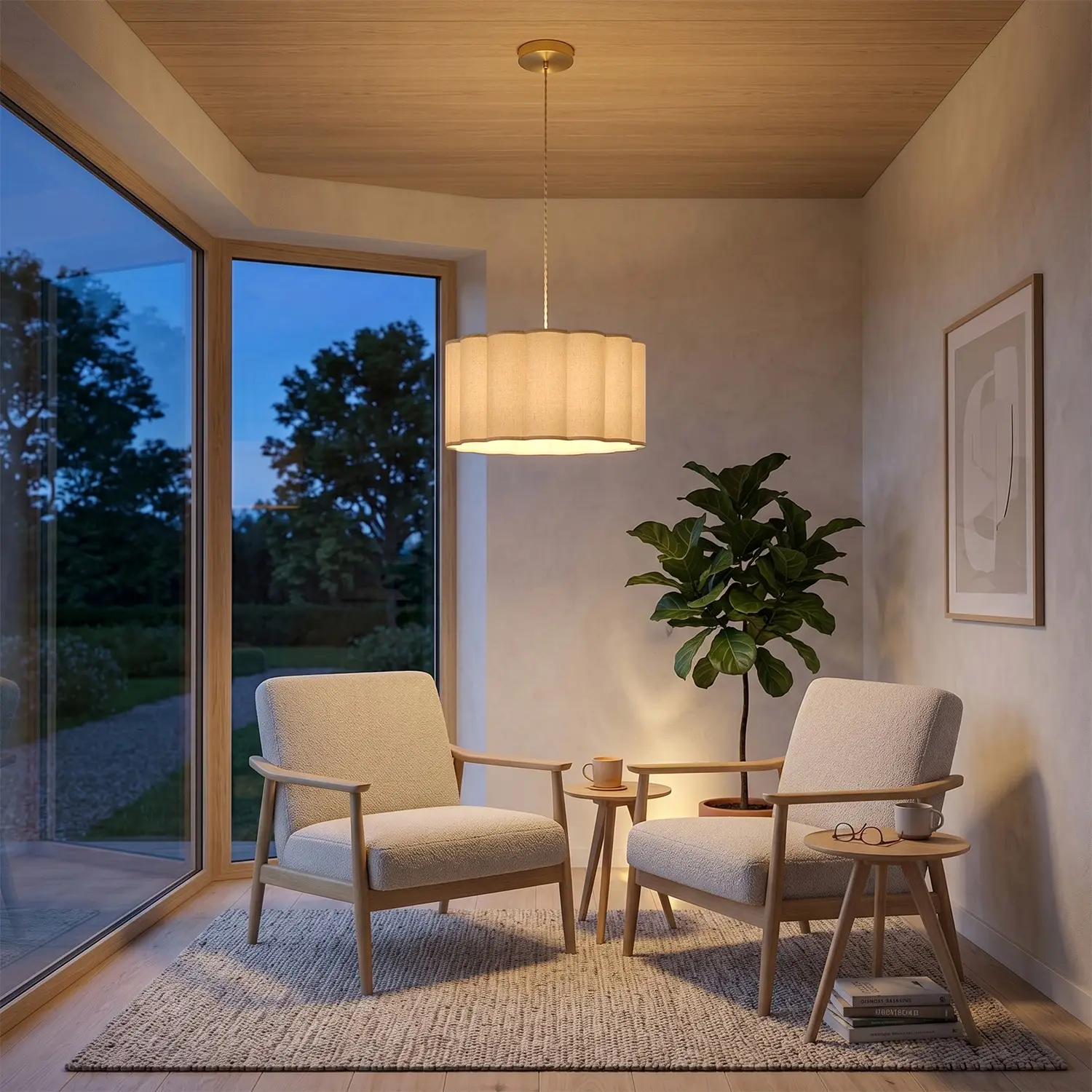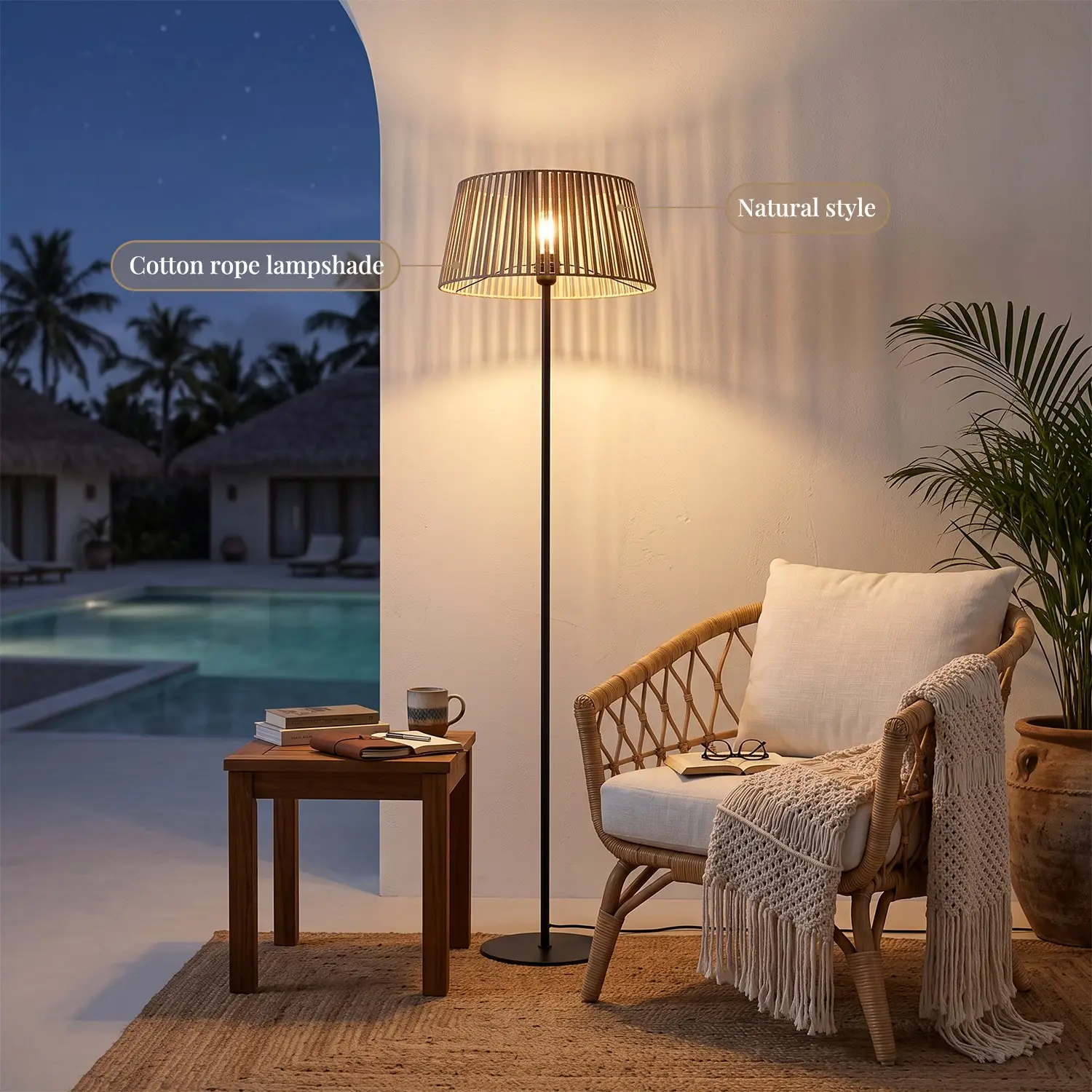
Architectural fabric tension lighting systems: These engineered solutions merge biophilic aesthetics with rigorous commercial performance. Unlike decorative fixtures, they integrate precise tensioning, ISO 354 acoustic absorption, and ASTM E84 flame-retardant compliance to meet the structural and safety demands of modern corporate and hospitality environments.
The Evolution of Biophilic Design: Beyond Greenery
Biophilic design has historically focused on incorporating living plants into interiors. However, the next phase of this movement emphasizes the psychological benefits of soft, diffused lighting that mimics natural filtration through tree canopies. For commercial designers, the challenge lies in scaling this aesthetic without sacrificing the stringent safety and structural standards required in modern architecture.
Industrial vs. Residential Fabric Shades
Distinguishing between residential pendants and architectural-grade Fabric Pendant Lights is critical for procurement managers. Residential units, such as our model JM30364, are designed for ease of installation in low-occupancy areas. In contrast, architectural-grade stretched fabric systems utilize high-tension framing mechanisms that prevent sagging over multi-year lifecycles. During factory assembly, we ensure that the frame-to-fabric mounting utilizes reinforced corner tensioners to maintain structural integrity under HVAC airflow.
The Physics of Fabric: Diffusion, GSM, and Kelvin Stability
The performance of any Ceiling Light using fabric hinges on Grams per Square Meter (GSM) management. We utilize high-GSM weave density to control melanopic lux output, preventing unwanted glare while maintaining Kelvin stability. Heat-aging test reports, showing light transmittance stability after 5,000+ hours of continuous LED operation, confirm that our selected textiles resist yellowing caused by thermal output from LED sources.
Acoustic Integration in Modern Workspaces
In open-plan offices, lighting should serve a dual purpose. By incorporating materials tested for sound absorption, our systems function as passive acoustical fabric light diffusers. We refer to ISO 354 noise absorption standards to calibrate the performance of our textile components, providing verifiable acoustic dampening that improves speech privacy in high-traffic environments.
Engineering for Longevity: Maintenance and HVAC Resilience
Commercial longevity depends on resilience to dust and air circulation. In our production line, we apply anti-static finishes that mitigate dust accumulation. Our model JY30321 represents our commitment to this, featuring a simplified mounting system that allows for efficient installation and maintenance. For detailed protocols, consult our Optimizing Maintenance Fabric Pendant guide.
Compliance and Safety: Navigating Flame Spread Standards
Safety is non-negotiable. All architectural textiles provided undergo ASTM E84 flame spread tests to ensure compliance with commercial fire codes. Procurement managers should always request the latest Fire Retardant Lamp Shade documentation before finalizing specifications for large-scale hospitality projects.
| Metric | Residential Fabric | Architectural Fabric System |
|---|---|---|
| Tensioning Mechanism | Gravity/Static | Precision Mechanical Tensioner |
| Flame Rating | Standard/Non-Rated | ASTM E84 Compliant |
| Acoustic Performance | Minimal | ISO 354 Certified |
Need Technical Data for Your Project?
Request our latest spec sheets and material samples to ensure your project meets all safety and performance benchmarks.
Request Technical Spec SheetPartnering for Custom Specifications
Our factory utilizes a collaborative design approach, working directly with specifiers to align material GSM and tensioning requirements with project-specific HVAC and acoustic conditions. By integrating factory audits and rigorous QC checkpoints, we ensure every unit meets the Architectural Finish Specification Technical Light requirements.
Frequently Asked Questions
Q: How does fabric-based lighting affect acoustic performance in open-plan offices?
A: Our fabric lighting systems are engineered with materials that provide acoustic dampening based on ISO 354 coefficients, which helps reduce reverberation time in high-traffic commercial spaces.
Q: What are the fire safety and flame-retardant standards for architectural fabric lighting?
A: We adhere to ASTM E84 flame spread standards for all commercial textile components to ensure fire safety compliance across all building types.
Q: Can fabric light diffusers be cleaned or replaced in high-traffic commercial environments?
A: Yes, our architectural systems are designed for maintenance accessibility, with modular tensioning that allows for professional cleaning or fabric replacement without full fixture removal.
Q: What is the typical lifespan of UV-resistant textiles used in indoor biophilic lighting systems?
A: Through 5,000+ hours of continuous LED heat-aging tests, our textiles demonstrate stability in both light transmittance and color, ensuring consistent performance over multi-year lifecycles.
Q: How do textile light diffusers influence light transmission compared to polycarbonate?
A: Textile diffusers offer a superior, soft-diffusion quality that minimizes hot spots and glare, which is critical for achieving the natural lighting aesthetics required in biophilic design.
Partner with Our Engineering Team
Contact us today to discuss your large-scale commercial lighting specifications.
Request a Consultation