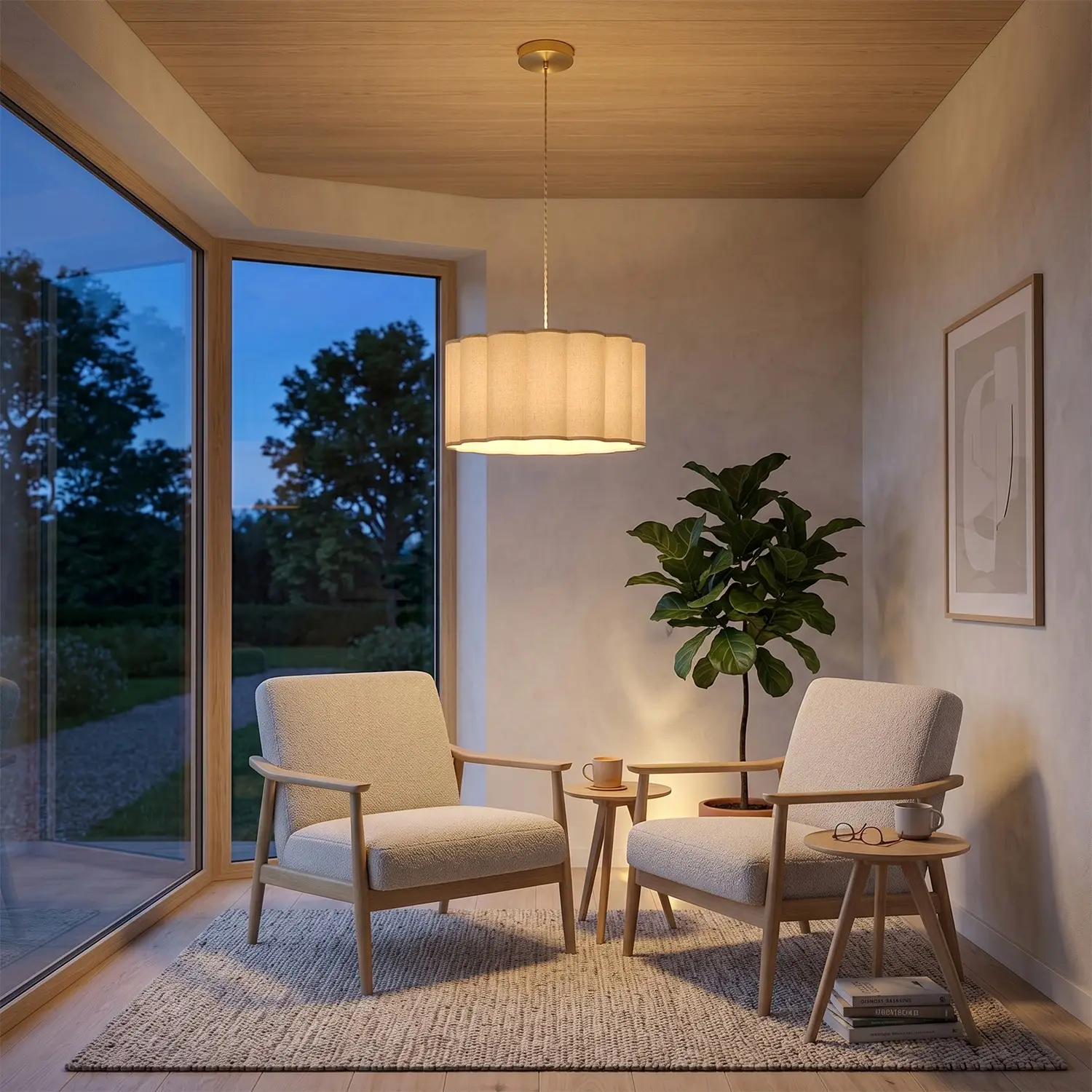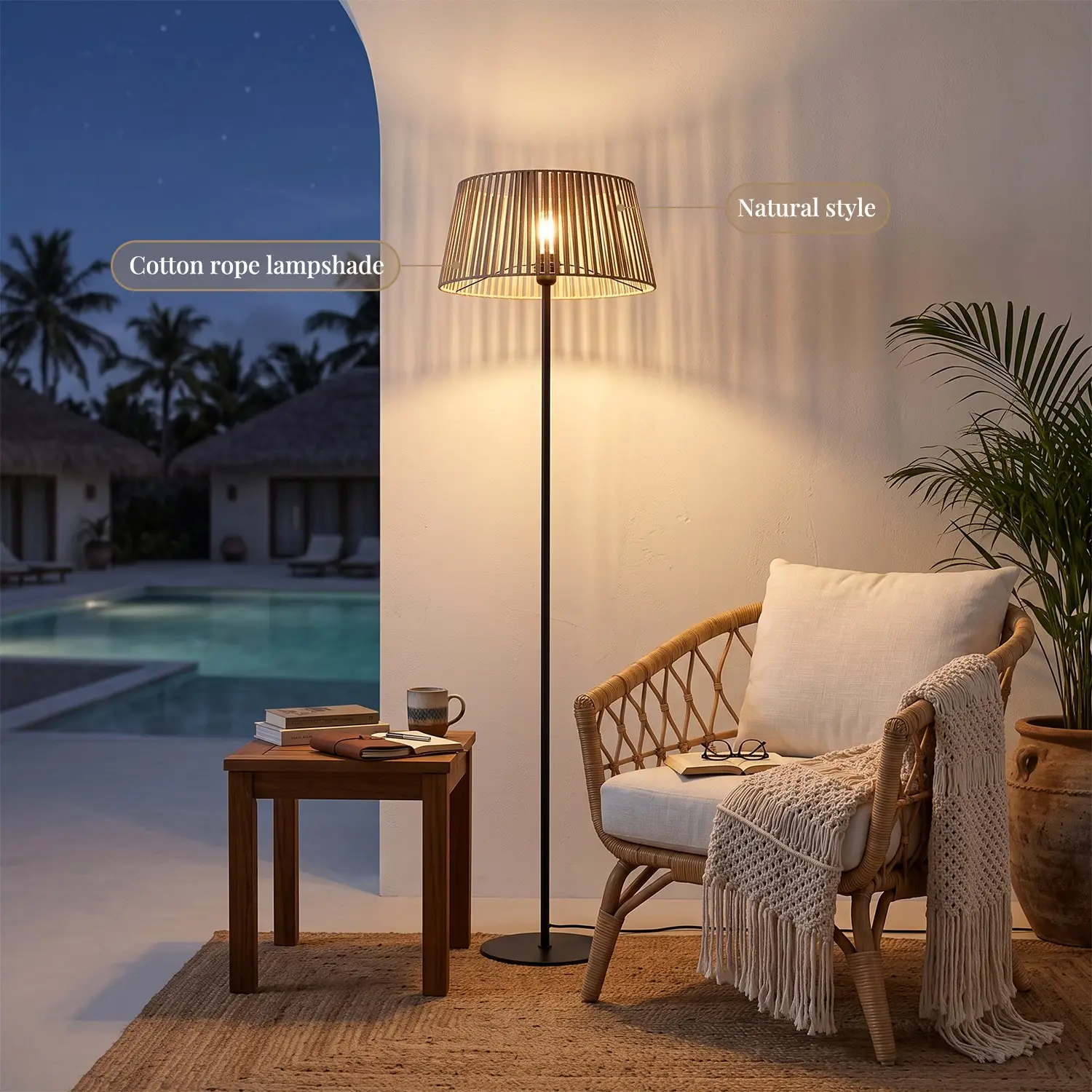
Commercial chandelier material specification guide: Selecting between natural fiber and industrial metal requires balancing aesthetic goals with rigorous structural and safety standards. Procurement managers must prioritize NFPA compliance, fatigue-resistant mechanical design, and thermal management to ensure long-term performance and safety in high-traffic hospitality and commercial environments.
The Engineering Trade-off: Aesthetics vs. Facility Longevity
In modern architectural lighting, the demand for natural textures creates significant challenges for facility managers. While fiber-based Chandeliers offer unique acoustic and aesthetic benefits, they do not inherently possess the durability of industrial-grade metal. During factory audits, we have observed that premature material degradation often stems from failing to account for HVAC-cycling and ambient humidity early in the procurement phase.
Structural Load Analysis: Ceiling Reinforcement and Fixture Weight
Large-scale pendants demand precise structural planning. Engineers must ensure the mounting surface adheres to structural load requirements. Our internal testing for models like the Glass Hanging Lights series (e.g., JM30351-5, measuring Ø49 × H110 CM) demonstrates that metal-glass combinations require rigid point-load calculations, often necessitating independent suspension cabling for heavy units.
Material Science: Tensile Strength vs. Fatigue Resistance
Natural fibers suffer from humidity-induced elongation. In our production line, we conduct tensile failure testing on all ropes intended for long-term hanging. Unlike steel frames, which exhibit predictable fatigue limits, organic materials fluctuate under HVAC-cycling. For high-traffic areas, we recommend metal-heavy fixtures like model JM30356, where the metal construction ensures long-term dimensional stability.
| Metric | Natural Fiber/Rope | Industrial Metal |
|---|---|---|
| Lifespan (High-Traffic) | 3-5 years (if maintained) | 10+ years |
| Fire Safety | Requires chemical treatment | Inherent (non-combustible) |
| Humidity Response | Prone to expansion/sagging | Stable (with powder coating) |
Download Technical Spec Sheets
Access our MSDS and load-bearing data for all commercial-grade fixtures.
Request Technical DocsSafety & Code Compliance: Fire Retardancy Protocols
All decorative fiber materials must comply with NFPA 70 / NEC standards. Our factory-floor process includes a pressurized application of flame-retardant solution that penetrates the fiber core. Without this documented treatment, natural materials fail to meet the code requirements for commercial public-access spaces.
Thermal Management: Protecting Fixture Integrity
Heat dissipation is critical for integrated LED Fabric Pendant Lights. Model JM30364, using E27 lamps, requires specific air-gap clearances to prevent localized charring or material fatigue. We test all lamp holders under full-load conditions at 240V to ensure thermal equilibrium within the shade enclosure.
Procurement Checklist & Performance Expectations
When specifying Hemp Rope Light or metal fixtures, demand documented test results for salt spray (ASTM B117) and pull-force testing. A 5-year performance expectation requires a regular re-tensioning schedule for fiber components, whereas metal fixtures primarily require biennial finish inspections to maintain integrity in high-moisture environments.
Frequently Asked Questions
Q: Do rope chandeliers meet commercial fire safety standards?
A: Only when they undergo factory-applied flame-retardant treatments that align with NFPA and local fire code standards for the specific commercial project.
Q: How often should I re-tension fiber chandeliers?
A: We recommend a quarterly inspection during the first year, transitioning to a biannual schedule as the material stabilizes in the HVAC-controlled environment.
Q: What is the benefit of powder-coated metal over natural fibers?
A: Powder-coated metal provides superior moisture resistance and structural predictability, which is critical for safety-regulated commercial ceilings.
Q: Are there weight limits for hanging light fixtures?
A: Yes, structural load requirements vary by ceiling type. Always consult the MEP engineer to verify the ceiling grid's ability to support the fixture weight and wind-load if near building entryways.
Q: How does thermal heat affect fabric lamps?
A: Excessive heat from high-wattage sources can lead to premature material degradation. Utilizing optimized LED cooling and ensuring proper ventilation around the lamp holder is essential for longevity.
Need Help Specifying Your Next Project?
Contact our engineering team for technical compliance support and custom material data sheets.
Contact Engineering