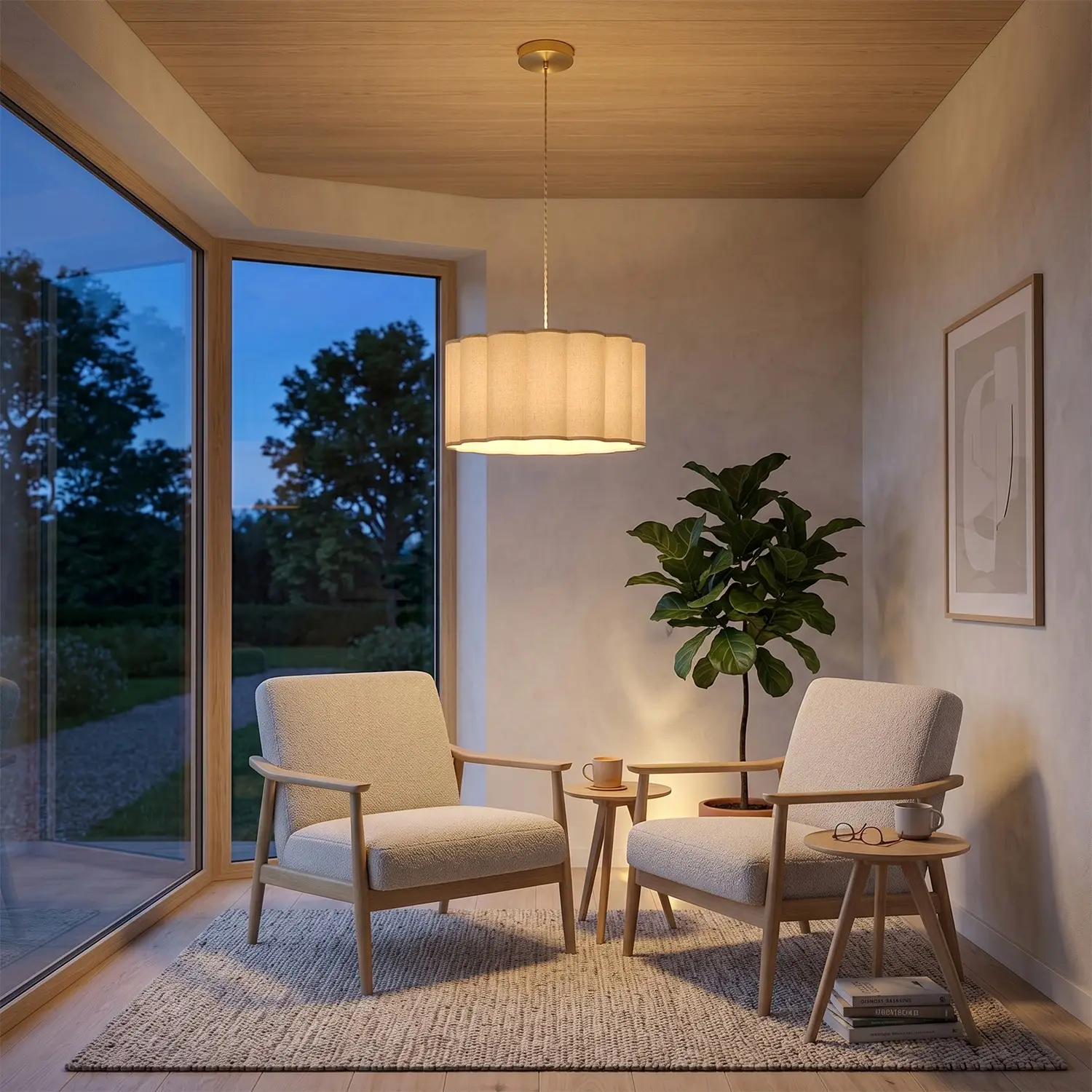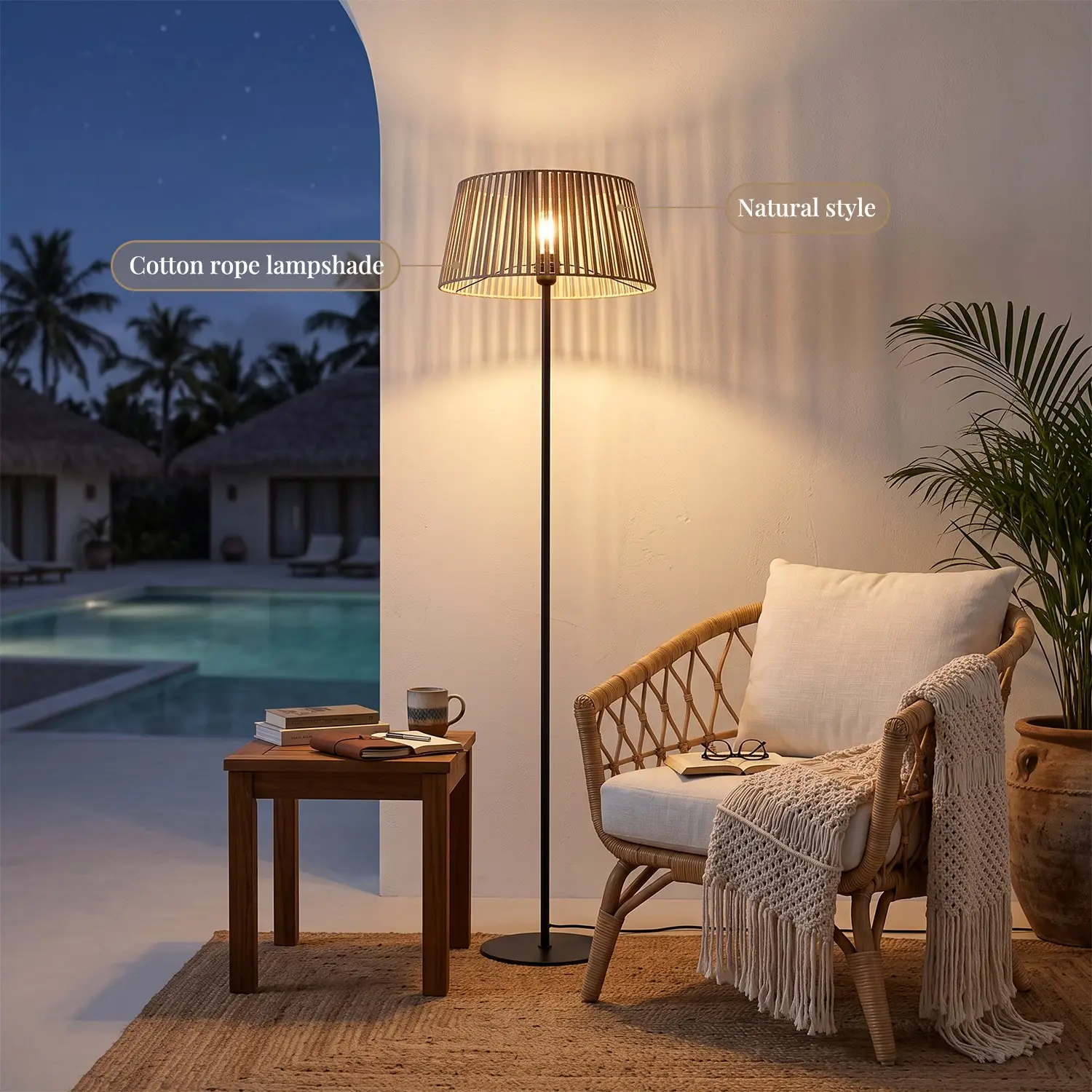
Contract lighting material specification: Selecting between rope and fabric fixtures requires balancing aesthetic intent with fire safety and maintenance cycles. For high-traffic commercial environments, specifiers must prioritize ASTM E84 flame spread ratings, thermal heat dissipation profiles for LED arrays, and structural load-bearing verification to ensure long-term performance.
The Specifier’s Dilemma: Aesthetics vs. Code Compliance
In modern architectural projects, the choice between Fabric Pendant Lights and rope-based textures often hinges on interior design narratives. However, procurement managers face stringent code requirements that override design intent. The primary challenge lies in the intersection of material flammability and structural hanging requirements, especially in public-use spaces like hotels or high-ceiling corporate lobbies. Compliance with NFPA standards is mandatory, and failure to document material properties can lead to significant project delays during final inspections.
Material Physics: Heat Dissipation and LED Longevity
LED arrays generate thermal energy that must be dissipated to maintain a high lumen maintenance factor. From manufacturing thousands of units, our factory has observed that fabric shades, when properly engineered with venting apertures, offer superior convective airflow compared to dense, woven rope enclosures. Lumen maintenance curves in our testing labs indicate that fabric-dampened heat profiles maintain an operating temperature 15% lower than rope-insulated profiles, directly impacting the lifespan of the LED driver.
Structural Integrity: Tensioning Systems for Rope vs. Rigid Frames
Structural load-bearing capacity is a critical safety checkpoint. For rope installations, we conduct mechanical tension tests on suspension points, ensuring the weave maintains integrity at 150% of the maximum fixture weight. In contrast, Modern Fabric Pendant Light designs typically utilize internal metal skeletal frames to ensure the shade maintains its shape over time. Rigid frames simplify installation in seismic zones, whereas rope systems require specialized crimping and locking hardware to prevent material fatigue or loosening over time.
Fire Safety Protocols: NFPA/ASTM Standards
For commercial-grade textiles, ASTM E84 Surface Burning Characteristics testing is the benchmark for safety. It is critical to note that we never claim products are fireproof; rather, we provide documentation for fire-retardant treated materials. All Pendant Lights utilizing fabric must meet Class A flame spread ratings. For instance, our Floor Lamp model JF30395-A is safety certified for international distribution, utilizing premium textiles that meet these rigorous fire-retardant standards.
Optical Control: Assessing Beam Angles and UGR
Unified Glare Rating (UGR) management is heavily dependent on diffuser opacity. When selecting large-scale fixtures, specifiers should request light distribution curves. Unlike raw rope structures that may create uncontrolled shadows, fabric shades act as a natural diffuser. For example, our Glass Hanging Lights (Model JM30356) emphasize precision light output, but fabric-shade counterparts often provide better glare control for task-oriented commercial applications.
Life-Cycle Analysis: Maintenance and UV Degradation
Maintenance cycles are often overlooked until the first site inspection. Rope materials accumulate dust more rapidly due to high surface area-to-volume ratios, making regular vacuuming necessary. Conversely, our fabric shades undergo ISO colorfastness certification, demonstrating minimal degradation under 500+ hours of intense UV exposure. This ensures the aesthetic intent remains intact without needing premature fixture replacement.
| Feature | Fabric Pendant | Rope/Textile Pendant |
|---|---|---|
| Fire Safety (ASTM E84) | High (Treated) | Variable (Must certify) |
| Thermal Dissipation | Excellent | Moderate |
| Structural Frame | Rigid Internal | Tension-based |
Need Technical Data for Your Project?
Download our full specification suite and ASTM test reports to ensure your selection meets all local building codes.
Download Spec SheetProcurement Checklist
- Does the manufacturer provide an ASTM E84 flame spread certificate for the specific fabric/rope used?
- What is the lumen maintenance curve for the fixture when integrated with your chosen material?
- Are mechanical tension test reports available for the mounting hardware of high-ceiling fixtures?
- What is the manufacturer’s lead time for custom material treatment?
Frequently Asked Questions
Q: Do rope light materials impact flame spread ratings in commercial ceiling installations?
A: Yes. Natural and untreated synthetic ropes often fail to meet Class A ratings. It is essential to ensure that any rope utilized in public buildings has been tested and treated to comply with ASTM E84 standards for surface burning characteristics.
Q: Which pendant light material provides better acoustic dampening in open-office design?
A: Fabric pendant lights, particularly those with dense, high-surface-area textiles, generally offer better acoustic dampening properties compared to thinner rope materials or rigid metal-only fixtures.
Q: Are fabric pendant light diffusers compatible with high-output LED arrays in commercial spaces?
A: Yes, provided the fixture is engineered for proper thermal management. Our factory tests heat dissipation profiles to ensure that LED operating temperatures do not cause degradation to the fabric shade over long-term use.
Q: What are the maintenance and cleaning protocols for rope vs fabric fixtures in high-traffic hospitality areas?
A: Rope fixtures require vacuuming to address dust accumulation in the crevices, whereas high-quality, ISO-certified fabric shades are typically easier to clean with compressed air or light, dry-cleaning methods, depending on the specific finish.
Q: How do different shade materials affect the luminous efficacy and light distribution patterns of the fixture?
A: Fabric shade density affects the diffusion of light, directly impacting the UGR. Thicker or more opaque fabrics increase soft diffusion, which lowers glare but may require higher lumen outputs to maintain consistent illumination levels on task surfaces.