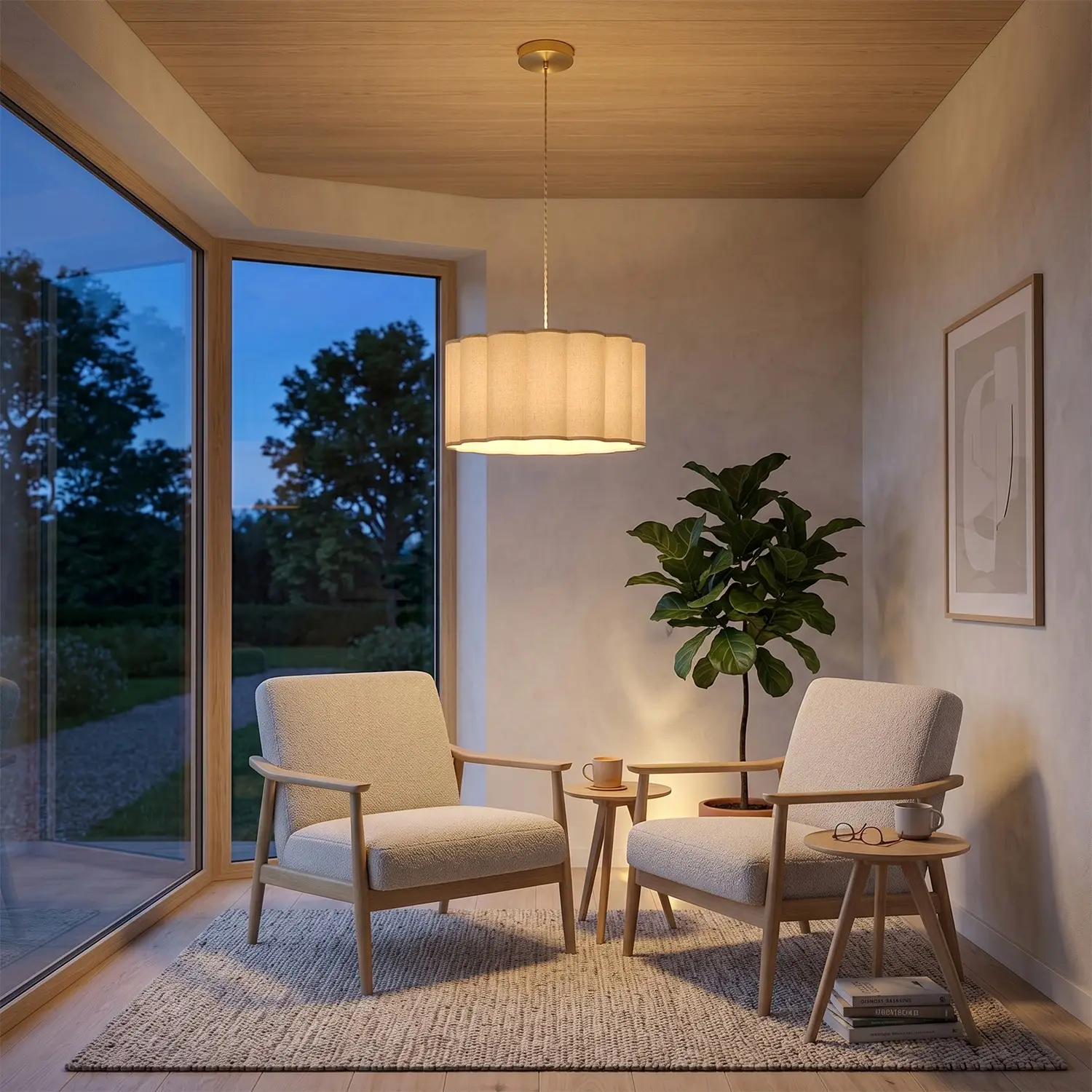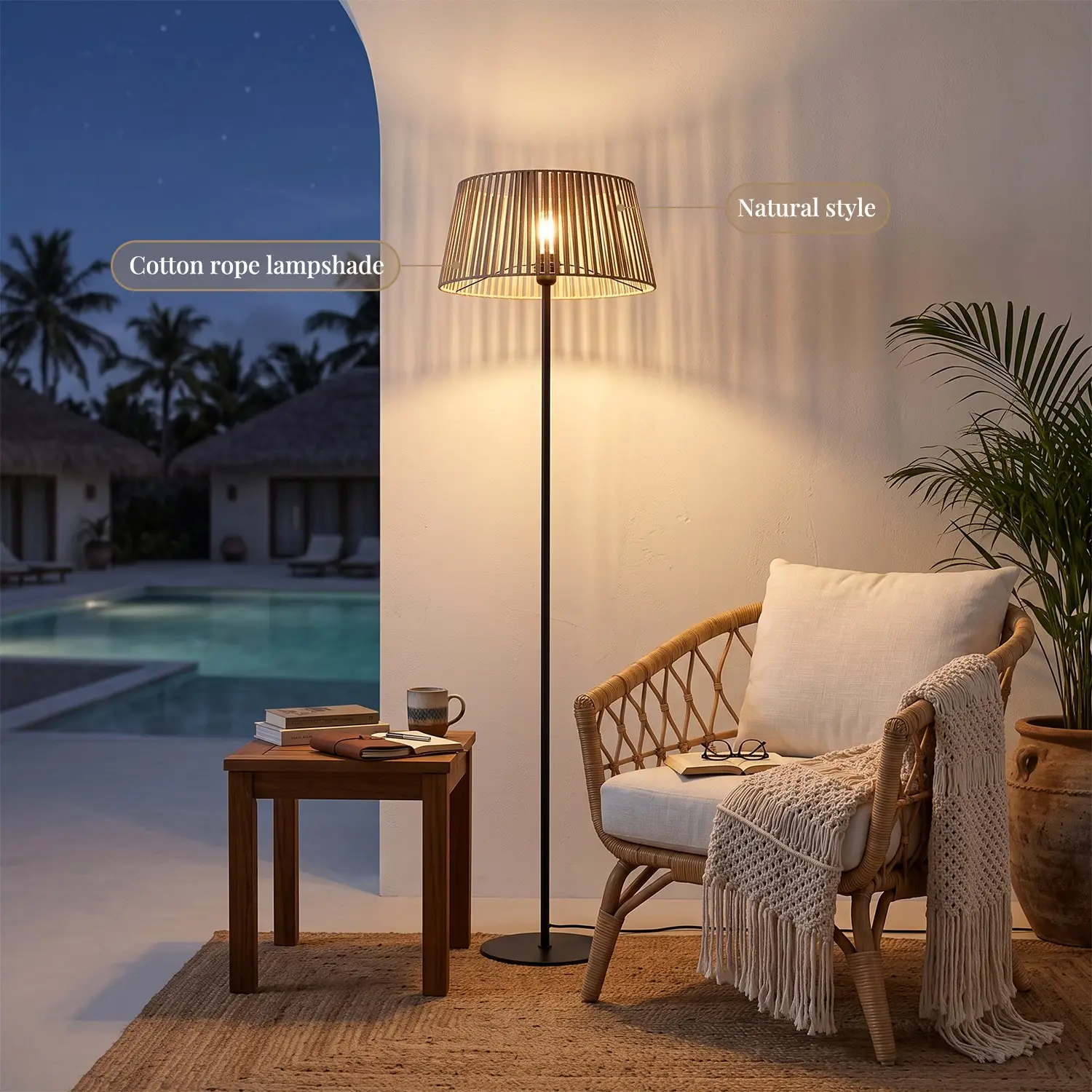
Rope pendant light wholesale supplier: Selecting a commercial partner requires balancing artisanal aesthetics with rigorous electrical and structural safety standards. Procurement managers must prioritize verified tensile strength, IEC 60598 compliance, and documented material flame-retardant performance to ensure fixtures meet high-volume hospitality and commercial building codes.
The Procurement Challenge: Balancing Aesthetic Appeal with Commercial Safety Compliance
In high-end commercial fit-outs, the Hemp Rope Light category offers a unique, organic aesthetic that is highly sought after by designers. However, procurement managers often struggle to reconcile these design-forward pieces with the strict safety mandates of modern building codes. A primary risk in sourcing these items is the reliance on decorative knots that lack internal mechanical support. In our production facility, we emphasize that true safety in rope-based lighting is derived from engineered internal structures rather than the external weave itself.
Structural Integrity: Evaluating Tensile Strength and Mounting Hardware
For any hanging fixture, the suspension hardware must undergo rigorous stress testing. Our factory protocols require that all suspension hardware and mounting brackets possess a tensile strength capable of supporting at least four times the total weight of the fixture. When dealing with Pendant Lights, we employ industrial-grade cable glands that prevent longitudinal strain on the conductor wires. During our internal QC inspections, we simulate extreme tension loads to ensure that neither the hemp fiber nor the mechanical crimping compromises the ceiling mount integrity.
Electrical Standards: Meeting IEC 60598 and UL Requirements
Commercial lighting procurement requires adherence to international safety benchmarks such as IEC 60598 for luminaires. For cord-integrated pendants, we implement automated strain relief assemblies where the electrical cable is anchored independently of the aesthetic rope. For example, our Fabric Pendant Lights follow similar stringent wiring standards. Specifically, for model JM30364, we utilize a standardized E27 holder rated for AC 110-240V, ensuring that all internal connections are isolated from heat sources to prevent premature insulation failure.
Material Safety: Verifying Flame and Smoke Spread Indices
Using organic materials like jute or hemp in a commercial space requires verifiable fire-safety certifications. It is insufficient for a supplier to claim materials are "treated"; professional buyers must demand lab-verified reports documenting flame spread and smoke development indices. We perform regular third-party testing on our rope fibers to ensure they meet stringent safety thresholds, often requiring non-toxic, flame-retardant coatings that do not off-gas under the heat of high-output LED or halogen bulbs.
Scaling Production: Distinguishing Between Boutique and High-Volume Manufacturing
There is a critical technical distinction between a studio-based artisanal approach and an automated OEM production line. For large-scale projects, consistency is key. We utilize specialized tooling to ensure every unit, such as our Glass Hanging Lights (e.g., model JM30356 with body dimensions of Ø30 × H100 CM), maintains exact uniformity in finish and structural assembly. Unlike small-batch workshops, our facility integrates QC checkpoints at every stage—from material raw-fiber preparation to the final Hi-Pot electrical safety test—to ensure each piece meets the same rigorous specifications.
The QC Checklist: Mandatory Documentation for Bulk Commercial Orders
When ordering in volume, your manufacturer should provide a comprehensive documentation packet. This includes, at a minimum, hi-pot test results confirming insulation integrity, tensile strength verification for the hardware assembly, and batch-specific certification copies for the flame-retardant treatment. By standardizing these requirements, procurement managers can minimize onsite installation failure rates and ensure long-term liability protection for their projects.
| Criteria | Commercial Requirement | Our Factory Standard |
|---|---|---|
| Weight Load | Safety Factor 2.0x | 4.0x Tensile Testing |
| Safety Certification | IEC 60598/UL | Certified CE/IEC Compliant |
| Material Treatment | Flame Retardant | Third-party Lab Verified |
| Electrical QC | Hi-Pot Testing | 100% Units Tested |
Streamline Your Procurement
Download our full technical spec sheet and factory compliance documentation to expedite your vendor vetting process.
Request a QuoteFrequently Asked Questions
Q: How do we verify the weight capacity of hanging mechanisms for custom OEM lengths?
A: We conduct static load testing on every custom cable assembly. We provide documentation confirming that the mechanical crimps and ceiling attachments are rated for at least four times the fixture mass, ensuring a structural safety margin required for commercial buildings.
Q: What are the specific fire safety standards for rope light materials?
A: We treat all natural fiber components with flame-retardant agents that have been tested according to international fire safety indices. We provide lab reports upon request that verify low smoke spread and flame retardancy for each material batch used in our production.
Q: Can rope pendant lights be installed in damp hospitality environments?
A: Only fixtures explicitly rated with an IP (Ingress Protection) rating, such as IP44, should be used in damp areas. Unless a specific rope light model carries this rating, we recommend strictly indoor, dry-location installations to prevent material degradation and electrical shorts.
Q: How is thermal dissipation handled for enclosed rope-wrapped lighting?
A: We design our fixtures to maintain adequate air gaps between the heat-generating light source and the rope material. By utilizing UL-certified sockets and heat-shielding internal housing, we ensure that the rope fibers do not exceed their recommended operating temperatures.
Q: What is the difference between boutique manufacturing and our high-volume lines?
A: Boutique manufacturing often lacks the rigorous QC documentation required for large-scale commercial projects. Our high-volume lines utilize automated precision assembly and mandatory standardized test reports, such as Hi-Pot and tensile testing, which are essential for commercial compliance.
Partner with a Manufacturer that Prioritizes Engineering Transparency
Contact our engineering team to discuss your project requirements or to request a full factory audit packet for your upcoming procurement.
Request a Quote