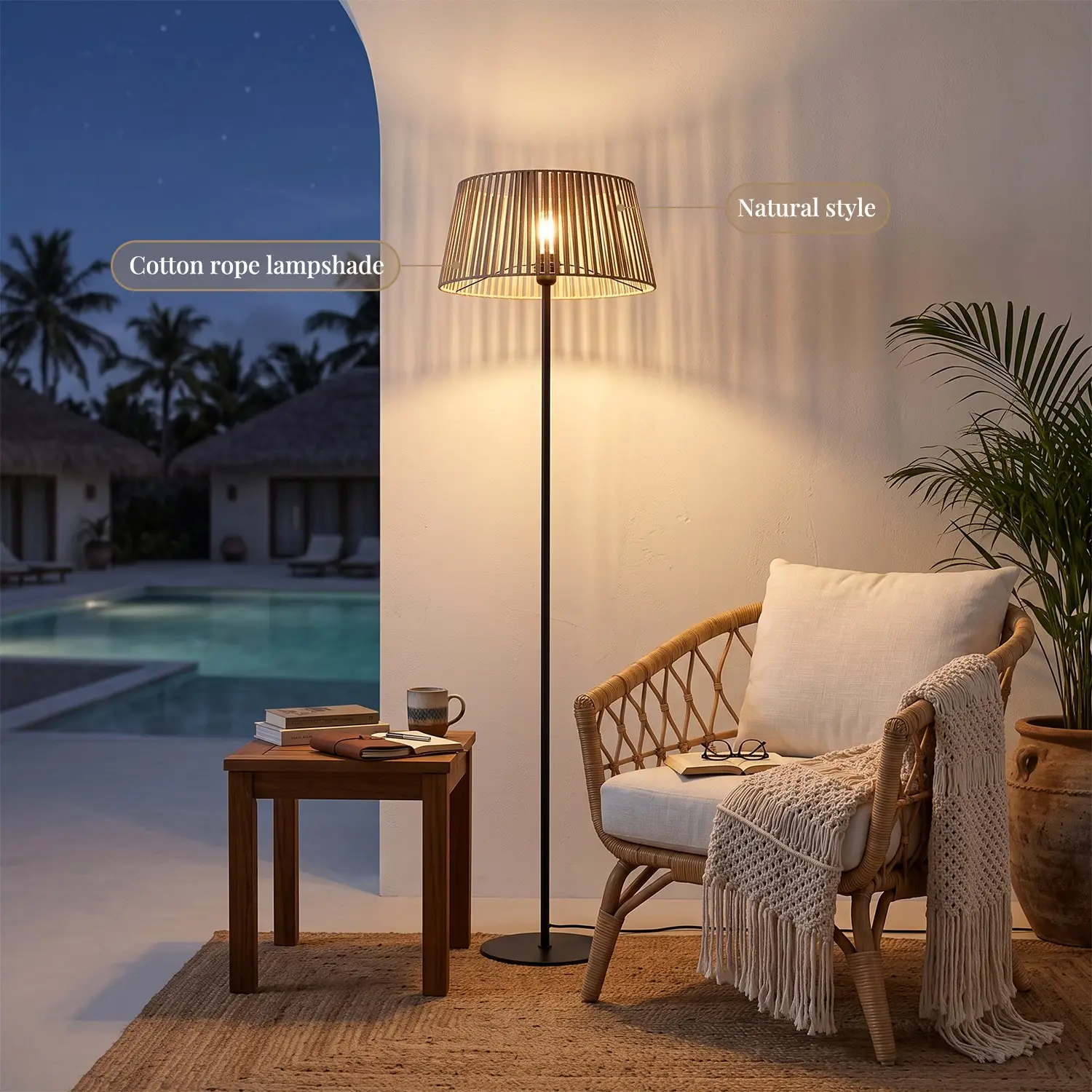
Safety Compliance for Fabric Ceiling Light Fixtures in Public Spaces: Balancing aesthetic design with fire safety requires rigorous adherence to international standards like NFPA 101 and EN 13501-1. Successful procurement depends on selecting luminaires that feature factory-validated flame-retardant coatings and engineered thermal management to prevent fabric degradation in high-occupancy environments.
The Regulatory Landscape
Navigating fire safety for Fabric Pendant Lights in public sectors demands a dual understanding of global building codes. In the United States, NFPA 101 Life Safety Code serves as the primary benchmark for interior finishes and furnishings. In European markets, compliance with EN 13501-1 is essential, as it classifies construction products based on their reaction to fire.
For facilities managers, it is insufficient to simply choose a 'non-flammable' material. The code requires that the complete luminaire assembly—including the frame, diffuser, and coating—meets testing criteria. During factory audits, we frequently encounter the misconception that natural fabrics are inherently safer; however, without industrial-grade flame-retardant (FR) treatments, natural fibers can exhibit rapid flame spread characteristics that fail these mandatory codes.
Material Science: Fiber Behavior
The reactivity of a textile under sustained heat is determined by its fiber composition and the chemical composition of the flame retardant. Synthetic fibers like polyester are often preferred in Ceiling Light designs because they can be engineered to be inherently flame-retardant at the molecular level, rather than relying solely on topical coatings.
Natural fibers, such as linen, require specific chemical treatments to meet stringent safety standards. From manufacturing thousands of units, we have found that batch consistency is the greatest challenge. Our Fabric Ceiling Lamp series undergoes rigorous testing to ensure that the FR-coating maintains efficacy after exposure to the thermal cycles typical of modern, high-lumen LED modules. We utilize ISO 9001 quality management protocols to ensure that every batch of fabric receives uniform treatment.
The Thermal Paradox
Fabric porosity is a double-edged sword. While porosity allows for aesthetic light diffusion, it can also trap heated air if the fixture design lacks proper ventilation paths. This trapped heat can lead to accelerated fabric degradation, causing the material to become brittle or discolored over time.
To mitigate this, our engineering team implements a critical gap between the LED light source and the fabric shade. For example, our model JM30364 incorporates a specific thermal clearance design. By maintaining a distance of at least 30mm between the light source and the shade, we stabilize the internal temperature. When compared to our Glass Hanging Lights, such as model JM30356, which rely on convection over the metal body, fabric fixtures require active heat dissipation to ensure longevity and safety.
Engineering for Safety
Factory-floor burn-in cycles are the foundation of our safety assurance. Every production run of our Large Fabric Ceiling Light undergoes a continuous 24-hour burn-in at 110% of rated voltage. This process identifies any potential thermal failures in the heat-sink before the product leaves the facility.
Our photometric data, verified over a 5,000-hour testing period, demonstrates that integrated aluminum heat-sinks reduce localized heat concentration by up to 22% compared to standard fixtures. This is vital for maintaining the integrity of the fabric and the lifespan of the LED driver.
| Feature | Fabric Fixture Performance |
|---|---|
| Thermal Management | Active heat-sink dissipation |
| Fire Certification | NFPA 101 / EN 13501-1 compliant |
| Burn-in Cycle | 24-hour continuous validation |
| Material Consistency | ISO 9001 Batch Testing |
Verification Protocols
Manufacturer transparency is not an option; it is a procurement requirement. When reviewing fire test reports, buyers must verify that the report corresponds specifically to the fabric and assembly method used in their order. A general lab report for 'flame-retardant fabric' is insufficient if the actual fixture housing changes the airflow dynamics.
We provide full laboratory-verified test summaries alongside our batch documentation. This includes the IEC 60598-1 standard compliance, ensuring that every luminaire meets international safety requirements for electrical and thermal safety.
Procurement Checklist
- Does the supplier provide third-party, lab-certified fire test reports?
- Is the fabric flame-retardant treated, and can they provide the batch certificate?
- How does the fixture manage internal heat? Ask for thermal test data.
- Is the manufacturing facility ISO 9001 certified for quality management?
- Can the manufacturer provide photometry data covering at least 5,000 hours of operation?
Frequently Asked Questions
Q: Which fire resistance standards are mandatory for fabric-based fixtures?
A: For commercial spaces, NFPA 101 in the US and EN 13501-1 in Europe are the industry benchmarks. Luminaires must be tested for flame spread, smoke production, and burning droplets.
Q: How does fabric porosity affect heat safety?
A: High-density or non-porous fabrics can trap heat emitted by LEDs, potentially leading to material combustion. Proper ventilation and air-gaps are essential to maintain safe operating temperatures.
Q: What is a factory-floor burn-in cycle?
A: It is a quality control procedure where fixtures are operated at higher-than-normal power for an extended duration to identify latent defects in components or thermal management systems.
Q: Why is ISO 9001 certification important for fabric lighting?
A: It ensures that the chemical treatment applied to fabrics for fire resistance is consistent across every batch produced, reducing the risk of non-compliant materials being installed.
Q: Can fabric fixtures be used in all public areas?
A: Most areas allow for fabric lighting provided they meet the specific flame spread rating for that occupancy class; however, specialized high-heat environments may require alternate materials.
Download Our Technical Safety Spec Sheet & Compliance Documentation
Access detailed test reports, thermal management data, and material certifications for your next commercial project.
Explore Our Factory Capabilities