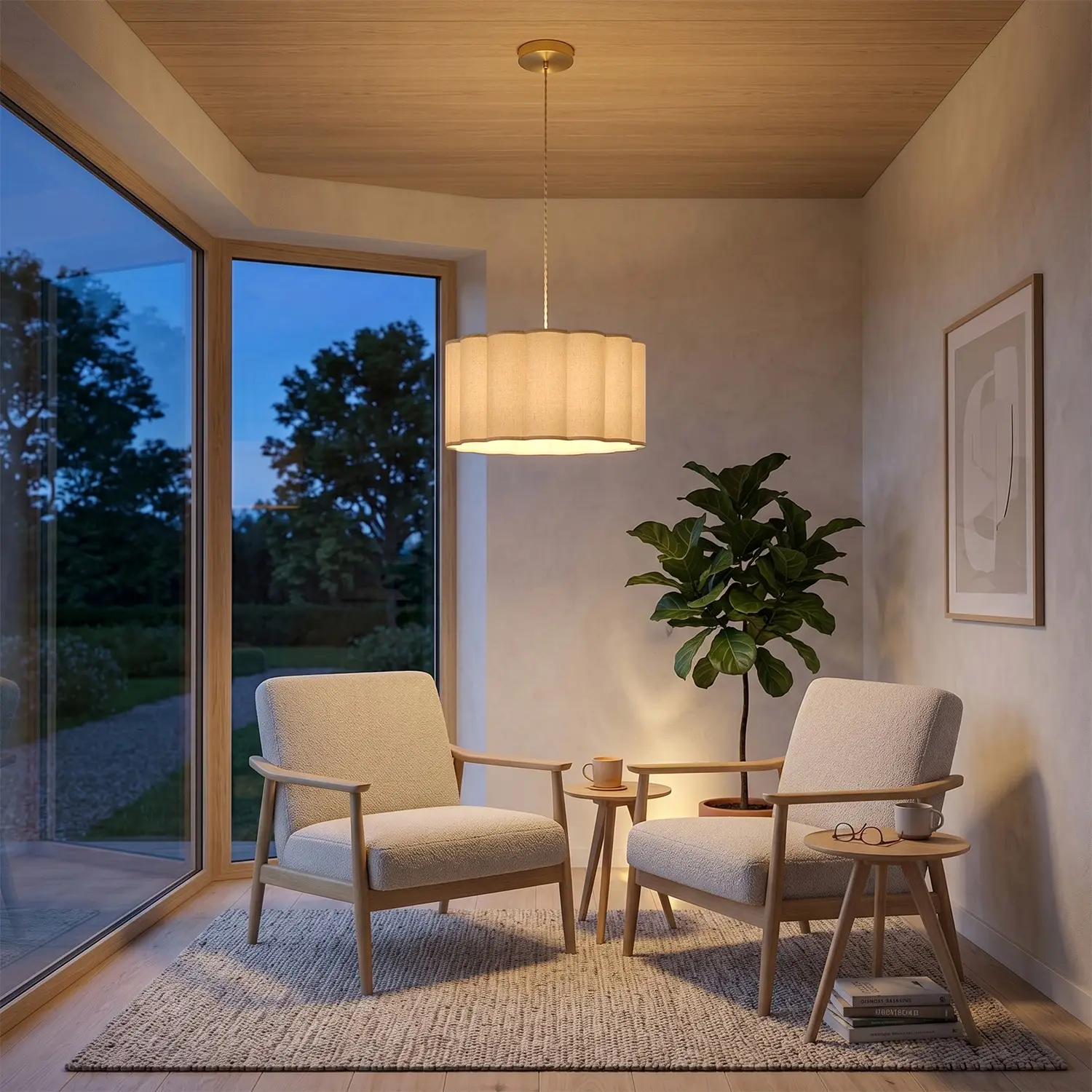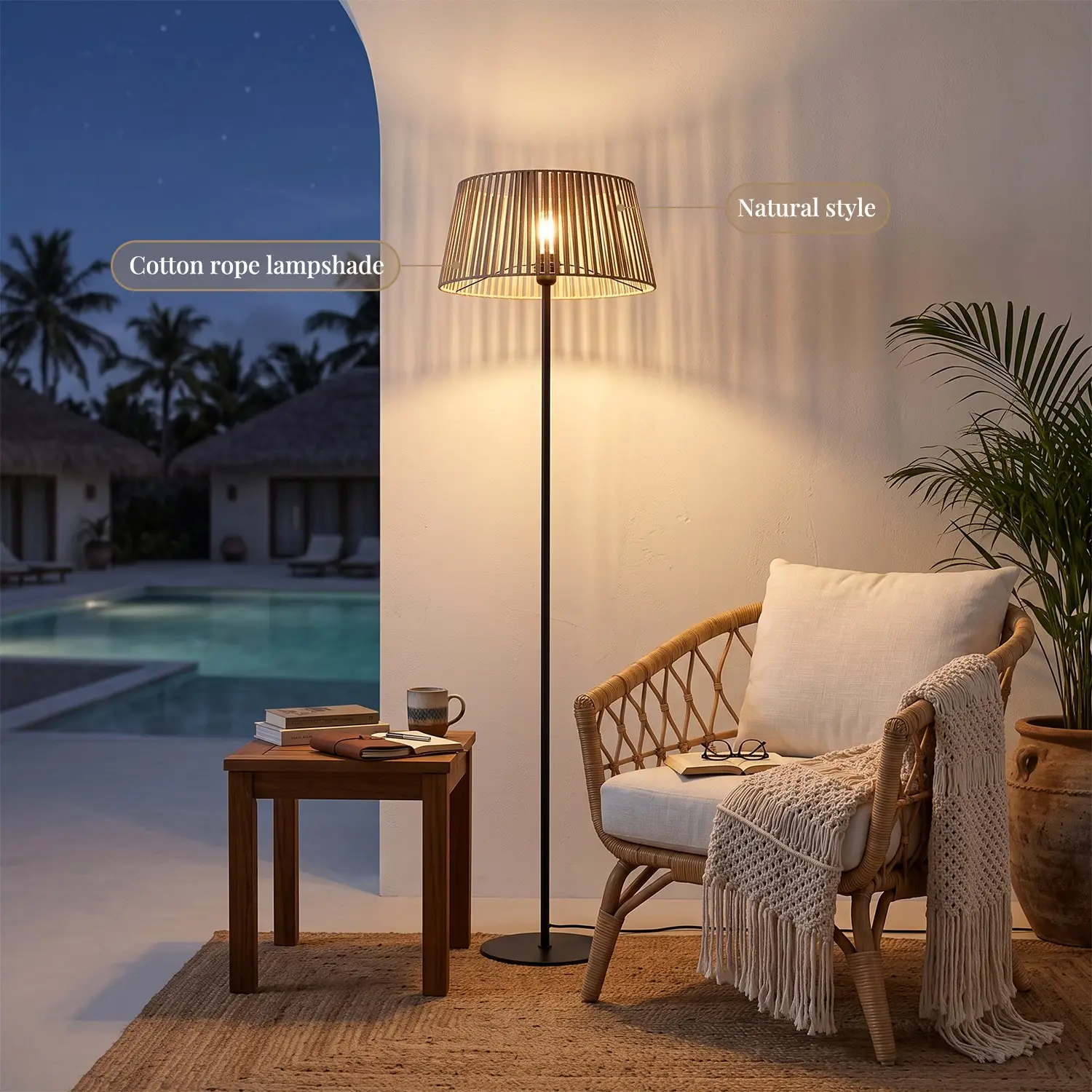
Selecting Commercial-Grade Fabric Lighting: Commercial-grade fabric lighting requires strict adherence to NFPA 701 fire-retardant standards and sophisticated thermal management for high-output LED integration. Procurement managers must prioritize verified laboratory testing for flame spread and tensioning stability to ensure long-term performance in high-occupancy commercial environments.
The Engineering Challenge: Fabric Aesthetics Meet Commercial Fire Codes
In high-end hospitality and corporate fit-outs, Fabric Pendant Lights are often favored for their ability to soften acoustic profiles and diffuse light. However, specifying these for commercial use introduces complex engineering requirements. Unlike residential fixtures, commercial-grade fabric shades must manage high-intensity LED light sources while complying with stringent life-safety regulations. Achieving this balance requires precise lamination and structural engineering that goes beyond basic visual design.
Material Science: Balancing Breathability with Thermal Dissipation
A frequent failure point in commercial installations is premature fabric yellowing or degradation due to trapped heat from high-output LED drivers. Our manufacturing process utilizes precision-engineered thermal gaps—specifically, a 15mm clearance between the internal LED module and the textile shell. For example, in our development of complex Floor Lamp modules like the JF30395-A, we employ a multi-layer composite textile that maintains structural integrity even when internal cavity temperatures exceed 65 degrees Celsius. Thermal imaging tests demonstrate that these venting protocols reduce external fabric surface temperatures by up to 22% compared to standard, non-vented shades.
Navigating Compliance: Why NFPA 701 and ASTM E84 are Non-Negotiable
Safety compliance is the bedrock of commercial lighting. We operate under the NFPA 701 Standard Methods of Fire Tests for Flame Propagation of Textiles and Films to ensure our fabrics do not contribute to fire growth. Furthermore, we test against ASTM E84 Surface Burning Characteristics. It is important to clarify that no fabric is truly fire-proof; however, our proprietary treatments reach Class A fire-retardant status, significantly slowing ignition and combustion rates. All internal wiring assemblies are certified to UL electrical safety protocols, ensuring the fixture remains stable under continuous load.
Manufacturing Quality Control: Stress-Testing Tension and UV-Stability
Large-scale installations often suffer from sagging fabric, which ruins the architectural silhouette. Our factory floor employs a proprietary tensioning protocol where shades undergo a 5,000-hour continuous stress test, during which tension is measured at 24-hour intervals to ensure zero slack development. We also apply a UV-resistant lamination finish to prevent colorfastness degradation, a common issue in lobby spaces with natural daylight exposure.
| Metric | Commercial Standard | Our Factory Protocol |
|---|---|---|
| Fire Compliance | NFPA 701 | Certified Laboratory Tested |
| Tension Stability | N/A (Industry Average) | 5,000hr Stress Test Pass |
| Heat Management | Standard Passive | Active 15mm Thermal Gap |
Need Technical Documentation?
Download our full catalog of laboratory test reports and fire compliance certificates to streamline your procurement process.
Download Spec SheetLifecycle Management: Maintenance Intervals for Fire-Retardant Preservation
While often marketed as maintenance-free, commercial fabric shades require routine dust mitigation to ensure both aesthetic clarity and fire safety compliance. Over time, dust accumulation can become a fuel source, potentially compromising the effectiveness of the flame-retardant coating. We recommend a cleaning interval of 6 months using soft-bristled suction attachments to preserve the fabric structure and ensure the FR treatment remains active as per factory certification.
Case Study: Longevity in High-Occupancy Environments
Our production team recently supported a 500-unit installation for a flagship corporate office project. By utilizing our proprietary tensioning hardware and integrating Glass Hanging Lights like the JM30356 for ambient accenting alongside custom fabric shades, the facility manager reported zero instances of sagging or discoloration after 24 months. The project benefited from our rigorous QC process, which included pre-shipment thermal load tests on all textile components to guarantee performance in continuous-use scenarios.
Selecting the Right Partner: Technical Checklist for Procurement
When vetting a lighting supplier, ensure they can provide the following: 1) Certified test reports from independent labs (not self-certified), 2) Data on thermal management for LED drivers, and 3) A transparent manufacturing history regarding tensioning and UV stability. Partnering with a manufacturer that understands the technical nuances of Fire Retardant Standards Fabric Pendant units will reduce long-term maintenance costs and eliminate liability risks in public-facing spaces.
Frequently Asked Questions
Q: What specific fabric treatment processes ensure compliance with NFPA 701?
A: Compliance is achieved through a deep-penetration topical chemical treatment or a pre-impregnated fiber coating that prevents the fabric from sustaining a flame once the ignition source is removed, as verified by independent laboratory burn testing.
Q: How does the durability of treated textiles compare to metal or glass in high-traffic environments?
A: While glass and metal offer superior impact resistance, our commercial-grade fabric shades are engineered for dimensional stability, using reinforced backing materials that resist tearing and deformation, offering a balance between weight and impact durability.
Q: What are the recommended cleaning protocols to maintain fire-retardant effectiveness?
A: We recommend light vacuuming every 6 months to remove dust accumulation, which ensures the flame-retardant properties are not obscured by particulate matter. Avoid harsh chemical cleaners, as these can strip the proprietary FR treatment.
Q: How do fire-retardant fabric fixtures perform in thermal management?
A: They require purposeful mechanical design, such as venting or thermal spacers between the LED and the fabric. Without these, internal temperatures can rise significantly, leading to accelerated material degradation.
Q: Which international test standards are required for global commercial projects?
A: Key standards include NFPA 701 (US Fire), ASTM E84 (US Flame Spread), and CE EN 60598 (European Safety), which govern both material flammability and general electrical safety for luminaire assemblies.
Partner With Our Engineering Team
Ready to specify high-performance lighting for your next commercial project? Connect with our technical experts today.
Request a Quote