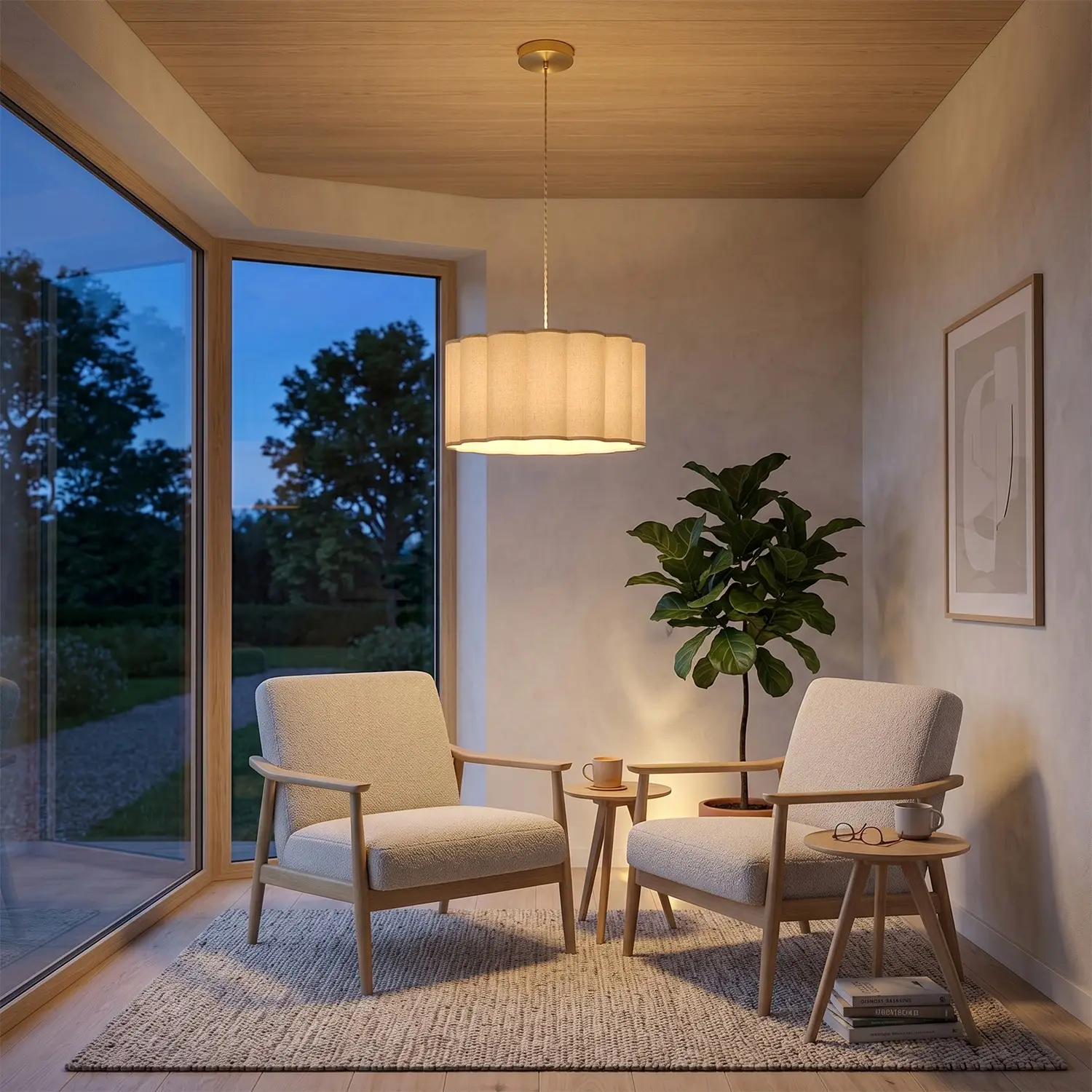
Selecting large-scale fabric pendant lighting for commercial atriums: Successful implementation requires balancing structural load-bearing capacity with NFPA-compliant flame-retardant materials. Architects and project managers must prioritize modular shipping design, thermal heat-dissipation, and professional rigging assessments to ensure long-term safety and performance in multi-story high-ceiling environments.
The Engineering Challenge of Atrium-Scale Lighting
In high-volume commercial spaces, the aesthetic impact of Fabric Pendant Lights often masks the significant engineering complexities involved. From a manufacturer's perspective, scaling a fixture to three or four meters in diameter introduces risks related to dead weight and material fatigue. Unlike standard Ceiling Light models, atrium-scale units require a rigid structural chassis to maintain geometric precision under tension.
Material Science: Flame-Rated Performance
For high-occupancy commercial lobbies, compliance with fire safety standards is non-negotiable. Manufacturers must provide specific documentation, such as ASTM E84 or NFPA 701 certifications, for every fabric SKU utilized. In our production line, we prioritize the use of inherently fire-retardant synthetic blends that resist yellowing from UV exposure, ensuring long-term aesthetic integrity in sun-drenched atriums.
Thermal Management and Optical Performance
High-output LEDs generate significant heat, which can degrade fabric shades if not managed. For example, our JY30321 model utilizes a ventilated internal chassis design, which we apply to our larger custom works to ensure airflow around the light engine. By integrating advanced thermal heat-dissipation, we prevent fabric discoloration and extend the lifespan of the Selecting High Performance Fabric Lamps components. Furthermore, IES file simulation is essential to ensure that light reaches the ground floor with the intended lux levels.
The Logistics of Scale: Modular Manufacturing
Transporting fixtures exceeding standard container dimensions is a major pain point. We utilize a proprietary modular framing system where the chassis is shipped in segmented, damage-proof crates. This process allows for onsite assembly by skilled labor, reducing freight costs and preventing structural warping. During factory audits, we test the tolerance of these connection points to ensure seamless integration during the Scaling Fabric Pendant Lamp phase of a project.
Suspension Safety and Load-Bearing
Professional rigging is mandatory. We verify all suspension hardware through pull-test success rates, ensuring the components meet UL 1598 luminaire safety standards. For our model JY30321, which operates at AC 110-240V with a 7W x 3 configuration, all structural mounting points are rated for at least four times the total weight of the fixture to account for seismic or wind-load considerations in open-lobby spaces.
| Atrium Height | Fixture Diameter | Min. Lumen Efficacy |
|---|---|---|
| 5 Meters | 1.5 Meters | 8,000 Lumens |
| 10 Meters | 2.5 Meters | 15,000 Lumens |
| 15 Meters | 4.0 Meters | 25,000+ Lumens |
Need Technical Specifications?
Request our full technical data sheets or a custom consultation for your upcoming atrium project.
Request Project ConsultationProcurement Checklist
When sourcing for large-scale projects, demand the following from your manufacturer: verifiable fire-rating reports (ASTM/NFPA), IES photometric files specific to the final fixture design, and documented pull-test results for mounting brackets. Ensure that the manufacturer has the capability to provide replacement fabric skins, as maintenance in 10-meter high voids is costly.
Case Study: Successful Atrium Installation
In a recent corporate lobby project, we supplied a series of 3.5-meter pendants. By utilizing our modular assembly process, we successfully navigated freight constraints, shipping the fixtures in 8 segments. The project team reported a 30% reduction in onsite assembly time compared to non-modular alternatives, with the thermal-dissipation chassis preventing fabric degradation over an 18-month test period.
Frequently Asked Questions
Q: How do you determine the structural load capacity for atrium-suspended fixtures?
A: We conduct rigorous pull-tests on all suspension hardware and integrate safety factors that exceed the total dead weight of the fixture by at least 400% to account for structural integrity.
Q: What maintenance protocols are required for fabric shade cleaning?
A: We recommend periodic dust removal via low-pressure air or electrostatic dusting; for deep cleaning, the modular design allows for the removal of the fabric skin without needing to deconstruct the entire primary chassis.
Q: Which fire-retardant fabric ratings are mandated for commercial atriums?
A: Most local building codes require compliance with ASTM E84 Class A or NFPA 701, though project-specific requirements should always be verified with the local fire marshal.
Q: How does light diffusion impact Lumen Maintenance in large-format pendants?
A: Diffusion materials can absorb light; our modeling process ensures that the selected fabric translucency matches the light source output to maintain the required floor-level illumination while minimizing glare.
Q: What are the integration requirements for atrium emergency lighting?
A: Emergency circuits should be isolated from the general dimming control and integrated into the driver housing, ensuring that the fixture remains illuminated even if the primary aesthetic control system fails.
Ready to start your project?
Contact our technical sales team for comprehensive support and specification downloads.
Download Spec Sheet