Commercial rope pendant light specifications: Specifying rope lighting for hospitality requires prioritizing structural load-bearing hardware, certified fire retardant treatments, and integrated strain relief systems. Unlike residential fixtures, commercial-grade lighting must meet strict electrical safety standards, such as IEC 60598, to ensure thermal management and fire code compliance in high-traffic ceiling junctions.
The Commercial-Grade Standard: Why Residential Rope Pendants Fail
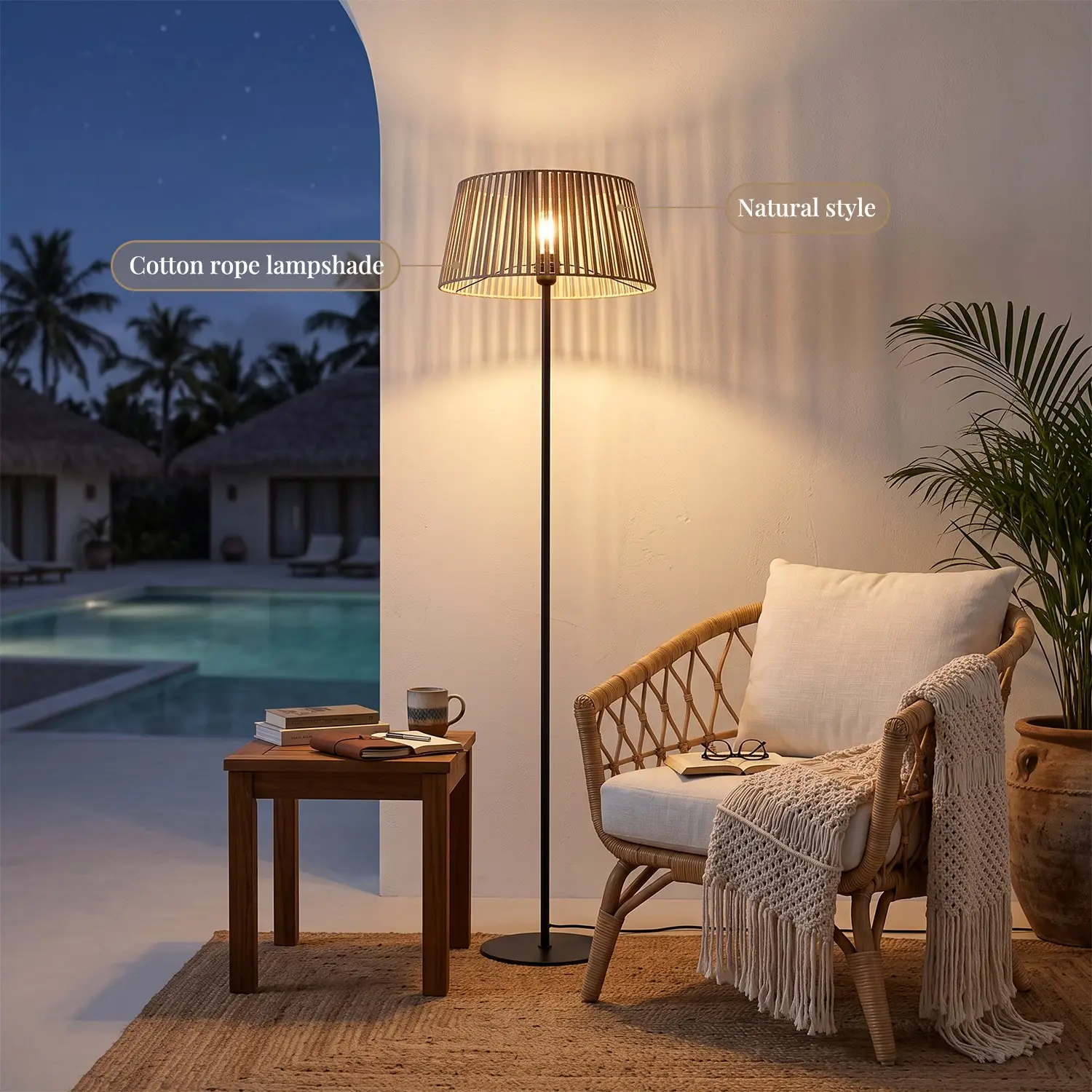
In high-traffic hospitality environments, lighting fixtures face mechanical stresses that rarely occur in a residential setting. Residential-grade pendants often use decorative rope as the primary load-bearing element, which inevitably sags or frays over time due to gravity and vibrations. In our factory, we have observed that standard adhesive-bonded rope fixtures lack the tensile strength required for ceilings exceeding 3 meters. Commercial projects require a Hemp Rope Light designed with core-reinforced structures, ensuring that the decorative aesthetic does not compromise the functional lifespan of the luminaire.
Engineering Safety: Managing Weight, Tension, and Thermal Dissipation
Effective commercial lighting engineering relies on decoupling decorative weight from electrical connections. During production, we implement factory-integrated strain relief systems that transfer tension directly to the mounting bracket rather than the wiring. This is critical when working with heavier fixtures; for instance, while our Glass Hanging Lights like model JM30356 require different thermal considerations than rope, the principle of rigorous mounting remains constant. For rope pendants, thermal management is paramount. We adhere to IEC 60598 standards for thermal management, ensuring that bulb sockets are housed in materials or heat-sink structures that prevent the organic fiber casing from reaching critical combustion temperatures.
Fire Safety 101: The Non-Negotiable Need for FRT Standards
Safety is the primary variable in commercial procurement. It is essential to distinguish between 'fireproof' materials and those that are 'fire retardant treated' (FRT). All natural fibers used in our high-end Fabric Pendant Lights undergo a certified FRT process, which significantly slows ignition and flame spread. We document this compliance through independent laboratory testing logs, which are available to procurement teams upon request. When selecting suppliers, ensure they provide material friction coefficient data, verifying that the tensioning hardware will not cause the rope to slide or fray against the structural cable, which can create friction-induced heat hazards.
Technical Mounting: Ensuring Canopy and Stem Integrity
For high-traffic ceiling junctions, the integrity of the mounting plate is just as important as the fixture itself. We provide mounting plate load-test certification logs to ensure that our fixtures safely support their rated weight plus a 20% safety margin. Installation in professional settings should always involve structural blocking behind the drywall or suspended ceiling tiles. Our data indicates that failure to use proper load-bearing backing is the leading cause of fixture drift in hospitality interiors.
Material Selection: Natural vs. Synthetic Fibers
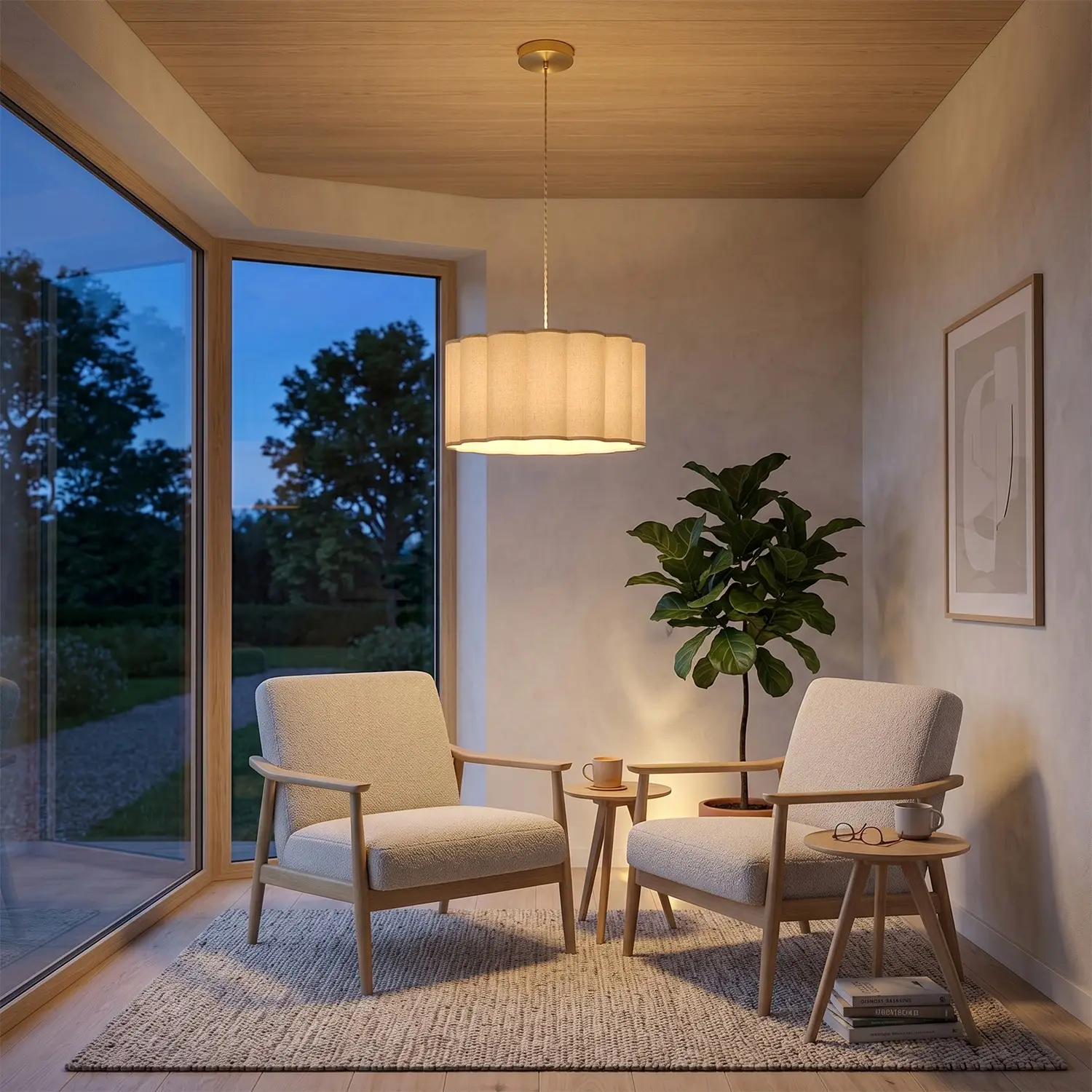
Choosing between natural jute/hemp and synthetic fibers involves balancing aesthetics with maintenance requirements. Natural fibers offer an organic warmth but can be sensitive to humidity. Synthetic alternatives, while more durable, must be UV-stabilized to prevent degradation. We maintain a detailed catalog of technical specifications for every unit, including the JM30364 Fabric Pendant Light, where we specify the exact voltage tolerance of AC 110-240V, ensuring compatibility with global commercial electrical systems.
| Feature | Residential Grade | Commercial Grade |
|---|---|---|
| Strain Relief | Integrated w/ Cord | Factory-Independent Hardware |
| FRT Compliance | Optional/None | Certified (UL/IEC) |
| Load Testing | Limited | Verified Certification |
Need Commercial Documentation?
Download our full technical spec sheet and independent load-test results to ensure your next project meets all fire and safety codes.
Request Spec SheetProcurement Checklist: What to Demand from Your Lighting Supplier
Before finalizing your procurement, ensure you receive the following: (1) UL 1598/IEC 60598 certification proof; (2) FRT compliance documentation for the rope casing; (3) Load-bearing test results for the canopy kit; and (4) Material friction coefficient data. These are not merely paperwork; they are the indicators of a supplier that understands the liabilities of high-traffic commercial installations.
Frequently Asked Questions
Q: How does rope material composition impact fire safety compliance in commercial ceiling installations?
A: Natural fibers are inherently flammable, so for commercial use, they must be treated with a certified Fire Retardant Treatment (FRT). This process does not make the rope fireproof but increases the ignition resistance to meet local commercial building codes.
Q: What are the maintenance requirements for organic rope lighting in high-traffic restaurant environments?
A: Maintenance involves routine dust removal and bi-annual inspections of the strain relief hardware. Because natural fiber can expand or contract with humidity, checking the tensioning points ensures the pendant remains level over time.
Q: Are there specific IP rating requirements for rope pendants used in outdoor patio or humid café settings?
A: Yes, rope fixtures used in outdoor areas or high-humidity settings must have an IP65 rating or higher to protect electrical components from moisture. Standard decorative rope is generally not suitable for outdoor exposed conditions unless explicitly rated.
Q: How can manufacturers ensure structural load-bearing consistency for rope pendants in long-term commercial use?
A: We use factory-integrated strain relief systems that decouple the rope weight from the electrical wires, paired with verified load-test logs on all mounting kits to ensure structural integrity remains constant throughout the fixture's service life.
Q: What is the difference between decorative rope casings and load-bearing cord integration?
A: A decorative casing simply surrounds a cable, putting the weight on the electrical wire, which is a major safety hazard. Load-bearing integration uses a steel aircraft cable or separate core structure to take the weight of the fixture, keeping the electrical wires under zero tension.
Streamline Your Procurement
Review our full product range and request documented safety test reports for your next high-traffic hospitality project.
Contact Sales Team