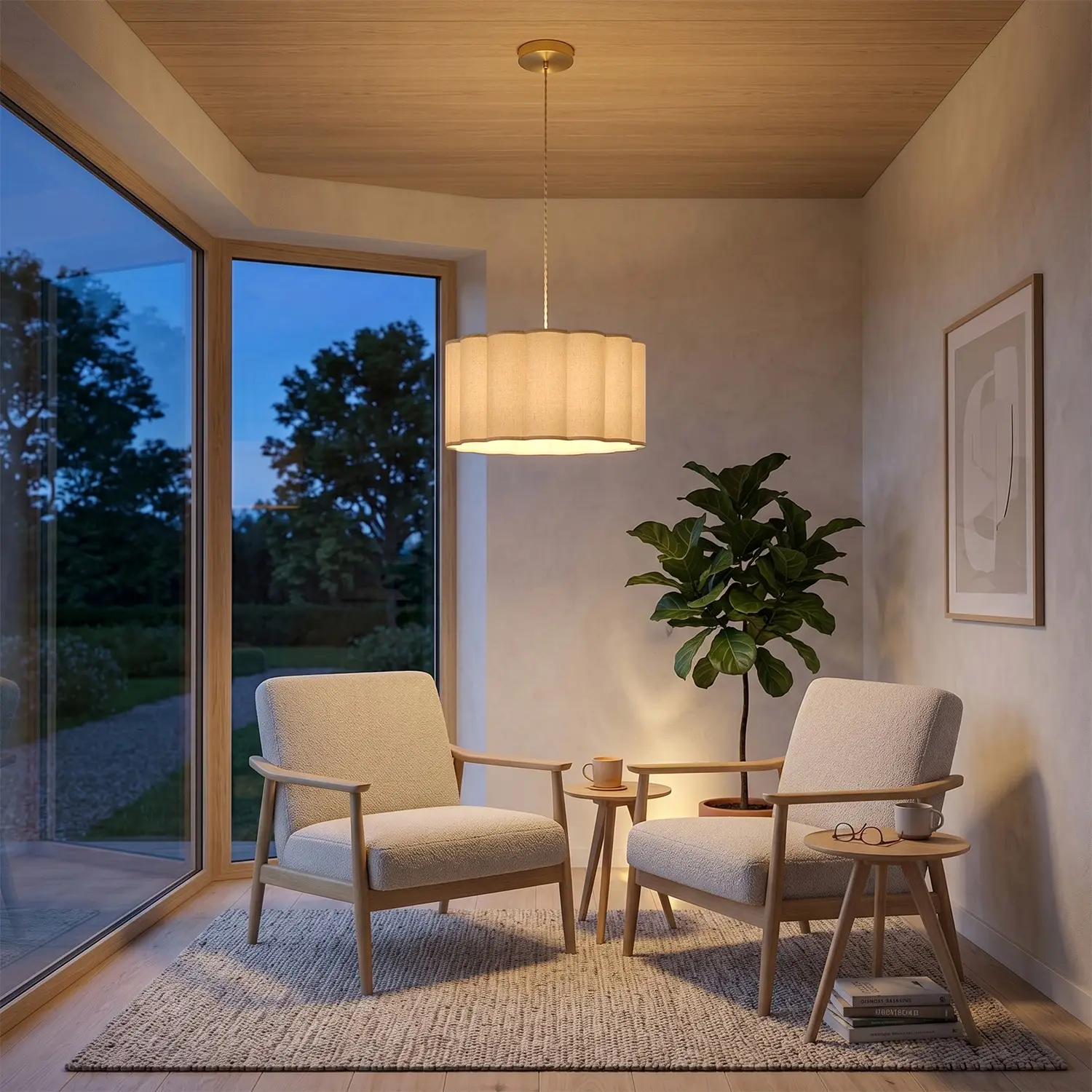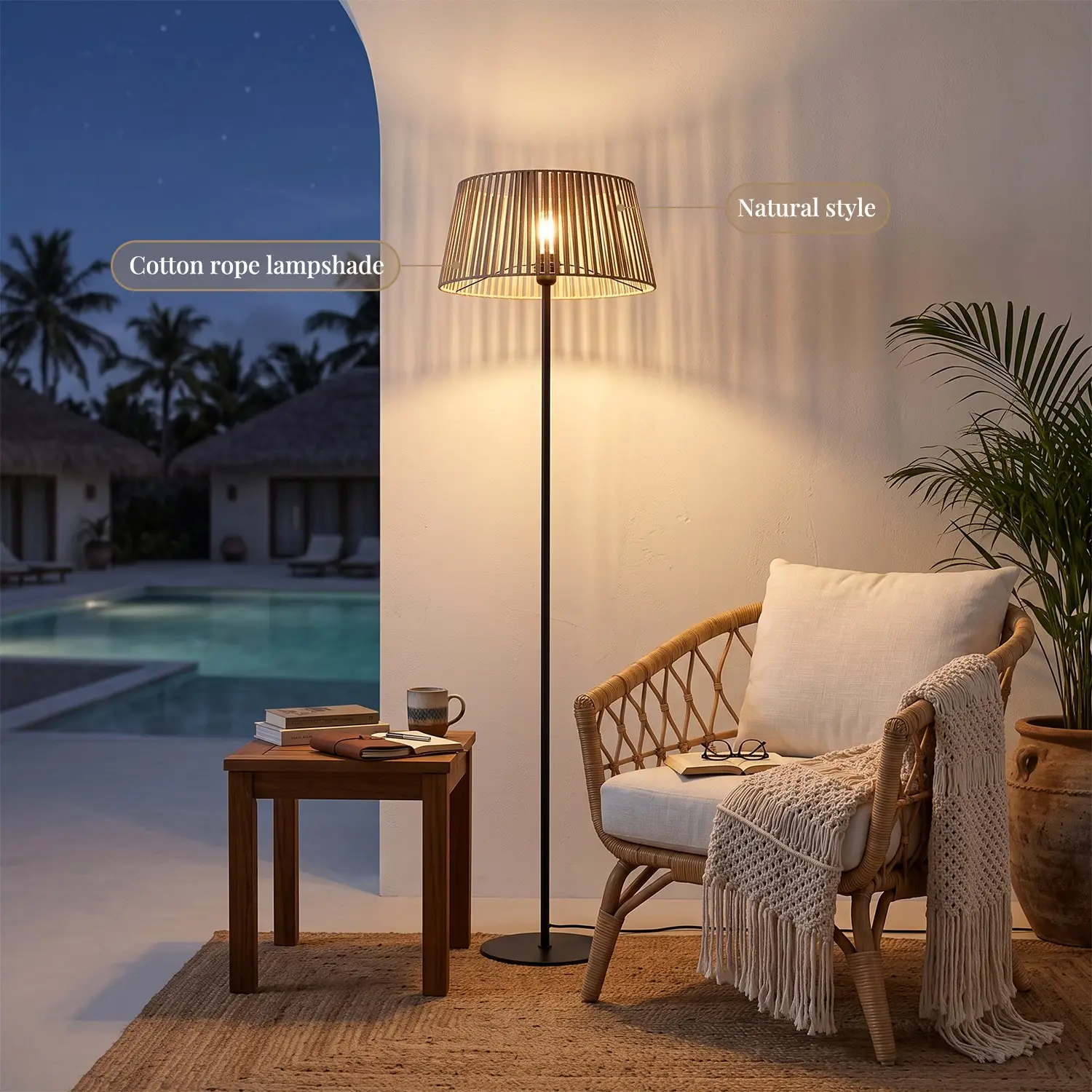
How to choose a hemp rope ceiling light for commercial interiors: Sourcing compliant decorative rope lighting requires prioritizing factory-certified fire-retardant treatments, internal wiring conduits for electrical safety, and verified structural load-bearing documentation. Facility managers must ensure all hardware aligns with local building codes for high-traffic environments to manage liability and safety effectively.
The Engineering Challenge of Rope Fixtures in Commercial Spaces
Integrating a Hemp Rope Light into a commercial setting involves significant structural and electrical hurdles. Unlike residential installations, public-facing spaces like hotels or restaurants are subject to strict fire codes and rigorous life-safety inspections. The primary engineering challenge lies in separating the decorative aesthetic—which relies on high-tension, combustible natural fibers—from the essential load-bearing and electrical insulation systems. Our production team regularly addresses these risks by decoupling structural cabling from the decorative rope elements to ensure that tension is never transferred directly to the wiring.
Material Science: Synthetic Blends vs. Natural Fibers
While traditional raw hemp provides an organic aesthetic, synthetic-treated blends often outperform raw fibers in high-traffic environments. Raw hemp is highly absorbent and susceptible to moisture fluctuation, which can impact rope tension over time. In contrast, factory-processed synthetic fibers exhibit higher tensile strength and resistance to environmental degradation. When comparing options for Fabric Pendant Lights, we prioritize materials that maintain consistent dimensions under heat and humidity variations. For example, our manufacturing process utilizes advanced fire-retardant polymers that are infused into the fibers before the braiding process, ensuring lasting compliance without compromising the rope's texture.
Fire Safety Compliance and Documentation
All decorative elements in commercial buildings must adhere to stringent flame spread requirements. When sourcing lighting, you must request testing reports based on ASTM E84 Standard Test Method for Surface Burning Characteristics. Documentation should explicitly state the Flame Spread Index (FSI) and Smoke Developed Index (SDI) for the specific rope material utilized. Never accept a manufacturer's verbal assurance of fire retardancy; always require a batch-specific certification document that correlates with the lot number shipped to your site.
Structural Integrity: Mounting and Weight Distribution
Rope fixtures often involve high self-weight, necessitating robust mounting solutions. In our factory, we design custom canopy hardware to bear the full vertical load independently of the decorative rope. For instance, in our Glass Hanging Lights series, such as model JM30356 (Ø30 × H100 CM), the metal suspension system is engineered for static load-bearing capacity far exceeding the weight of the fixture itself. We provide tensile strength test data for every bracket to verify that the canopy can be safely anchored to standard commercial structural ceilings. You must cross-reference your specific model’s weight against the maximum capacity of your ceiling junction boxes.
Electrical Safety: Thermal Management and Conduits
Commercial lighting requires compliance with IEC 60598 Luminaires Standard. A recurring issue in rope-style lighting is the management of heat dissipation from the lamp holder. As seen in model JM30364, which uses a standard E27 holder for AC 110-240V, the wiring must be housed in a non-conductive, heat-rated internal conduit. This conduit prevents the rope fibers from coming into contact with internal wires, mitigating fire risks caused by thermal degradation or short circuits. Our quality assurance teams perform mandatory conduit alignment checks on every unit during assembly to ensure the wiring is fully decoupled from any tension-bearing strands.
| Feature | Industry Requirement | Our Factory Protocol |
|---|---|---|
| Fire Retardancy | ASTM E84 Compliant | Certified Batch Reporting |
| Electrical Wiring | CE/UL Certified Components | Conduit-Isolated Wiring |
| Mounting Hardware | Load Tested Components | Tensile Strength Validation |
Need Help With Specifications?
Compare our load-bearing hardware and fire-safety documentation to ensure your next project is code-compliant.
Request Compliance DataProcurement Checklist for Facility Managers
Before confirming your order, ask your manufacturer the following: 1. Can you provide the ASTM E84 test report for this specific batch of rope? 2. Is the internal wiring housed in a dedicated conduit that prevents contact with the structural rope? 3. Does the mounting canopy hardware include a rated load-bearing capacity certificate? 4. Are the electrical components (sockets and cables) CE or UL certified? 5. What is the recommended cleaning schedule to ensure dust does not impact the fixture's heat dissipation or fire safety rating?
Conclusion: Balancing Aesthetics with Liability
Choosing decorative lighting for public-facing spaces requires a shift from purely aesthetic considerations to rigorous liability management. By ensuring your supplier uses certified flame-retardant materials and verified structural mounting systems, you protect both the facility and its occupants. Proper documentation and strict adherence to electrical standards allow you to achieve the desired interior design impact while maintaining total compliance with building codes.
Frequently Asked Questions
Q: What fire safety certifications should I request for rope fixtures?
A: You should request an ASTM E84 test report or an equivalent regional certification confirming that the rope materials have been treated with a fire-retardant coating and meet the flame spread index requirements for your specific building classification.
Q: How do I ensure my ceiling supports the weight of rope pendant lights?
A: Always verify the weight of the fixture as stated in the manufacturer spec sheet and compare it against your ceiling structural engineer's rating for the junction box. We provide tensile strength testing data for our mounting brackets to help with these calculations.
Q: Does the rope material require maintenance in commercial environments?
A: Yes. While the fixtures are not maintenance-free, they should be cleaned according to a schedule (typically monthly in high-traffic areas) using a vacuum with a soft brush attachment to remove dust that could interfere with heat dissipation or pose a potential fire hazard.
Q: Can I use rope lights in damp commercial locations like semi-outdoor lobbies?
A: Do not assume suitability for outdoor or damp use unless the manufacturer provides specific IP-rated testing data. Natural fibers are typically intended for climate-controlled indoor spaces only.
Q: How do you ensure electrical safety in rope-wrapped fixtures?
A: We utilize internal safety conduits that fully decouple the electrical wiring from the tension-bearing rope. This prevents the wiring from being pinched or damaged by the weight of the rope and ensures no electrical heat reaches the decorative material.
Streamline Your Procurement
Contact our team to receive full batch documentation and structural test reports for your next project.
Contact Sales Engineering