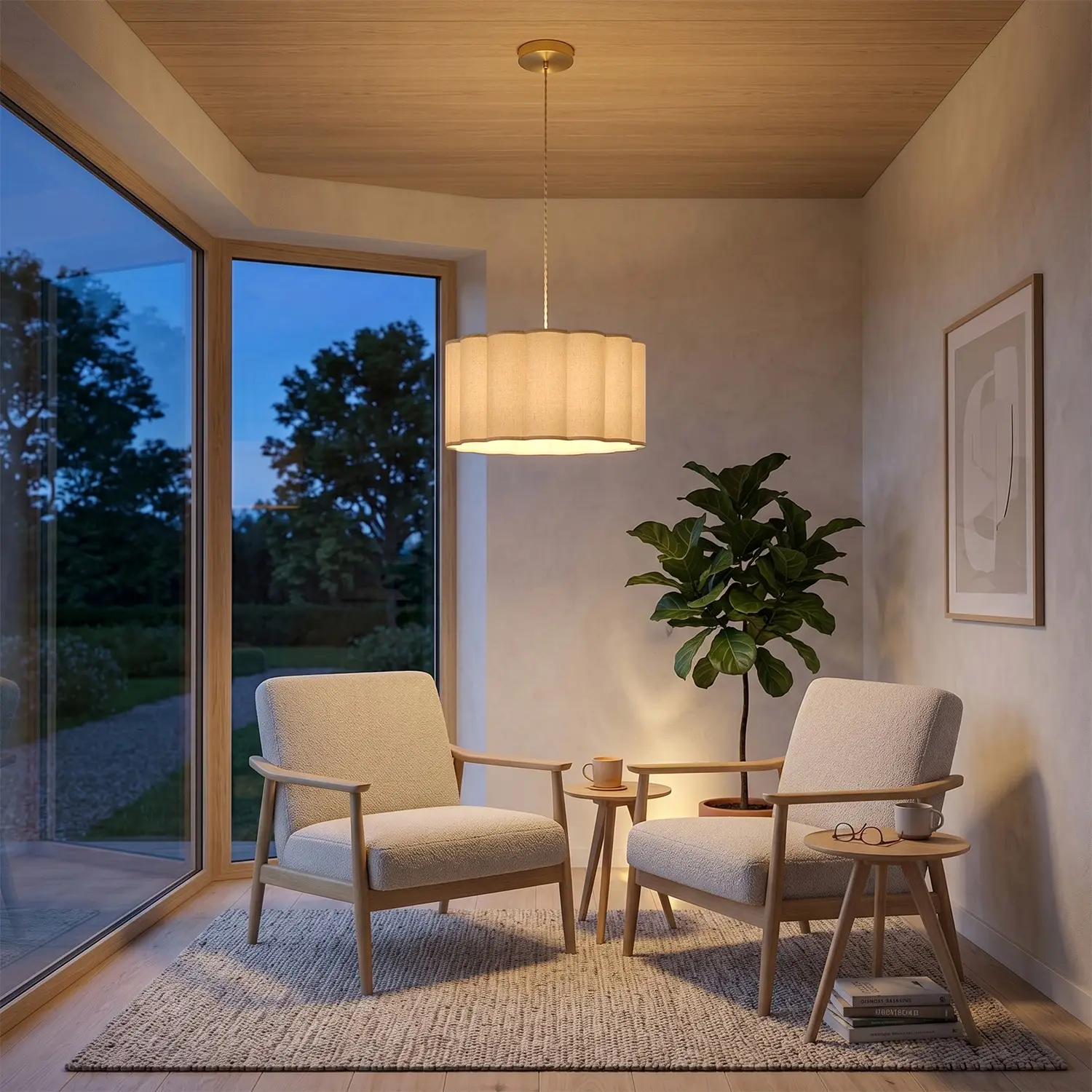
Maintenance Protocols for Commercial Fabric Ceiling Lighting in High-Traffic Areas: Effective management of commercial fabric luminaires requires a shift from reactive replacement to modular lifecycle maintenance. By focusing on thermal dissipation, fire-retardant material integrity, and accessible tensioning systems, facility managers can significantly extend the operational life of high-traffic Ceiling Light fixtures while minimizing total cost of ownership.
The Lifecycle Challenge: Balancing Aesthetics with Operational Longevity
In high-traffic facilities such as transit terminals and corporate lobbies, lighting systems face constant exposure to dust, debris, and structural vibration. During factory audits, we have observed that traditional fixed-ceiling systems often fail prematurely because they do not account for these environmental stressors. Managing Commercial Fabric Ceiling Light systems requires prioritizing access; if a fixture cannot be serviced, it becomes a liability the moment a component fails.
Material Science: Wipeable Synthetics vs. Standard Acoustical Fabrics
Selecting the right fabric is the first step in long-term facility management. While standard textiles provide excellent acoustic dampening, they often trap particulate matter deep within the weave, complicating cleaning efforts. In our production line, we increasingly favor high-density synthetic composites that offer superior surface durability.
| Feature | Standard Acoustical Fabric | Wipeable Synthetic Composite |
|---|---|---|
| Maintenance Cost | High (Replacement-heavy) | Low (Surface cleanable) |
| Fire Retardancy | Requires Treatment (ASTM E84) | Inherent (ASTM E84 Class A) |
| Dust Accumulation | Deep-seated | Surface-limited |
Mitigating Thermal Risks: How Proper Maintenance Impacts LED Lumen Depreciation
Lumen maintenance efficiency is directly tied to the thermal environment of the light engine. When fabric shrouds are covered in fine dust or debris, they inhibit convective cooling. We monitor this during Engineering High Performance Fabric validation, utilizing IEC thermal testing reports to ensure that our light engines operate within strict temperature limits. For reference, our JF30395-A model utilizes specific housing geometries designed to maximize passive airflow, preventing the heat-trapping effect common in poorly engineered systems.
Field-Repairability: Why Modular Design is Essential
Facility managers should mandate modularity in procurement. Systems should allow for individual fabric section removal without full-system decommissioning. For example, our manufacturing protocols for Fabric Pendant Lights focus on independent mounting points, ensuring that if one panel suffers damage, the entire ceiling array does not require a service shutdown.
Compliance and Safety: Navigating NFPA 70 and Fire Retardancy
Safety is non-negotiable. All fabric finishes used in our ceiling systems must meet the ASTM E84 Class A fire-retardancy test results. Furthermore, mounting hardware must comply with NFPA 70 (National Electrical Code) standards to ensure seismic and vibration resistance in high-traffic environments. Proper grounding and tensioning are essential checks for every facility team.
Implementation Guide: Step-by-Step Preventative Maintenance
A successful cycle involves a quarterly inspection of the tensioning hardware and a bi-annual vacuuming of the fabric surfaces using a low-suction HEPA-filtered attachment. Do not use industrial solvents unless an MSDS specifically validates their use for the textile grade provided. Consistent records of lumen output should be maintained to track performance against the manufacturer's initial LM-80 testing data.
Frequently Asked Questions
Q: How does high-traffic air circulation affect dust accumulation on fabric diffusers?
A: High-traffic areas generate significant HVAC-driven air movement. This constant flow pushes fine particles toward the luminaires. Using high-density synthetic fabrics minimizes the depth to which these particles penetrate the weave, allowing for easier surface cleaning.
Q: What are the recommended cleaning agents for fire-retardant treated commercial fabrics?
A: Always refer to the specific manufacturer MSDS. Generally, distilled water and mild, pH-neutral detergents are recommended. Avoid abrasive scrubbing, which can degrade the fire-retardant coating applied during the manufacturing process.
Q: How frequently should fabric lighting tension systems be inspected for structural fatigue?
A: We recommend a quarterly inspection of all tension points in public transit or high-vibration areas. Check for any sagging or loose hardware that could compromise the mounting integrity required for seismic compliance.
Q: Do fabric ceiling light components meet specific VOC emission standards for occupied commercial spaces?
A: Yes, professional-grade fabric luminaires are tested for low-VOC emissions to ensure they meet air quality standards for office and public space usage. Ensure your spec sheet specifies compliance with relevant indoor air quality protocols.
Q: What is the expected lifespan of LED drivers integrated into fabric modular ceiling systems?
A: Driver lifespan is heavily dependent on thermal management. When ambient temperatures remain controlled through proper ventilation and dust management, high-quality drivers should align with the LM-80 test reports of the LED light engines, typically reflecting 50,000+ hours of reliable operation.
Explore Our Factory Capabilities
Download our comprehensive technical spec sheet and installation guide to ensure your next project meets all safety and performance benchmarks.
Download Technical Guide